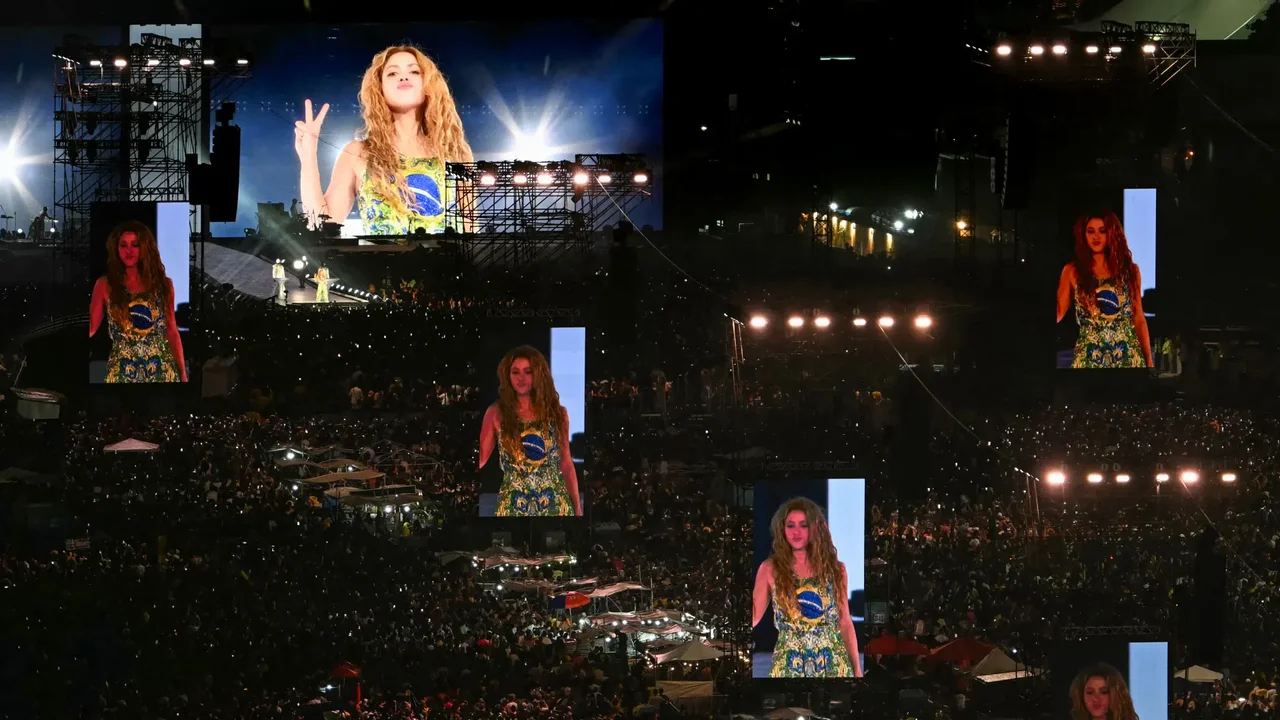
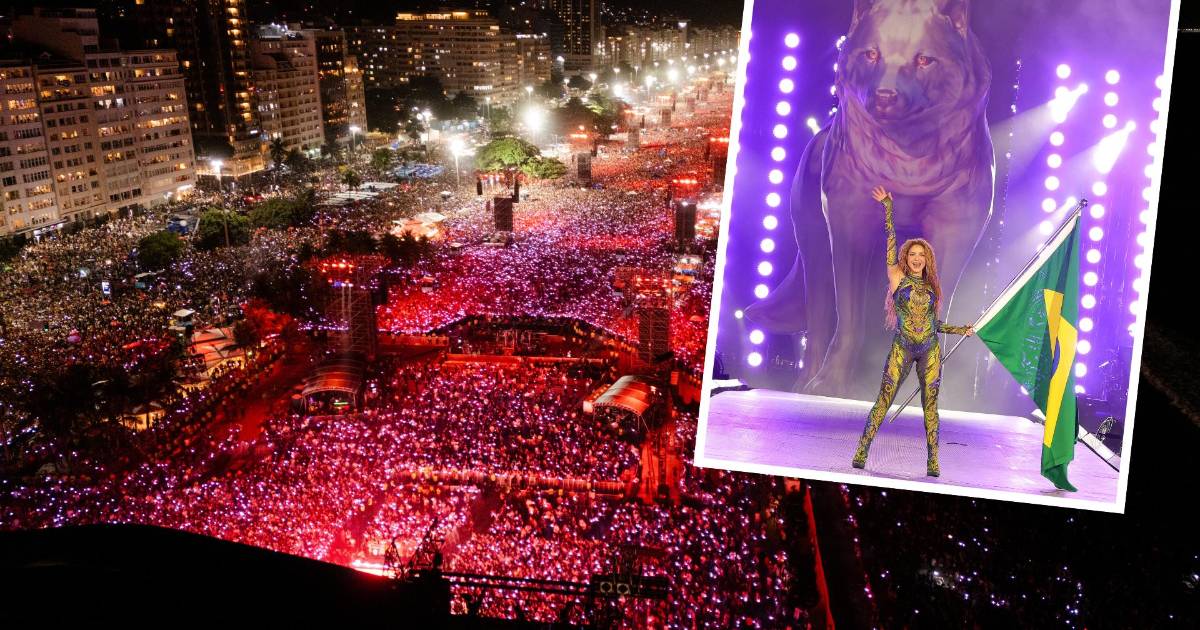
Shakira delivered a free, large-scale concert on Rio de Janeiro’s Copacabana beach that drew an unprecedented crowd estimated at just over 2 million people, with some outlets specifying about 2.2 million attendees, making it one of the largest live music audiences of the century. Both opposition and government-aligned coverage agree the event lasted around two hours, featured a career-spanning setlist of hits, and included notable Brazilian guest artists such as Anitta and respected icons of the local music scene, all framed as a historic moment for Latin music and for Rio as a global stage for massive cultural spectacles. They also converge on the scale of the logistical operation, highlighting the gigantic stage structure, sophisticated technical setup including visual effects such as drones, and an extensive security presence designed to manage the massive turnout.
Across both sides, the concert is situated within a broader narrative of Rio’s strategy to project itself internationally through mega-events and to leverage culture as a driver of tourism and economic activity. Coverage agrees that the show is expected to inject over 800 million reais (about 160 million dollars) into the local economy through hotel occupancy, tourism, and related commerce, and presents security spending as a major but integral part of hosting such events. Both perspectives emphasize Copacabana’s long tradition as a venue for massive free shows and New Year’s celebrations, treating Shakira’s performance as part of that legacy while also underscoring her particular symbolic importance for Latin American music and for Brazil-Colombia cultural ties.
Areas of disagreement
Scale and meaning of the record. Opposition-aligned outlets underscore Shakira’s attendance numbers primarily in competitive terms, stressing that the roughly 2.2 million crowd breaks records previously held by artists like Lady Gaga and Madonna and portraying the night as a personal and artistic triumph that cements her as a global pop benchmark. Government-aligned coverage, while acknowledging the record-breaking scale, is more inclined to fold the figures into a narrative about Latin music’s ascent and Rio’s role as a world capital for mega-shows, presenting the numbers less as a pop chart of winners and more as evidence of successful cultural policy and city branding. The opposition framing leans on the language of “she made history” and “the one who invoices and breaks records,” whereas government narratives emphasize “historic presentation” for the city and region.
Economic framing. Opposition sources treat the estimated 160 million dollar impact as a striking side effect of Shakira’s star power and the concert’s unprecedented logistics, often describing the profits as proof that major free cultural events can be economically justified and even framed as a boon that transcends political credit-claiming. Government-aligned outlets, by contrast, integrate the same figures directly into a policy storyline, highlighting how such spectacles fit into an official strategy of economic revitalization and international projection, and explicitly casting security and organizational costs as planned investments. While opposition pieces tend to foreground the spectacle and then mention the economic windfall, government-aligned coverage uses the profit estimates to validate the broader model of state- and city-backed mega-events.
Role of public authorities and security. Opposition-aligned reporting mentions the heavy security deployment mainly as a practical necessity to manage an enormous crowd and protect fans and artists, treating it as part of the engineering feat behind staging the largest concert of the century. Government-aligned outlets, however, more explicitly frame the security apparatus as a deliberate choice by authorities to safeguard Rio’s reputation as a safe and competent host of global events, presenting police and municipal coordination as central protagonists. In the opposition narrative, security underscores the logistical scale of Shakira’s impact; in the government-aligned narrative, it underscores the state’s capacity and responsibility in delivering orderly mega-shows.
Cultural and political symbolism. Opposition coverage tends to center Shakira’s personal narrative—her trajectory as a Latin artist who “invoices and breaks records,” the symbolic surpassing of other global pop icons, and the emotional connection with fans under a “full moon” at Copacabana—using these elements to highlight popular culture’s power somewhat independently of official agendas. Government-aligned stories more consistently embed the concert in a storyline about Latin American pride, Brazil’s passion for football and upcoming international events, and the city’s long-term image strategy, subtly aligning Shakira’s triumph with the success of current governance and public policy in promoting culture and tourism. Thus, while both sides celebrate the cultural significance, opposition outlets frame it as an artist-centered milestone, and government-aligned outlets as a shared achievement of artist and institutions.
In summary, opposition coverage tends to spotlight Shakira’s individual record-breaking achievement and the sheer spectacle of drawing more than 2 million people, with economic and logistical aspects serving mainly to amplify her artistic triumph, while government-aligned coverage tends to weave the same facts into a broader narrative about effective public management, economic revitalization, and Rio’s strategic use of mega-concerts to project the city and country internationally.