opposition
Video
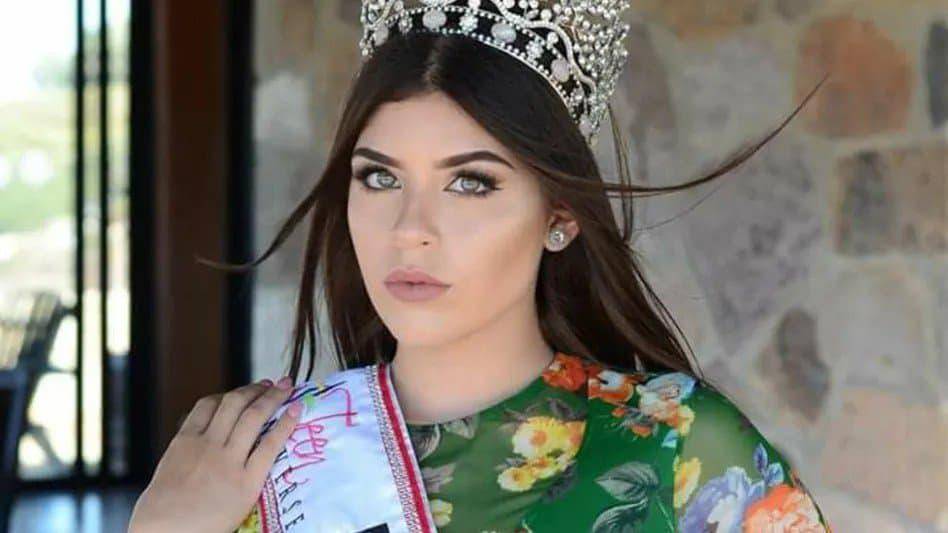
The death of Carolina Flores Gómez, a 27-year-old former beauty queen, continues to cause shock in Mexico after the leak of a video that recorded her...
16 days ago
Former beauty queen Carolina Flores Gómez, 27, was allegedly shot dead in her apartment in the upscale Polanco area of Mexico City, in an incident that both sides describe as deeply shocking and emblematic of broader violence against women. Opposition and government-aligned narratives converge on the basic facts: the prime suspect is her mother-in-law, identified as Erika (or Érika) María Herrera; the killing occurred inside the family home while Flores’ husband, Alejandro Sánchez, and their eight-month-old baby were present; and the Mexico City Prosecutor’s Office is investigating the case under a femicide protocol. Both agree there is video evidence of a domestic confrontation leading up to the shooting, reportedly capturing Herrera following Flores into a room, gunshots, a scream, and statements attributed to Herrera that suggest jealousy and possessiveness, such as that Flores had “stolen” her son.
Across the spectrum, coverage situates the case within Mexico’s entrenched crisis of gender-based violence and femicide, noting that legal frameworks and protocols exist but are frequently undermined by failures in prevention, protection, and enforcement. Media on both sides highlight that the use of the femicide protocol signals official recognition of a gender-motivated crime, placing the case within a category that already draws national and international scrutiny. They also concur that the suspect remains at large as of the latest reports, that the video’s leak has intensified public outrage, and that the incident underscores systemic problems in addressing domestic violence, family dynamics, and mental health, even in affluent neighborhoods. There is shared acknowledgment that public institutions—from prosecutors’ offices to police and social services—are under pressure to demonstrate that this case will not be another example of impunity.
Responsibility and blame. Opposition-aligned outlets emphasize the mother-in-law’s personal culpability and alleged history of psychological aggression toward Flores, layering in direct quotes from family members who describe a pattern of belittlement and control. They also hint at suspicions toward the husband, foregrounding the mother’s doubts about his delayed reaction and his account of prioritizing the baby before reporting the crime. Government-aligned outlets, by contrast, tend to center on the individual act of the mother-in-law as an isolated crime, downplaying or omitting broader family complicity and focusing less on potential negligence or conflicting statements from the husband.
Institutional performance. Opposition coverage portrays the Mexico City Prosecutor’s Office and police as reactive and slow, highlighting that the prime suspect remains at large and framing this as yet another example of weak enforcement of femicide protocols. These outlets use the case to question whether existing institutions genuinely protect women, implying that the legal framework is robust on paper but hollow in practice. Government-aligned media, in turn, stress that authorities are following established femicide procedures, underline official statements about ongoing investigations, and frame the activation of the protocol as evidence that the system is functioning as intended rather than failing.
Political framing and systemic critique. Opposition sources cast the killing as symptomatic of a broader security and governance crisis under current leadership, linking the case to national statistics on femicide and impunity and suggesting that government narratives of progress on women’s safety are contradicted by reality. They often give significant voice to the victim’s mother and best friend, using their testimonies to argue that the state chronically fails families in similar circumstances. Government-aligned outlets, however, tend to decouple the incident from partisan politics, treating it more as a tragic but individual domestic case and avoiding direct criticism of security policy, instead echoing official messaging about ongoing reforms and institutional commitment to combating gender violence.
Media ethics and use of video. Opposition-aligned reporting prominently mentions and sometimes describes in detail the leaked video of Flores’ final moments, arguing that its circulation has galvanized public outrage and made it harder for authorities to minimize the case. They justify referring to the footage as a necessary tool to expose the brutality of femicide and alleged institutional shortcomings. Government-aligned outlets are more likely to reference the existence of the video in general terms, emphasize privacy and legal constraints, and avoid sensational description, presenting restraint as respect for due process and the victim’s dignity.
In summary, opposition coverage tends to frame the case as proof of systemic failure, emphasizing patterns of abuse, institutional weakness, and political responsibility, while government-aligned coverage tends to underscore the suspect’s individual culpability, the formal activation of femicide protocols, and the message that institutions and reforms are actively responding to a tragic but isolated crime.