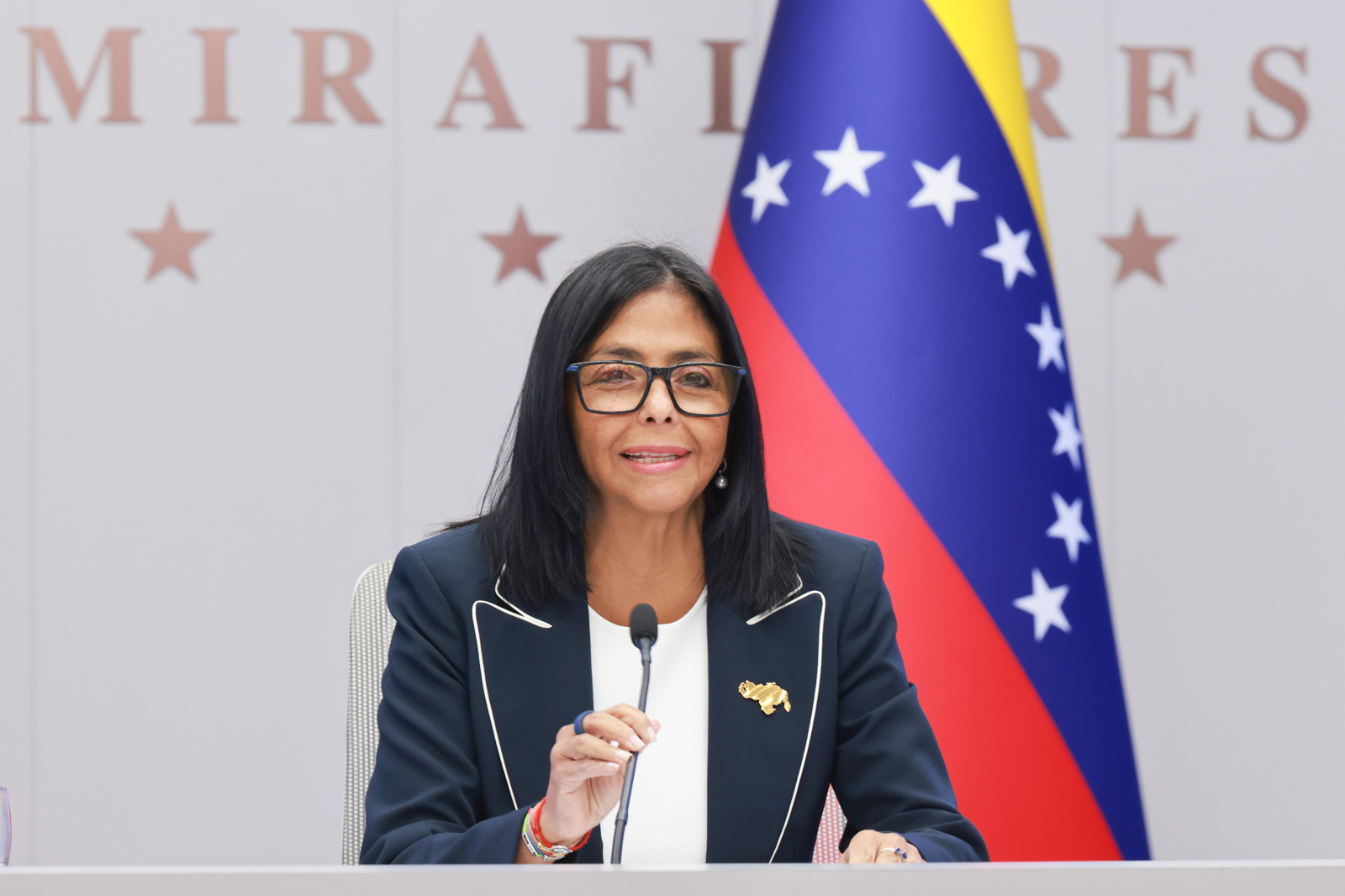
Venezuelan acting president Delcy Rodríguez has publicly denounced that some judges are allegedly demanding bribes to grant benefits under the country’s recently enacted Amnesty Law, calling on judicial authorities to end these practices and take action against those involved. Across outlets, it is consistently reported that she made these remarks while presenting results from the Program for Democratic Coexistence and Peace and in coordination with institutions such as the Prosecutor’s Office, the Ombudsman’s Office, the Supreme Court, and the Penitentiary Ministry. Both sides agree that the Amnesty Law was approved earlier this year, has specific eligibility criteria and exclusions, and that official figures place the number of beneficiaries at more than 9,000 people so far, framed as part of a broader policy of reconciliation and sentence reduction.
Coverage from both opposition and government-aligned sources converges on the idea that the justice system is undergoing scrutiny and that the Amnesty Law is a central piece of an ongoing justice and penitentiary reform agenda. They also agree that Rodríguez links the amnesty policy and the Program for Democratic Coexistence and Peace to a wider institutional effort that includes the Supreme Court’s Constitutional Chamber, which she has asked to develop doctrine recognizing sexual diversity as a fundamental human right. There is shared acknowledgment that the government is promising further announcements on reforms and concrete results in the short term, and that NGOs and international organizations have raised concerns over the law’s scope and implementation, even if they differ in emphasis and interpretation. Both sides present the episode as part of a larger debate over corruption, judicial independence, and human rights in Venezuela’s legal and penitentiary systems.
Areas of disagreement
Framing of Rodríguez’s denunciation. Opposition-aligned sources tend to frame Rodríguez’s accusations against judges as a limited or reactive move, suggesting it exposes deeper, systemic corruption and long-standing abuses in the judiciary that the government has tolerated. Government-aligned outlets portray the denunciation as evidence of the executive’s political will to cleanse the justice system and protect citizens from corrupt intermediaries. While opposition coverage often implies the announcement is more performative than transformative, pro-government media emphasize it as a decisive step in an ongoing reform process driven by state institutions.
Assessment of the Amnesty Law’s impact. Opposition media usually question the official figure of more than 9,000 beneficiaries, highlighting reports from NGOs and international bodies that many political prisoners, protesters, and critics remain excluded or face restrictive conditions. Government-aligned coverage underscores the same figure as proof that the law is widely benefiting ordinary detainees, contributing to reconciliation and social peace. Where opposition narratives focus on who is left out and the narrow or conditional nature of the relief granted, government-aligned narratives stress the scale of releases and present the law as a humanitarian and inclusive achievement.
Characterization of the justice reform agenda. Opposition-aligned outlets often present the promised “great justice reform” as vague, delayed, or unlikely to alter the structural concentration of power in pro-government institutions. They point to past unfulfilled reform promises and argue that corruption and political interference are rooted in the very authorities now claiming to lead change. Government-aligned sources, by contrast, depict the reform as a comprehensive modernization effort coordinated across branches, linking amnesty, coexistence programs, and doctrinal advances on human rights into a coherent state policy aimed at democratizing justice.
Role of institutions and rights discourse. Opposition reporting tends to treat Rodríguez’s appeal to the Supreme Court’s Constitutional Chamber on sexual diversity and human rights as rhetorical or instrumental, set against a backdrop of selective law enforcement and politically biased courts. Government-aligned coverage highlights the same appeal as proof that top institutions are embracing a progressive human-rights narrative that includes sexual diversity and prison conditions, using it to reinforce the legitimacy and responsiveness of the state. Thus, opposition sources emphasize institutional complicity and deficits in rights protection, while government-aligned outlets stress institutional activism and evolving legal doctrine.
In summary, opposition coverage tends to cast Rodríguez’s statements as a selective acknowledgment of deeper, regime-linked judicial corruption and a narrowly applied amnesty that leaves major injustices untouched, while government-aligned coverage tends to present her intervention as strong leadership within a broad, good-faith reform of the justice system and a successful amnesty that showcases the state’s commitment to reconciliation and human rights.