government-aligned
Authorities Exhume Body of Víctor Quero
Authorities exhume the body of Víctor Quero, a deceased political prisoner, amid NGO concerns about the investigation into his case.
2 days ago
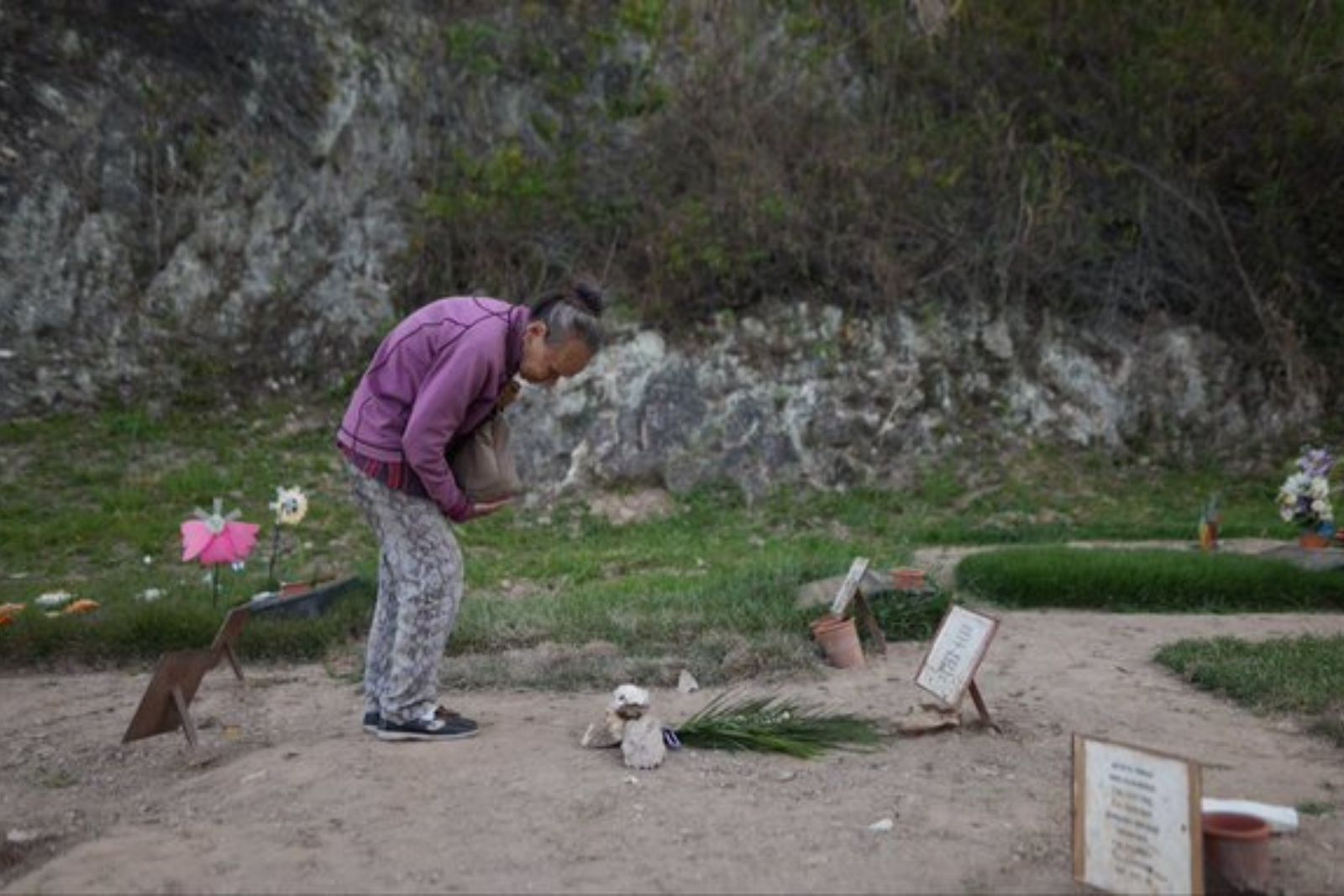
The body of Venezuelan political prisoner Víctor Hugo Quero (also referenced as Víctor Hugo Quero Navas) was exhumed in early May at a cemetery in Venezuela by officials from the CICPC, in the presence of his mother, Carmen Navas. Both opposition and government-aligned accounts agree that Quero had been detained by state authorities for over a year before his death was officially acknowledged, that he died in state custody after being transferred from El Rodeo I prison to a hospital with severe digestive bleeding and fever in July, and that the exhumation was ordered by the national prosecutor’s office (Fiscalía) as part of a formal investigation into the causes of his death. They also converge on the fact that human rights NGOs and his family had denounced irregularities and a lack of information for months, leading to the current forensic procedures and renewed scrutiny, and that this case now stands as one of the clearest instances in which a previously disappeared political prisoner’s death has been publicly recognized by authorities.
Across coverage, there is shared context that Quero’s case occurs amid broader international and domestic concern about political imprisonment, enforced disappearances, and prison conditions in Venezuela, involving institutions such as the Fiscalía, the CICPC, and human rights organizations like Foro Penal, Justicia, Encuentro y Perdón, and the Observatorio Venezolano de Prisiones. Both sides describe a pattern in which relatives of detainees, especially mothers, must navigate opaque bureaucratic and security structures to obtain basic information, often resorting to NGOs and public advocacy. They also agree that the exhumation is framed as part of an official investigative process that could, at least on paper, determine responsibility for deaths in custody, and that the outcome may have implications for how Venezuela responds to accusations of human rights violations and possible future reforms in detention oversight.
Responsibility and blame. Opposition-aligned sources portray Quero’s death as the direct result of state repression and systemic abuse, arguing that his detention, disappearance, and subsequent death in custody amount to a grave human rights violation for which security forces and high-level authorities bear responsibility. Government-aligned coverage instead emphasizes the formal launch of an investigation by the Fiscalía, presents the exhumation as evidence that institutions are functioning, and refrains from assigning blame before forensic conclusions. While opposition outlets stress a presumption of state culpability rooted in patterns of past abuses, government-aligned narratives frame the matter as an isolated case under review rather than proof of a broader policy of lethal repression.
Nature of the detention and disappearance. Opposition reporting typically describes Quero as a political prisoner arbitrarily detained for his alleged opposition links or past military service, highlighting that he was effectively disappeared for months with his mother denied information and his whereabouts concealed. Government-aligned sources acknowledge his condition as a political prisoner for the purposes of NGO discourse but focus on the procedural side of his arrest, avoiding detailed discussion of arbitrariness and instead noting that he was held in El Rodeo I and later hospitalized for medical reasons. Opposition accounts underline a narrative of enforced disappearance and secretive custody, whereas government-aligned coverage softens this language, speaking of prior "irregularities" or "lack of communication" without explicitly labeling the case as forced disappearance.
Characterization of institutions and investigation. Opposition outlets tend to cast the prosecutor’s office, CICPC, and prison authorities as compromised actors, suggesting that the exhumation is a late and pressured response driven by NGO and international scrutiny rather than a genuine pursuit of justice. Government-aligned coverage highlights the presence of Quero’s mother during the exhumation, the formal opening of the case, and procedural steps as indicators that institutions are responsive and capable of self-correction. While opposition media frame these same steps as performative or insufficient within a system lacking independence, government-aligned narratives underscore legality, order, and the professionalism of investigators.
Broader pattern and implications. Opposition-aligned sources situate Quero’s case within a wider pattern of politically motivated detentions, torture, and custodial deaths, presenting it as emblematic of systemic persecution and warning that many similar cases remain hidden or unresolved. Government-aligned outlets acknowledge concerns about disappearances and prison conditions largely through quoting NGOs but avoid endorsing the claim of a systematic policy, instead portraying this as a serious but bounded incident whose proper handling can demonstrate institutional will to address abuses. Opposition coverage extrapolates from Quero’s death to condemn the entire security and justice apparatus, whereas government-aligned coverage narrows the lens to the individual case and the current investigative process.
In summary, opposition coverage tends to frame Víctor Hugo Quero’s exhumation as overdue evidence of a lethal, systemic pattern of political persecution and enforced disappearance, while government-aligned coverage tends to present it as a specific case under active institutional investigation that illustrates the state’s capacity and willingness to correct irregularities.