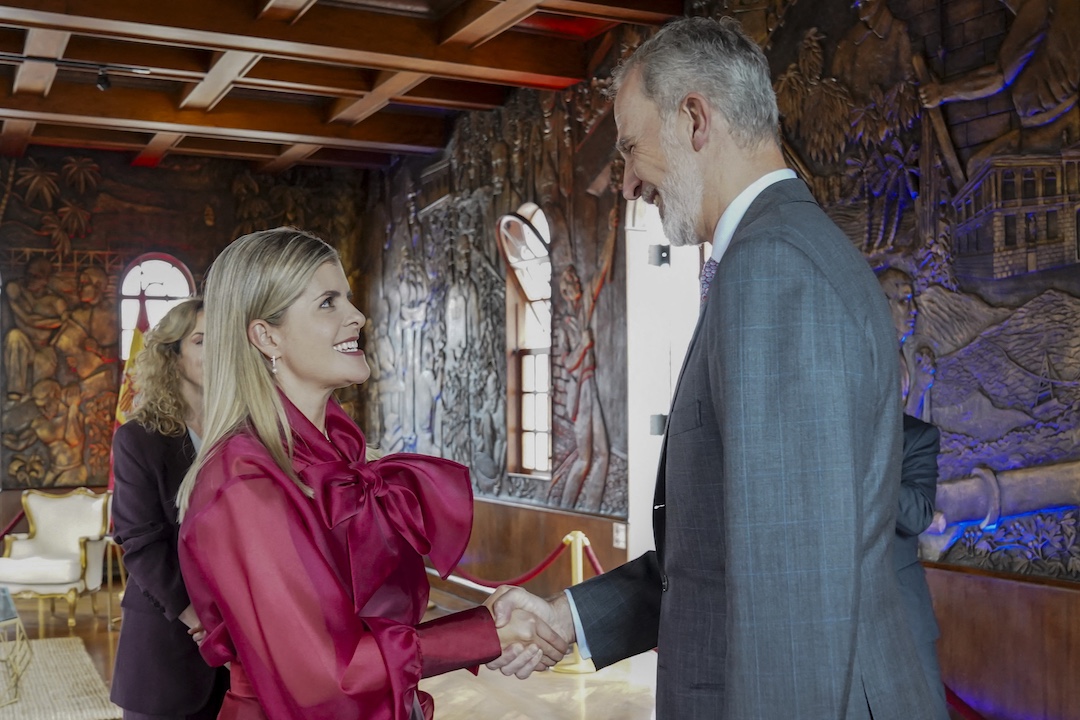
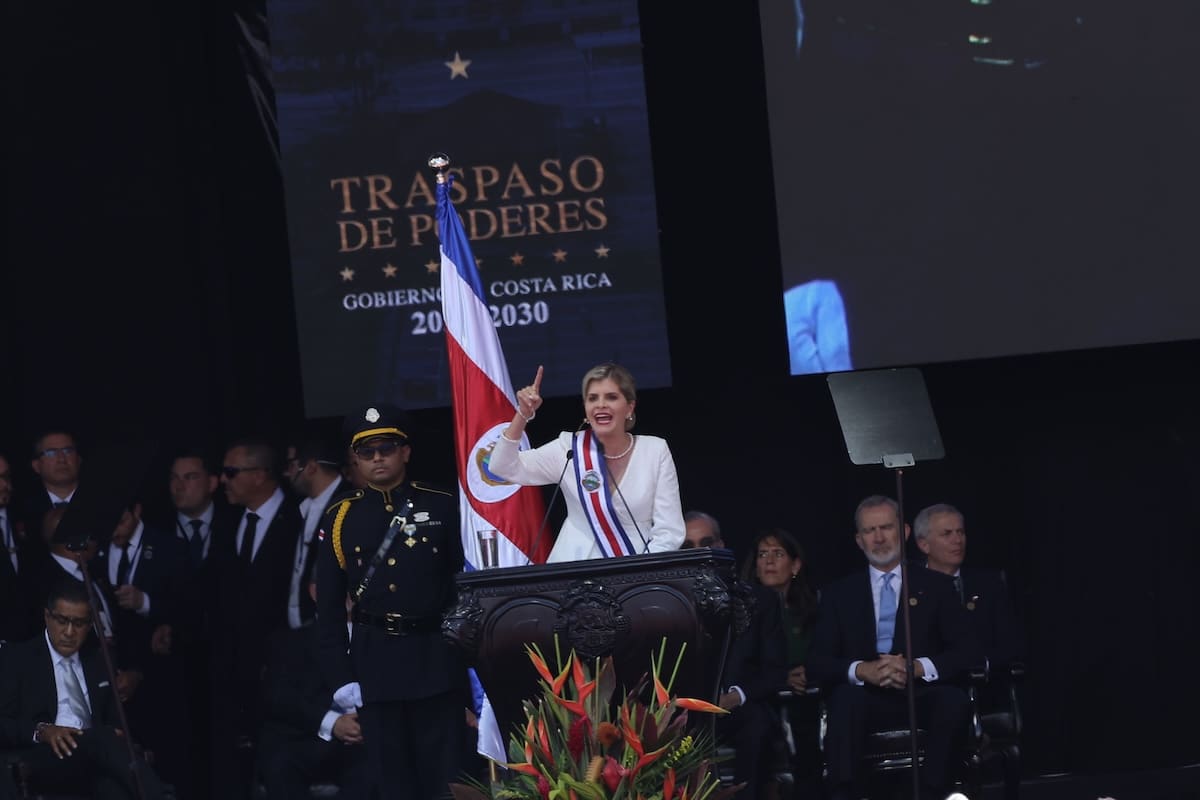
Laura Fernández Delgado, a 39-year-old political scientist from the right‑wing Partido Pueblo Soberano, has been sworn in as Costa Rica’s 50th president and the country’s second woman head of state, for the 2026–2030 term. Both opposition and government‑aligned outlets agree that the inauguration took place in the National Stadium in San José, where outgoing president Rodrigo Chaves formally handed over power and the presidential sash in a ceremony led by Legislative Assembly president Yara Jiménez. Coverage on both sides highlights the strong international presence, with delegations from 71 countries and 18 international organizations attending, and notes that Fernández previously served as Minister of Planning and Minister of the Presidency under Chaves, positioning her as his political protégé. All outlets concur that Chaves will become a powerful “super minister,” retaining substantial influence in the new administration.
Across the spectrum, media describe Fernández’s agenda as centered on security, institutional reform, and economic modernization, presenting a shared picture of ambitious structural change. There is broad agreement that she has vowed a “profound reform of the state” and a hardline strategy against organized crime, including building a mega‑prison for around 5,000 inmates modeled on El Salvador, creating a national security command center, and tightening sentencing. Both sides also acknowledge her promised economic and infrastructure initiatives, such as a proposed four‑day workweek, strategic road projects, an electric passenger train, and a Caribbean marina, framed as efforts to boost competitiveness and connectivity. Common context across outlets situates this inauguration as a continuity government, explicitly linked to the outgoing Chaves administration’s political project and populist reform discourse.
Areas of disagreement
Nature of continuity with Chaves. Opposition outlets portray Fernández’s self‑description as “heir of change” as evidence that Chaves’ project is being extended, with his role as “super minister” framed as de facto co‑government and a mechanism to preserve his power and immunity. Government‑aligned coverage, while acknowledging continuity, presents it as institutional stability and policy coherence, emphasizing a smooth transfer of experience and a united hardline front against crime and economic stagnation. The former stresses risks of personalized rule and over‑reliance on Chaves, whereas the latter highlights Fernández’s own credentials and leadership while treating Chaves’ influence as an asset rather than a liability.
Security agenda and mega‑prison model. Opposition‑leaning sources underline the El Salvador‑inspired mega‑prison and “iron fist” rhetoric as potentially copying Nayib Bukele’s most controversial tactics, invoking concerns about human rights, due process, and the militarization of public security. Government‑aligned reporting instead frames the same measures as a necessary response to rising organized crime, focusing on toughness, deterrence, and the urgency of regaining territorial control. While both acknowledge the scale of the security challenge, opposition pieces warn of creeping authoritarianism and institutional erosion, whereas pro‑government outlets emphasize effectiveness and public demand for stronger order.
Institutional reform and concentration of power. Opposition coverage casts Fernández’s promised “profound reform of the state” as a vehicle for weakening checks and balances, pointing to her populist attacks on elites and institutions and to analysts’ fears of power concentration in the executive and the super‑minister. Government‑aligned media present the same reform language as modernization and efficiency, highlighting goals such as streamlining public administration, cutting bureaucracy, and improving service delivery without foregrounding risks to judicial or legislative independence. The former stresses continuity with what it sees as Chaves’ pattern of institutional confrontation, while the latter stresses technocratic problem‑solving and a results‑oriented state.
Political positioning and rhetoric. Opposition outlets describe Fernández’s inaugural speech as mirroring Chaves’ populist style, with sharp criticism of traditional elites and an appeal to a mandate for radical change, suggesting a polarizing strategy that sidelines consensus‑building. Government‑aligned reports acknowledge her strong rhetoric but reframe it as a necessary break with complacency, interpreting her discourse as a call to national unity against crime and economic hardship rather than an attack on democracy itself. Thus, opposition media interpret the tone as a warning sign of democratic backsliding and heightened confrontation, while government‑aligned sources see it as energizing leadership aligned with voters’ desire for decisive action.
In summary, opposition coverage tends to depict Fernández’s inauguration as the formalization of an increasingly concentrated and potentially authoritarian power structure under the guise of continuity and security reform, while government-aligned coverage tends to frame the same events as the start of a stable, experienced, and resolute administration focused on restoring security, modernizing the state, and responding firmly to public demands for change.