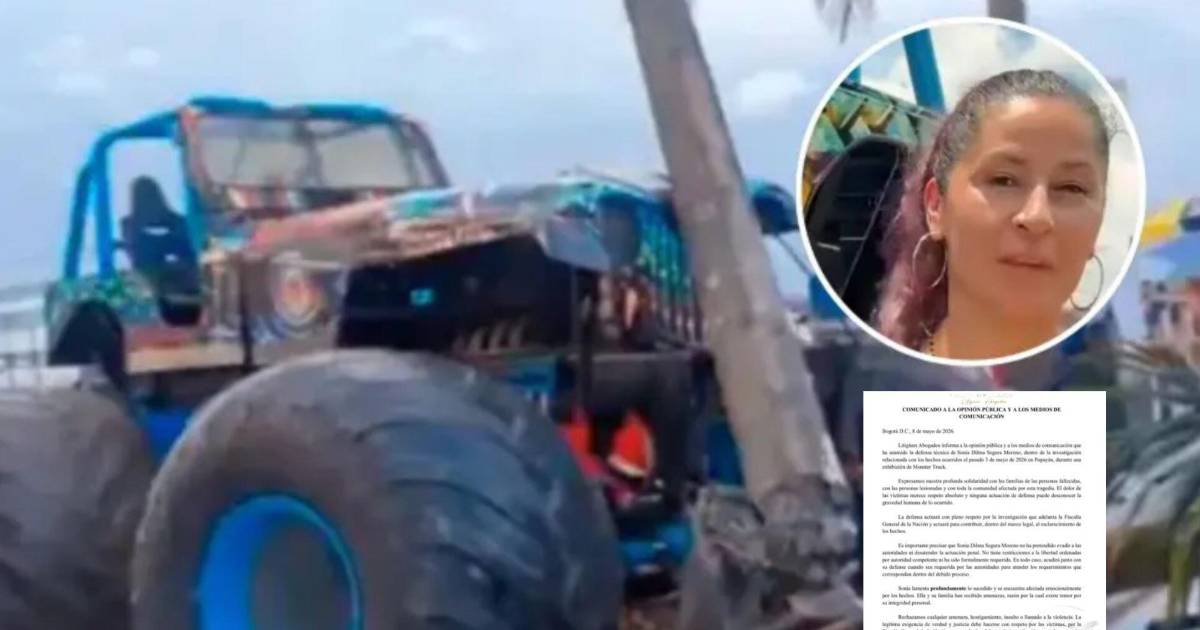
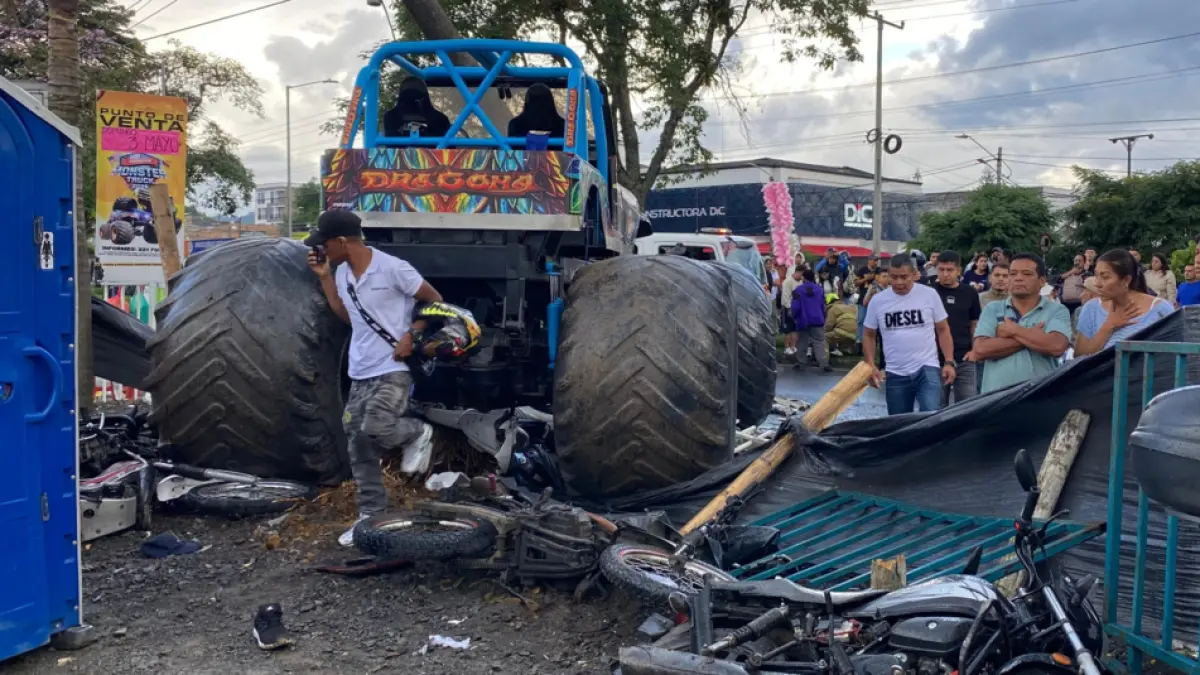
Opposition- and government-aligned outlets agree that Sonia Dilma Segura Moreno, the driver of the monster truck involved in the Popayán accident that left three people dead and dozens injured, has issued her first public statement through her legal team. Both sides report that the statement conveys solidarity with the victims and their families, emphasizes that Segura is not trying to evade judicial authorities, and pledges full cooperation with the ongoing investigation into the May 3, 2026 event. They likewise coincide that Segura says she is deeply affected by what happened, that her defense insists she regrets the tragedy, and that she and her relatives have received threats that have raised significant concerns about their personal safety.
Coverage from both camps situates the statement within an official investigation that goes beyond the driver to look at how the event was organized and secured. There is shared acknowledgment that investigators are examining the adequacy of barriers and crowd‑control measures that separated spectators from the track, and that institutional responsibility may extend to organizers and local authorities who authorized or oversaw the show. Both sides treat the case as part of a broader debate over safety standards at large public events in Colombia and the role of regulatory bodies, prosecutors, and municipal governments in preventing similar tragedies.
Areas of disagreement
Responsibility and blame. Opposition outlets put more weight on potential negligence by event organizers and local authorities, using Segura’s statement as a springboard to question why barriers and safety protocols failed so catastrophically. They tend to frame the driver as one actor in a wider chain of institutional failures, stressing that the configuration of the venue and permits may have made the disaster almost inevitable. Government-aligned outlets, while acknowledging possible organizational failings, keep the focus more squarely on Segura’s actions behind the wheel and highlight the scale of the harm she caused to over 50 victims.
Portrayal of the driver. Opposition coverage presents Segura primarily as a key witness and a figure under intense public pressure, emphasizing the threats she has received and her stated willingness to collaborate in clarifying systemic faults. These outlets are more likely to humanize her by stressing her emotional distress while still noting that she remains under investigation. Government-aligned sources, in contrast, foreground her as the person who "ran over" the crowd, describing the scene in graphic terms and only secondarily mentioning her emotional state and legal defense narrative.
Framing of the statement’s purpose. Opposition media characterize the statement as both a gesture of empathy toward victims and a way to ensure due process, underscoring that she is not fleeing and that her defense seeks transparent clarification of all responsible parties. They suggest that the communication responds to a climate of public vilification and possible scapegoating. Government-aligned outlets tend to portray the statement as a necessary response to the gravity of the offense and public outrage, framing it less as a rights-based defense and more as an expected act of contrition from the central protagonist of the tragedy.
Institutional accountability. Opposition reporting more explicitly links the accident to broader questions about regulatory oversight, hinting that municipal and national authorities may be downplaying their own role by focusing attention on the driver. They often use Segura’s case to reopen criticism of how safety inspections, permits, and enforcement have been handled under current officials. Government-aligned coverage generally acknowledges inquiries into organizers and safety measures but presents these as routine procedural steps, reinforcing the view that institutions are responding appropriately and keeping the main narrative centered on the criminal investigation into Segura herself.
In summary, opposition coverage tends to stress systemic and institutional failures surrounding the Popayán event and frame the driver's statement as part of a broader quest for shared responsibility and due process, while government-aligned coverage tends to center legal and moral culpability on the driver, portraying her declaration chiefly as contrition and confirmation of her cooperation with a properly functioning investigation.