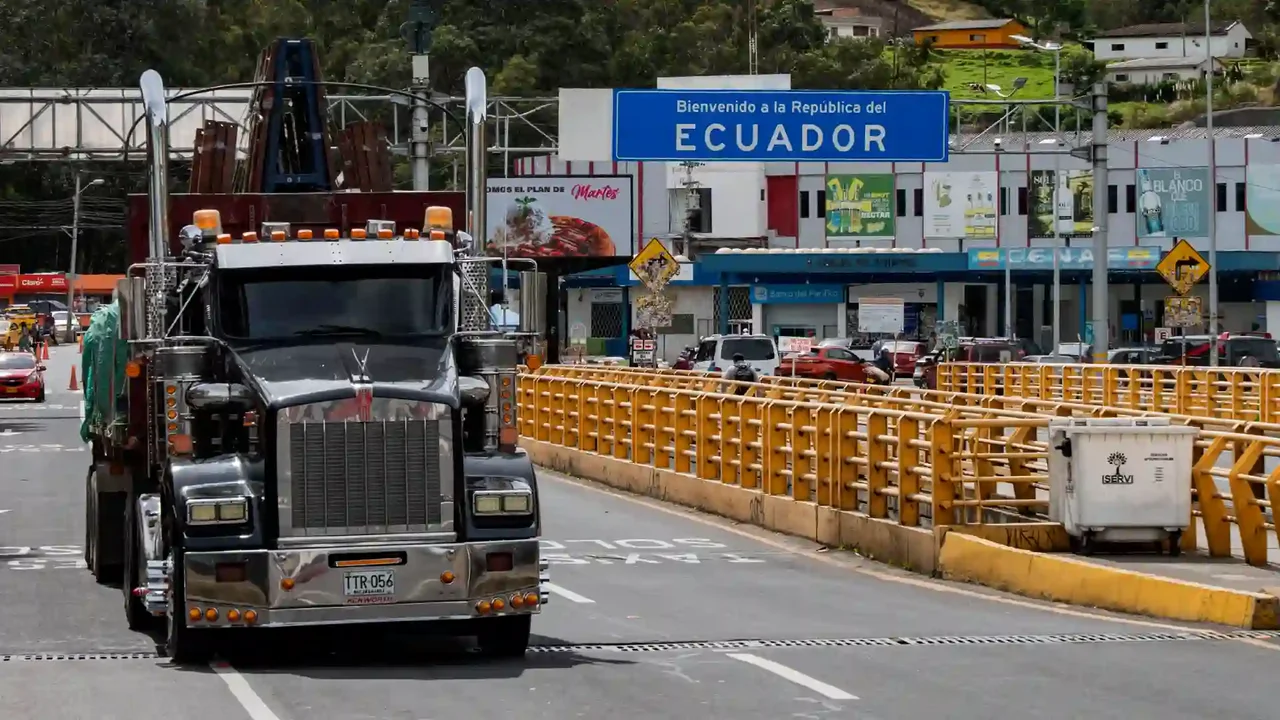
The Andean Community (CAN) has ordered both Colombia and Ecuador to lift the extraordinary tariffs and trade restrictions they imposed on each other in their recent tariff dispute, giving them a deadline of ten business days to comply. Both opposition and government‑aligned outlets agree that the measures, which in some cases reached tariff surcharges of up to 100% on bilateral trade, were found to be incompatible with the regional legal framework—specifically, to violate the rules of the Cartagena Agreement that governs the Andean integration system. Coverage from both sides notes that the dispute centered on Ecuador’s unilateral imposition of new charges on Colombian imports and Colombia’s retaliatory measures, and that the CAN’s resolutions are binding on both countries as full members of the bloc. They also concur that the purpose of the order is to halt a spiraling tariff war and re‑establish normal trade conditions across the Colombia‑Ecuador border.
Reports from both camps locate the CAN’s ruling within the broader institutional role of Andean integration mechanisms in resolving intra‑regional trade conflicts and enforcing common market rules. They agree that the case arose after Ecuador framed its measures partly as a response to security and drug‑trafficking concerns related to flows from Colombia, and that Colombia reacted with its own restrictions, turning a security‑framed move into a wider economic dispute. Both types of outlets highlight that the conflict has affected cross‑border commerce and jobs, particularly for border communities whose livelihoods depend on the fluid movement of goods and services. There is shared acknowledgment that the CAN’s intervention is designed not only to address this specific conflict but also to reinforce the principle that member states must channel trade grievances through supranational mechanisms rather than through unilateral tariff escalations.
Areas of disagreement
Responsibility and blame. Opposition outlets emphasize that the conflict was triggered by Ecuador’s unilateral decision to impose steep tariffs and other barriers under the pretext of combating drug trafficking from Colombia, casting Quito as the primary instigator and stressing that its measures clearly breached the Cartagena Agreement. Government‑aligned coverage instead presents the clash as a more balanced “tariff war,” describing it as an escalation that began with Ecuador’s security tax but was significantly aggravated by Colombia’s reciprocal tariffs, thereby distributing responsibility more evenly between both governments. While opposition pieces focus on Ecuador’s initial breach, government‑aligned stories underline that both sides contributed to prolonging the standoff and thus both must now comply with the CAN’s ruling.
Legal and institutional framing. Opposition media highlight the CAN’s finding that the tariffs were illegal under Andean law, framing the decision as a clear legal rebuke—especially to Ecuador—for undermining the regional integration regime. Government‑aligned outlets, by contrast, present the CAN more as a facilitator that “ended” the tariff war and restored order, with less accusatory language and greater emphasis on institutional mediation than on specific violations. The former stress the precedent this sets against unilateral security‑justified trade barriers, while the latter underscore the bloc’s capacity to preserve regional harmony and protect economic actors without dwelling on fault.
Economic and social impact. Opposition coverage notes the severity of the up‑to‑100% tariffs and criticizes that some punitive measures, such as higher crude transport fees and Colombia’s suspension of electricity exports to Ecuador, remain unaddressed by the CAN, implying that the economic fallout and asymmetries are still unresolved. Government‑aligned outlets focus more optimistically on the expected benefits of dismantling tariffs within the 10‑day window, spotlighting border workers and businesses that anticipate a return to normal trade and improved livelihoods once restrictions are lifted. Thus, opposition pieces stress lingering tensions and incomplete remedies, while government‑aligned reports foreground relief, recovery, and the positive outlook for cross‑border commerce.
Security rationale and narrative. Opposition sources treat Ecuador’s invocation of drug‑trafficking concerns as a questionable justification for trade sanctions, suggesting that security arguments were instrumentalized to impose protectionist or politically motivated measures against Colombian exports. Government‑aligned media, while acknowledging the security tax origin of the dispute, give it more neutral treatment and avoid directly challenging Ecuador’s stated rationale, instead quickly pivoting to the economic and legal resolution provided by the CAN. This leads opposition coverage to question the legitimacy of securitizing trade, whereas government‑aligned narratives minimize that debate in favor of highlighting institutional conflict‑management.
In summary, opposition coverage tends to foreground illegality, unilateral overreach by Ecuador, and the incomplete nature of the remedies, while government-aligned coverage tends to distribute responsibility more evenly, stress institutional problem‑solving, and highlight the hopeful economic normalization expected from the CAN’s order.