opposition
Ortega delivers more land to La India Gold mine
New concessions to India Gold S.A. raise questions due to potential ties with foreign businessmen linked to the mining sector.
a day ago
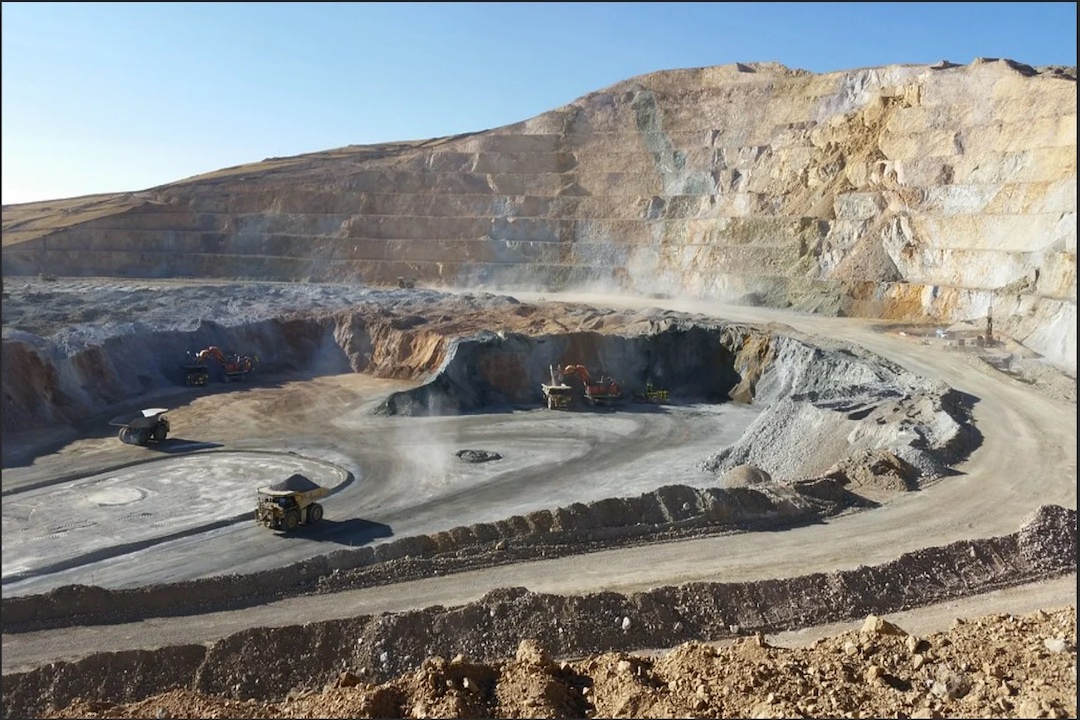
Nicaraguan media across the spectrum report that the Ortega-Murillo government has recently expanded gold mining rights for India Gold S.A., a company linked to British capital, via new concessions and renewals in multiple departments. Both sides agree that the updated package of mining rights centers on the La India project and extends across parts of León, Chinandega, and Matagalpa, with concession terms running up to 25 years and framed around industrial-scale gold exploitation amid high international gold prices. They also concur that these concessions significantly increase the total area under India Gold S.A.’s control, involving multiple mining lots and reflecting Nicaragua’s broader push to expand the gold sector as a key export earner.
Coverage from both opposition and government-aligned outlets situates these concessions within the long-running expansion of Nicaragua’s mining industry, the prominence of gold as one of the country’s top export products, and the role of foreign mining companies, particularly those of British origin like the parent company Metals Exploration. Both perspectives reference the institutional framework that allows the executive branch to grant large, long-duration concessions and highlight that this is not an isolated move but part of a pattern of enlarging mining frontiers in strategic regions. They note the broader economic context of rising global gold prices and Nicaragua’s effort to attract and retain foreign investment, as well as the environmental and social sensitivity of mining in rural and often impoverished communities that depend on land and water resources.
Scale and characterization of the concessions. Opposition outlets emphasize two new concessions totaling just over 12,000 hectares and frame them as the regime “delivering more land” to a single foreign-linked miner, stressing the incremental expansion around La India and a new Cinco Pinos I lot. Government-aligned media instead highlight a broader package of seven lots covering about 69,500 hectares, presenting it as a strategic, large-scale mining plan across three departments and underscoring the 25-year renewal for La India alongside six new concessions. While opposition pieces imply creeping territorial capture by the company, pro-government coverage portrays a coherent national development initiative anchored in substantial, planned investment.
Economic framing and beneficiaries. Opposition coverage questions who truly benefits, implying that the concessions primarily serve the Ortega-Murillo circle and foreign capital, and suggesting links to behind-the-scenes business visits by British entrepreneurs as indicators of elite dealmaking. Government-aligned sources emphasize job creation, foreign direct investment, and the potential for Nicaragua to become a gold producer “of international standards,” presenting the concessions as a rational response to high gold prices that will boost national income. The former underscores concentration of gains and opaque arrangements, while the latter stresses macroeconomic benefits, export growth, and technological modernization.
Environmental and social implications. Opposition media underscore environmentalists’ warnings, noting risks of deforestation, water contamination, and community impacts in León, Chinandega, and Matagalpa, and casting the expansion as a threat to rural livelihoods and ecosystems with limited public consultation. Government-aligned coverage either downplays or omits these environmental critiques, focusing instead on formal regulatory frameworks and the supposed modern standards of operation promised by the company, with no detailed discussion of potential harms. Thus, opposition reports center social and ecological costs, while pro-government narratives largely subsume such issues under assurances of regulated, responsible mining.
Political and institutional legitimacy. Opposition outlets portray the concessions as another example of the regime using captured state institutions to allocate natural resources without transparency, highlighting the central role of the executive and suggesting that legal processes are a façade for authoritarian control over strategic sectors. Government-aligned media describe the same institutional mechanisms in neutral or positive terms, as lawful and routine use of the country’s mining legislation and investment policies, framing the state as an active, legitimate promoter of development through partnerships with foreign firms. The former thus uses the episode to reinforce a broader narrative of authoritarian resource management, while the latter normalizes it as standard governance in pursuit of economic progress.
In summary, opposition coverage tends to frame the new India Gold S.A. concessions as opaque, politically driven expansion of foreign-controlled mining with serious social and environmental risks, while government-aligned coverage tends to present them as a lawful, large-scale development strategy aimed at leveraging high gold prices to modernize the sector and grow Nicaragua’s economy.