government-aligned
Costa Rica ignored UN report and welcomed Valdrack Jaentschke
For Nicaraguan exiles in Costa Rica, the presence of Ortega's spy chief is an alarming sign.
2 days ago
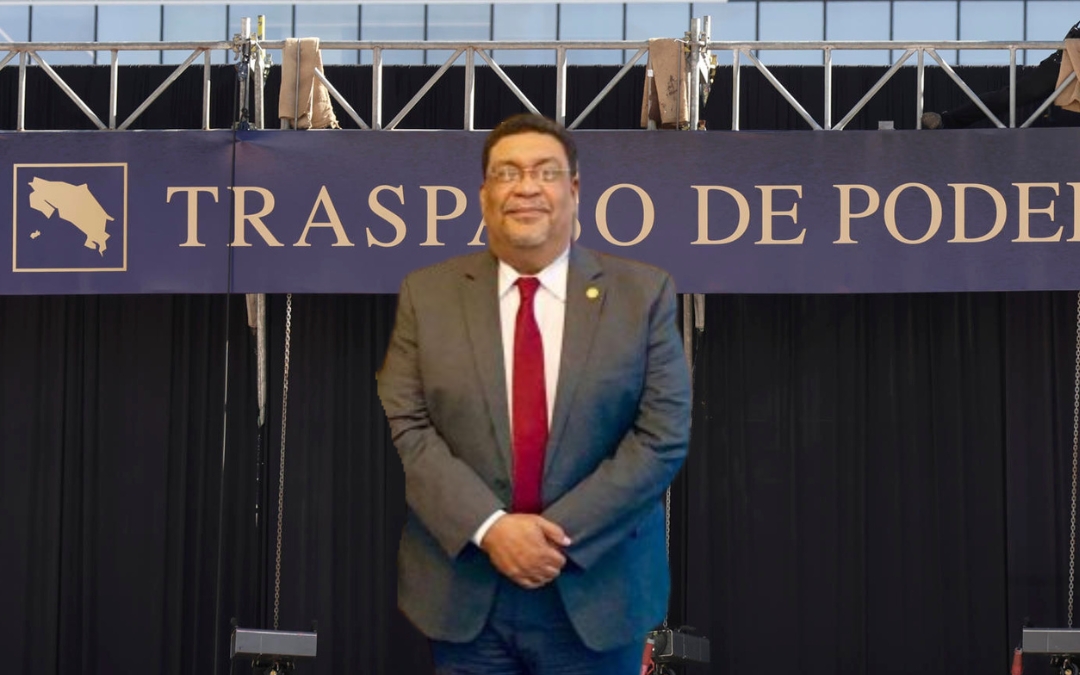
Valdrack Jaentschke, Nicaragua’s foreign minister, attended the presidential inauguration ceremony in Costa Rica for President Laura Fernández, sitting in a prominent front-row seat alongside other dignitaries. Coverage from both opposition and government-aligned sources agrees that Costa Rica allowed his participation despite a recent report by the UN Group of Human Rights Experts on Nicaragua that links Jaentschke to a high-level structure allegedly coordinating surveillance, intimidation, and broader transnational repression against exiled Nicaraguans, and that his presence drew alarm and protests from exile and opposition sectors.
Both sides also note that this is not Jaentschke’s first high-profile appearance abroad since the UN accusations, highlighting that he previously attended a presidential inauguration in Chile in a similarly visible role. They agree that Costa Rica’s decision unfolded amid ongoing international scrutiny of Nicaragua’s human rights record, and that the UN report has become a key reference point shaping regional diplomatic reactions to Nicaraguan officials, especially in countries that host large communities of Nicaraguan exiles such as Costa Rica.
Significance of Costa Rica’s decision. Opposition-aligned outlets frame Costa Rica’s decision to receive Jaentschke and seat him prominently as a serious political misstep that disregards the demands and safety concerns of Nicaraguan exiles. Government-aligned coverage presents the same decision more as an act of standard diplomatic protocol during a presidential handover, implicitly downplaying the idea that it represents endorsement of Nicaragua’s internal policies. Opposition sources emphasize that ignoring exile pleas erodes Costa Rica’s democratic credibility, whereas government-aligned narratives stress state-to-state continuity and formality.
Characterization of Jaentschke and the UN accusations. Opposition media describe Jaentschke as a key operator of “Orteguismo,” stressing his alleged role in a coordinated transnational repression network identified by UN experts. Government-aligned coverage acknowledges the existence of UN accusations but tends to couch them as claims in a report, avoiding detailed reiteration of the alleged crimes or his personal responsibility. While opposition outlets foreground the UN findings as established evidence of systematic abuse, government-aligned narratives treat them more as contested allegations that do not prevent him from fulfilling diplomatic functions.
Portrayal of victims and exiles. Opposition reporting centers Nicaraguan exiles as primary moral and political stakeholders, stressing their protests, open letters, and feelings of betrayal at seeing an alleged architect of repression honored abroad. Government-aligned outlets mention exile concern in more generic terms, portraying it as a reaction by a particular community rather than as a decisive factor that should shape Costa Rican or regional policy. Opposition narratives thus connect Jaentschke’s presence directly to ongoing harm suffered by specific individuals, while government-aligned narratives treat exile alarm as secondary to sovereign diplomatic choices.
Implications for international norms. Opposition sources argue that Costa Rica’s welcome signals a dangerous normalization of authoritarian practices and undermines international human rights mechanisms like the UN expert group. Government-aligned coverage, while noting criticism, suggests that bilateral and regional diplomacy must continue even amid disputes over human rights reports, implying that engagement does not necessarily contradict global norms. For opposition outlets this episode illustrates a broader regional pattern of impunity for Nicaraguan officials, whereas government-aligned narratives frame it as part of pragmatic coexistence in Central American diplomacy.
In summary, opposition coverage tends to treat Jaentschke’s attendance as emblematic of impunity and a betrayal of exiles and UN human rights efforts, while government-aligned coverage tends to present it as a routine diplomatic act where allegations remain secondary to protocol and interstate relations.