government-aligned
US hits the heart of the Cuban regime and companies begin to leave the country
Gaesa was already subject to U.S. sanctions. But the new measures were applied under a decree signed last week by President Donald Trump
3 days ago
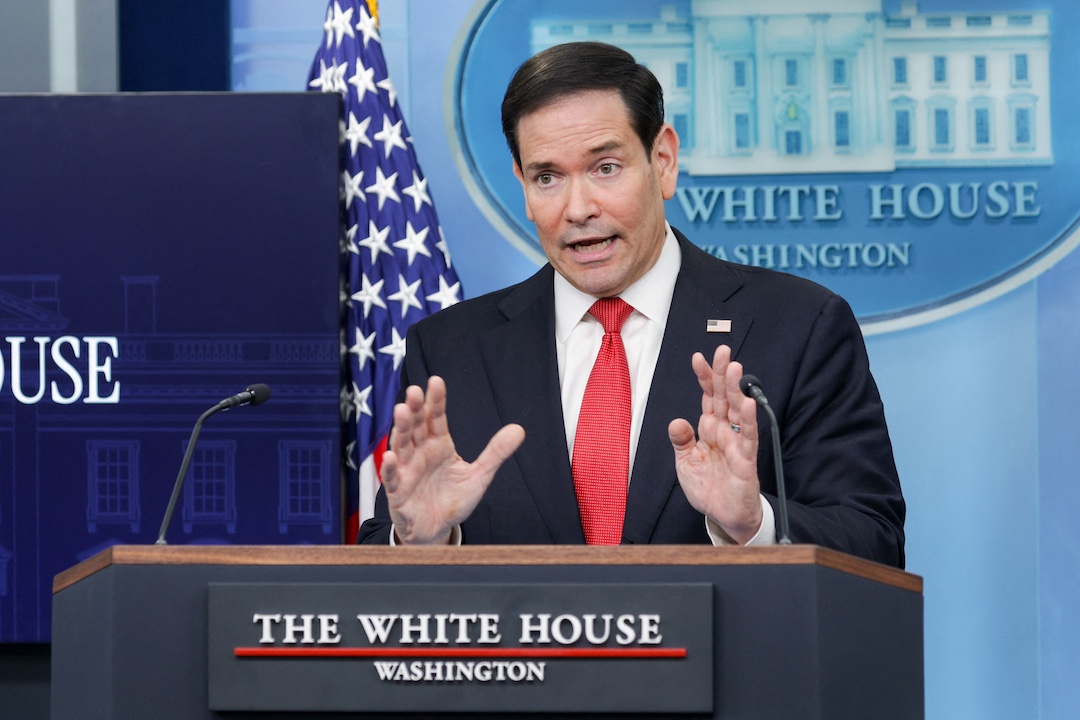
The latest US sanctions target Cuba’s military-controlled conglomerate GAESA, its director Ania (Ana Guillermina) Lastres Morera, and the state mining company Moa Nickel S.A., a joint venture with Canadian firm Sherritt International, under a new executive order signed on May 1, 2026. Both opposition and government-aligned outlets report that GAESA, tied to the Revolutionary Armed Forces and estimated to control a large share of the Cuban economy (around 40% in some accounts), is now subject to asset-freeze risks and restrictions, with immediate fallout including Sherritt’s suspension of its direct participation in Cuban joint ventures and announcements of its departure from the island. Coverage on both sides notes that the measures were announced by senior US officials, are framed by Washington as part of broader national security and anti-corruption efforts, and represent a clear escalation of already tense US–Cuba relations affecting critical sectors such as tourism, trade, finance, and mining.
Across both opposition and government-aligned reporting, GAESA is consistently described as the central economic arm of the Cuban state and military, with extensive control over foreign currency–earning sectors and strategic enterprises. Both sides agree that the sanctions are designed to choke off financial resources to the Cuban government and its elites, and that Moa Nickel and other entities are implicated because of their participation in ventures involving expropriated US assets and key export industries. The shared context emphasizes that these measures are part of a broader US policy line under President Donald Trump to increase pressure on what Washington labels authoritarian regimes in Latin America—especially Cuba, Venezuela, and Nicaragua—and that Havana officially interprets the sanctions as part of a long-standing pattern of economic hostility from the United States.
Legitimacy and intent of sanctions. Opposition outlets generally portray the sanctions as a justified, rules-based response aimed at holding the Cuban regime accountable for repression, corruption, and the misuse of state-controlled conglomerates like GAESA. They accept or echo the US framing that the measures defend national security and protect against illicit enrichment derived from expropriated assets and opaque military-controlled enterprises. Government-aligned coverage, by contrast, stresses Cuban officials’ denunciations, describing the sanctions as illegal, immoral, and tantamount to “international crimes” or evidence of “genocidal intent” against the island’s population.
Impact on the Cuban population and economy. Opposition reporting emphasizes the sanctions as targeted at regime elites and military enterprises, arguing that any economic disruption is a necessary pressure point on those who benefit from GAESA’s dominance, not an attack on ordinary Cubans. Articles in this camp highlight the conglomerate’s concentration of wealth and foreign currency, suggesting that reducing its income could eventually open space for fairer economic arrangements. Government-aligned outlets instead foreground probable harm to the broader economy and everyday life, warning that the exit of companies like Sherritt and constraints on key sectors such as mining and tourism will deepen shortages and hardship, for which they explicitly blame Washington’s coercive policy.
Characterization of GAESA and the Cuban state. Opposition sources depict GAESA as a powerful, opaque hub of the military and Communist Party elite that monopolizes strategic sectors for a “corrupt” ruling class, largely at the expense of the wider population. Their coverage ties GAESA’s role to systemic repression and lack of transparency, casting the sanctions as a strike at the financial backbone of an authoritarian regime. Government-aligned reports, while acknowledging GAESA’s central economic role, tend to frame it as a sovereign state enterprise vital to national development and resistance to US pressure, implying that the conglomerate’s success underpins social programs and national independence rather than elite enrichment.
Geopolitical framing and escalation. Opposition-aligned media place the sanctions within a wider strategy of confronting authoritarian allies of US adversaries, stressing Cuba’s role as a platform for foreign intelligence and military operations and grouping it with Venezuela and Nicaragua. They tend to view this as a necessary recalibration of regional policy to contain hostile influence and curb impunity. Government-aligned coverage instead presents the move as another step in a long history of US aggression against Cuba, suggesting it is driven by domestic US politics, ideological hostility to socialism, and an attempt to destabilize the island’s government rather than any genuine security concern.
In summary, opposition coverage tends to frame the sanctions as a legitimate, targeted attempt to curtail a corrupt military-economic apparatus and pressure an authoritarian regime, while government-aligned coverage tends to depict them as unlawful, politically motivated aggression that harms the Cuban people and threatens the country’s sovereign development.