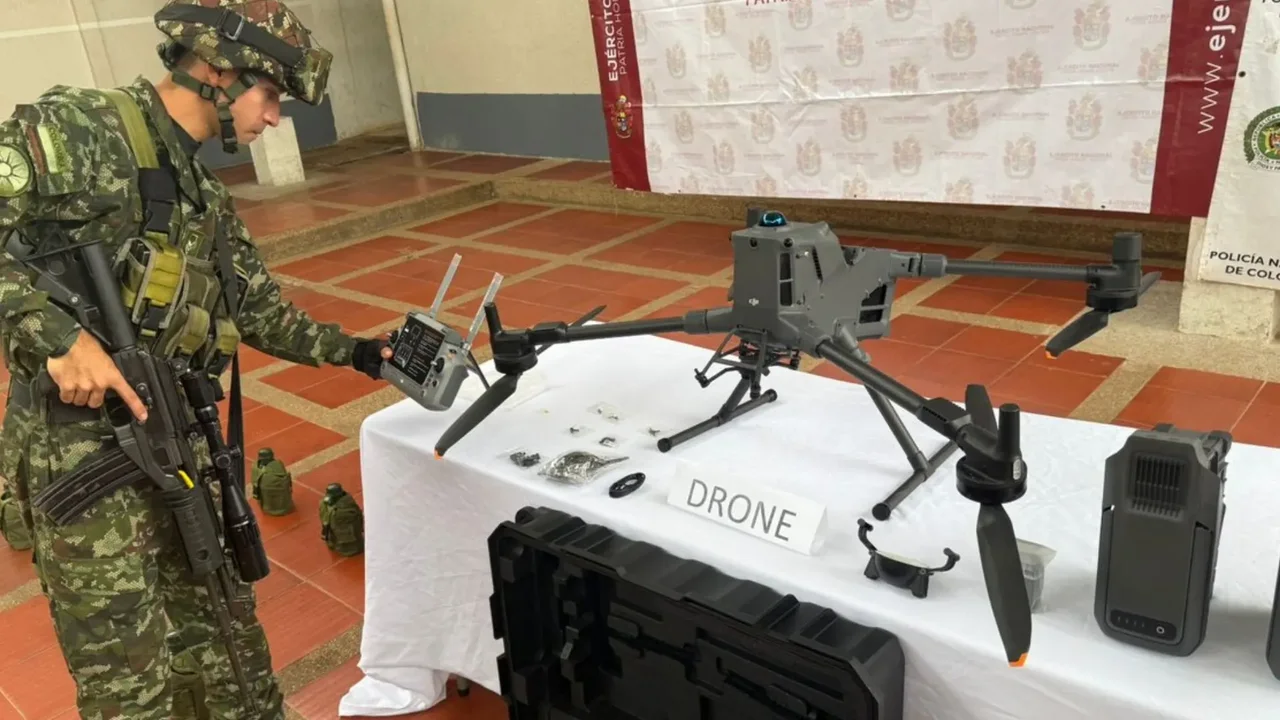
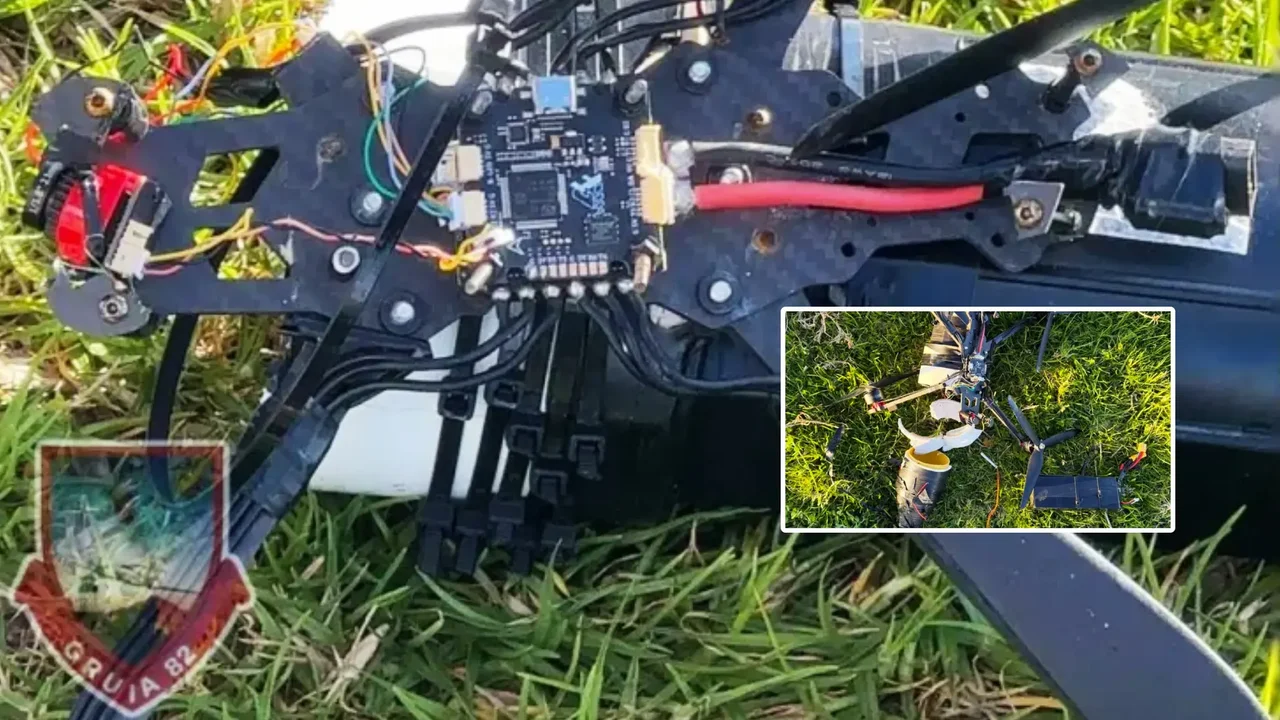
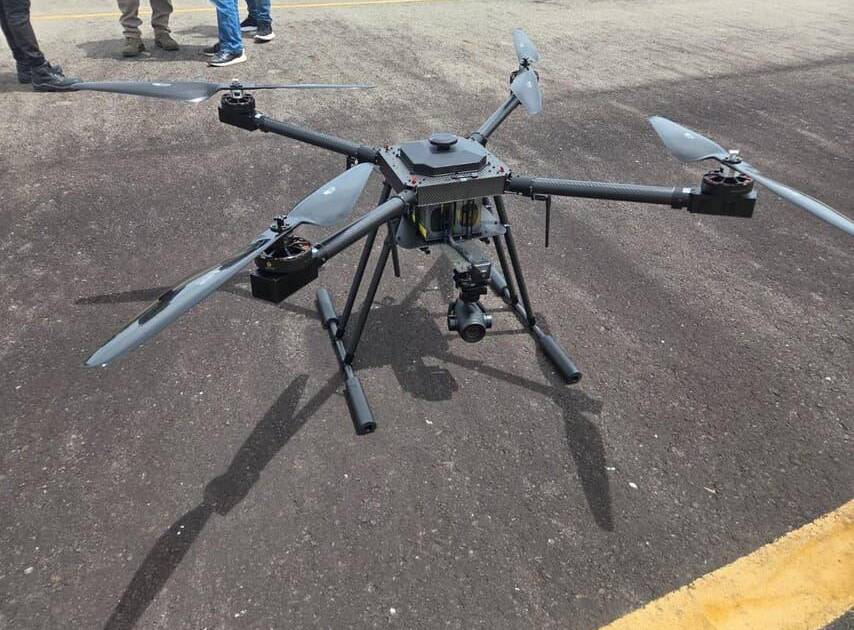
Authorities in Colombia reported the discovery of a drone carrying explosives in the vicinity of the Catam military base and between Bogotá and Mosquera, approximately 5.4 kilometers from the Catam military ramp. Both opposition and government-aligned outlets agree that the aircraft was adapted to carry an explosive load, that anti-explosives units from the National Police intervened to secure and deactivate the device, and that the alert was triggered following investigative information relayed by the Popayán Prosecutor's Office. Reports converge on the drone being an advanced, modified platform rather than a toy device, and they agree that its proximity to strategic infrastructure around Bogotá, including air operations linked to Catam and El Dorado, generated significant security concerns and prompted a rapid official response.
Coverage also aligns on broader contextual elements: the incident is framed within rising anxieties over the misuse of commercial or improvised drones by illegal armed groups and criminal organizations in Colombia, as well as within a pattern of recent drone-related disruptions around Bogotá’s airspace. Both sides mention institutional actors such as the National Police, military commands, and the Prosecutor’s Office as central to detection and response, and they situate the event in an ongoing national conversation about the need to update regulations governing unmanned aircraft around sensitive military and airport facilities. There is shared acknowledgment that this episode underscores vulnerabilities in current security and air-safety regimes and is being used politically and institutionally to justify tighter control over drones.
Areas of disagreement
Nature and sophistication of the threat. Opposition-aligned outlets emphasize that the drone carried a C4 charge and highlight advanced features such as fiber optic guidance, presenting it as a highly sophisticated weapon designed to evade jamming and indicating a potentially organized, militarized actor behind it. Government-aligned outlets generally describe the payload as improvised explosives and focus less on specific materials or high-end technology, framing the device as serious but in line with broader issues of improvised explosive devices. Opposition narratives thus stress a leap in capabilities on the part of illegal armed groups, while government-aligned reporting tends to normalize it as another manifestation of existing threats.
Responsibility and political framing. Opposition coverage leans toward implying that the incident reveals shortcomings in the current government’s security strategy and preparedness, hinting that policy softness or gaps have allowed armed groups to innovate with drones. Government-aligned media avoid assigning political blame and instead attribute the risk to evolving tactics of illegal organizations, portraying the state as actively adapting and responding through coordinated security and judicial work. Where opposition voices use the event as indirect proof of deteriorating security under present leadership, government-aligned outlets cast it as evidence of the state’s vigilance and institutional capacity.
Policy response and regulation focus. Opposition-aligned sources concentrate on the operational and tactical threat, warning that technological adaptation by illegal groups is outpacing state controls and suggesting that mere regulatory tweaks will not be enough without tougher security measures. Government-aligned coverage foregrounds the legislative project to regulate drones more strictly, presenting the incident as a key argument for advancing drone regulation around airports and military bases and highlighting parliamentary and executive initiatives. As a result, opposition narratives question whether regulation alone addresses structural security gaps, while government-aligned outlets frame legal reform as the central, constructive response.
Impact on public perception and institutions. Opposition media implicitly underscore public alarm by stressing the proximity to key military infrastructure and the potential damage that could have occurred, thereby suggesting an erosion of confidence in the state’s ability to anticipate such threats. Government-aligned sources emphasize the swift coordination between the Prosecutor’s Office, National Police, and military units, portraying the episode as a success story of prevention that should reassure citizens about institutional effectiveness. Thus, opposition coverage tends to heighten perceptions of vulnerability, whereas government-aligned coverage seeks to bolster trust in security institutions.
In summary, opposition coverage tends to frame the drone incident as a sign of escalating, sophisticated threats that expose weaknesses in the government’s security approach, while government-aligned coverage tends to present it as a serious but contained event that validates existing institutional responses and supports tighter drone regulation.