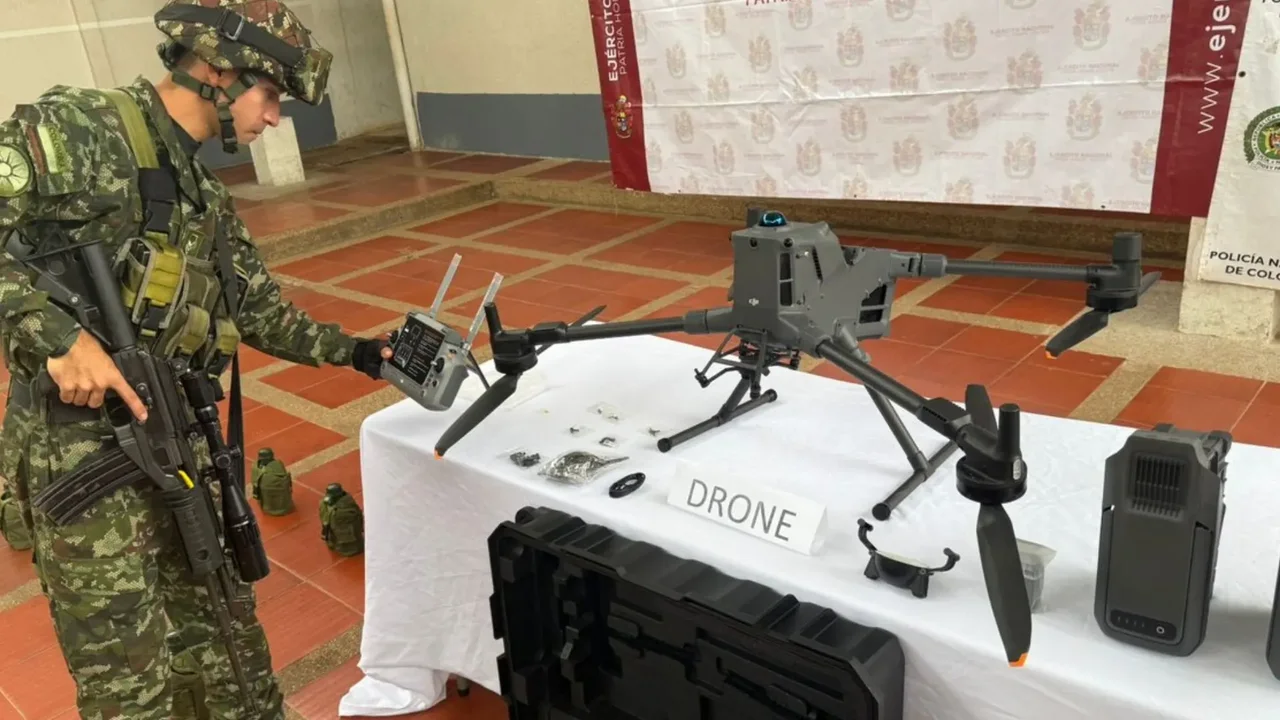
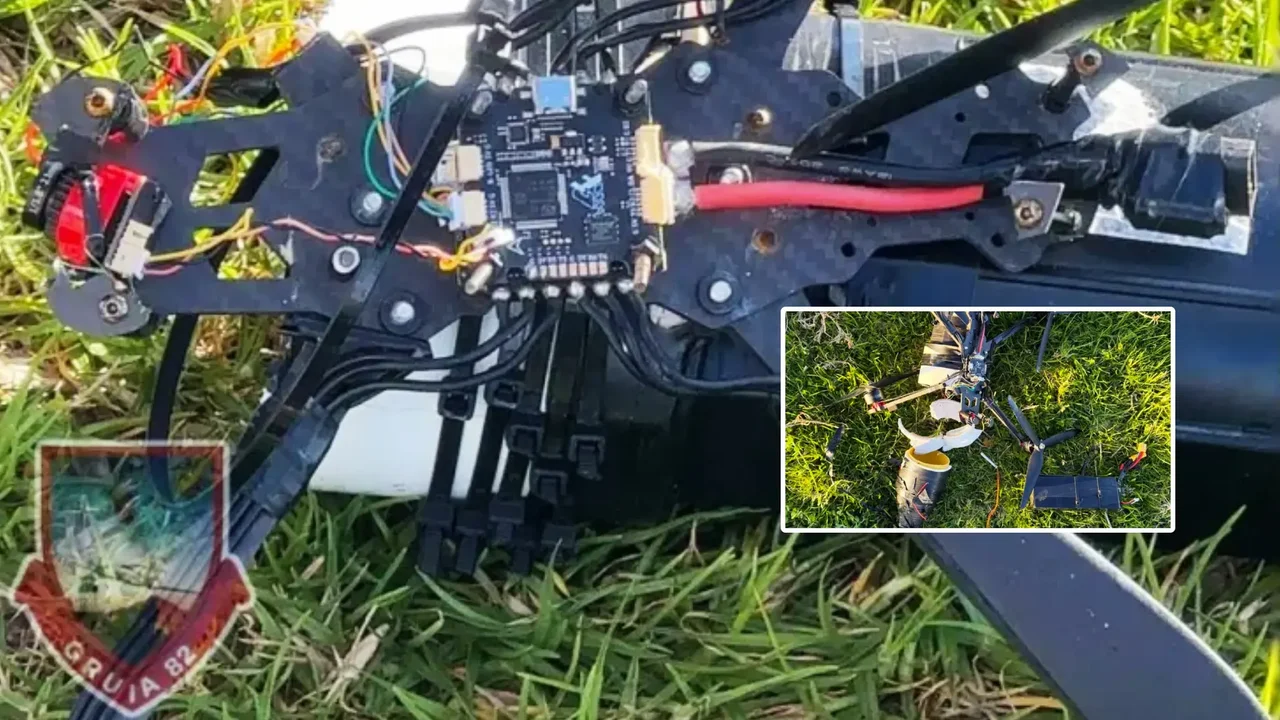
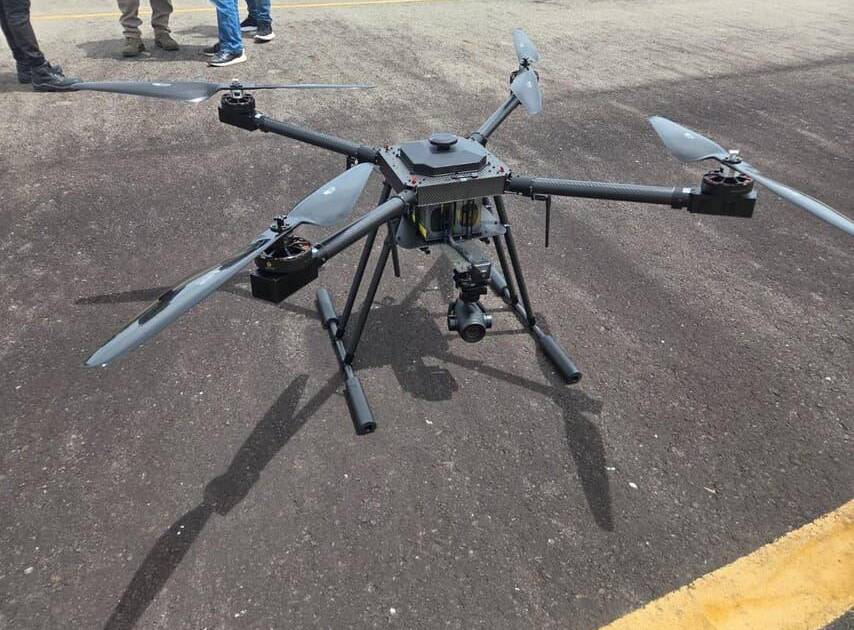
Authorities from the National Police and military sector report that a drone equipped with explosives was located and secured in the vicinity of the Catam military base area between Bogotá and Mosquera, approximately 5.4 kilometers from the Catam military ramp. Both opposition and government-aligned outlets agree that the aircraft carried an explosive load, was neutralized by anti-explosives units, and that the alert came through official investigative channels, including information relayed by the Popayán Prosecutor's Office. They concur that the device was an adapted unmanned aircraft rather than a conventional weapon, that it posed a credible security risk to a sensitive military and air operations zone, and that the incident forms part of a broader pattern of drone-related alerts affecting critical infrastructure and air operations around Bogotá.
Coverage from both sides situates the discovery within the wider context of growing drone use in Colombia and the associated security and safety challenges near airports and military installations. There is agreement that existing regulations and technical countermeasures have struggled to keep pace with increasingly sophisticated adaptations, whether for criminal or disruptive purposes. Both perspectives reference prior incidents and alerts involving drones near El Dorado airport and other strategic areas, and they describe the episode as further evidence that institutions such as the National Police, the Air Force, and prosecutors must adapt investigative, monitoring, and regulatory tools to address emerging airborne threats.
Areas of disagreement
Nature and sophistication of the device. Opposition outlets stress that the drone carried a C4 charge and highlight its advanced design, including fiber optics for guidance to potentially defeat electronic jamming, framing it as a highly engineered weapon likely linked to illegal armed groups. Government-aligned media, by contrast, describe the payload mainly as improvised explosives without dwelling on specific materials or exceptional sophistication, portraying it as a serious but manageable threat. The result is that opposition coverage underscores a leap in technical capability and danger, while government-aligned coverage emphasizes operational control and containment.
Perpetrators and security implications. Opposition reporting tends to imply, though often without naming specific organizations, that illegal armed groups or sophisticated criminal structures are experimenting with adapted drones to penetrate military defenses, raising alarms about state vulnerability. Government-aligned outlets are more cautious about attributing responsibility, focusing instead on the fact that the device was detected and neutralized, which they present as evidence that security and intelligence systems are functioning. The former therefore frames the incident as a symptom of escalating asymmetric warfare against the state, while the latter frames it as an isolated but illustrative case within a broader security-management narrative.
Policy and legislative framing. Opposition sources make only passing or indirect reference to regulation, concentrating instead on the immediate threat and technological adaptation by criminal actors, and suggesting that authorities are reacting late to a known risk. Government-aligned coverage foregrounds a bill in Congress to regulate drones, explicitly tying the incident to momentum for stricter rules around airports and military facilities and presenting legislative advances as a proactive institutional response. This leads opposition narratives to stress gaps and delays in state preparedness, while government-aligned narratives highlight ongoing reforms and regulatory strengthening.
Assessment of institutional performance. Opposition-aligned media implicitly question whether current counter-drone tactics and intelligence are sufficient, using the presence of such an armed drone so close to a major base to illustrate systemic weaknesses and the need for upgraded capabilities. Government-aligned outlets underscore the coordination between the Popayán Prosecutor's Office, the National Police, and military authorities, framing the rapid neutralization of the device as a success story that validates existing protocols. Thus, opposition coverage leans toward a critical assessment that warns of underestimation of the threat, whereas government-aligned coverage emphasizes institutional effectiveness and responsible management.
In summary, opposition coverage tends to highlight the sophistication of the explosives, the potential involvement of illegal armed groups, and perceived gaps in state preparedness, while government-aligned coverage tends to foreground successful neutralization, advancing regulatory initiatives, and the message that institutions are responding effectively to emerging drone threats.