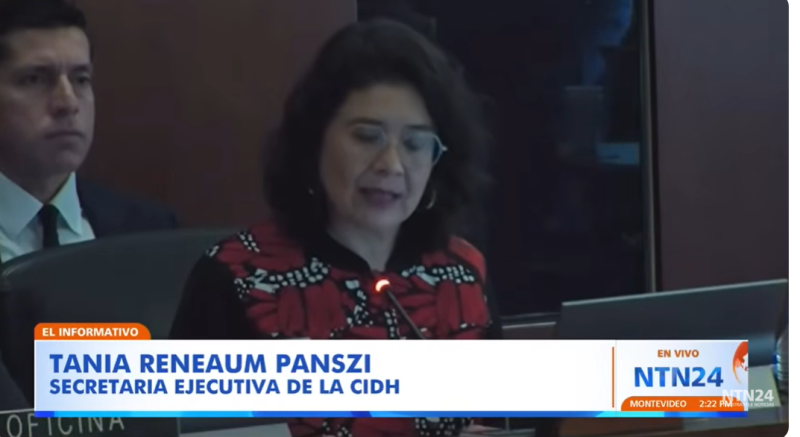
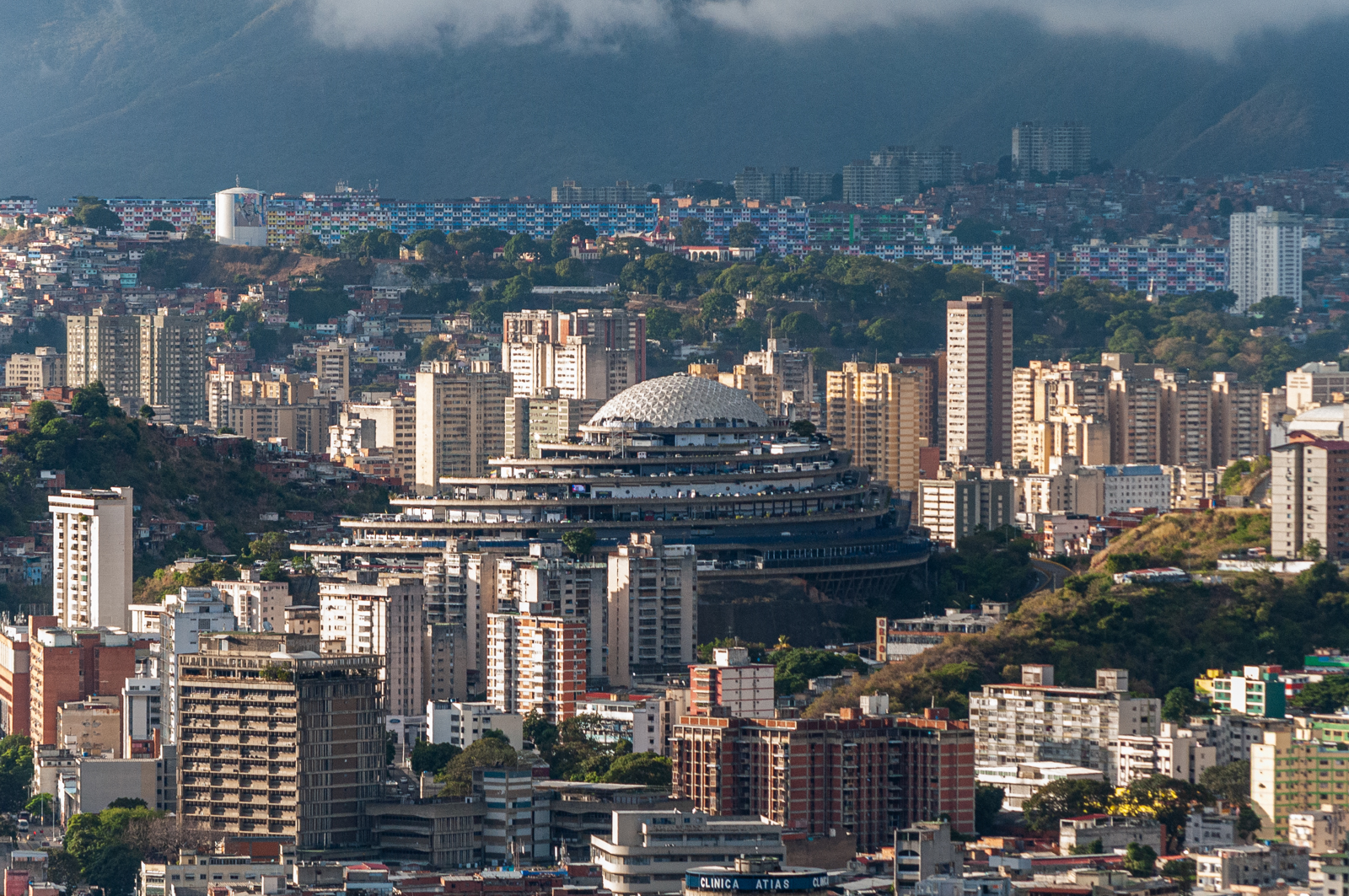
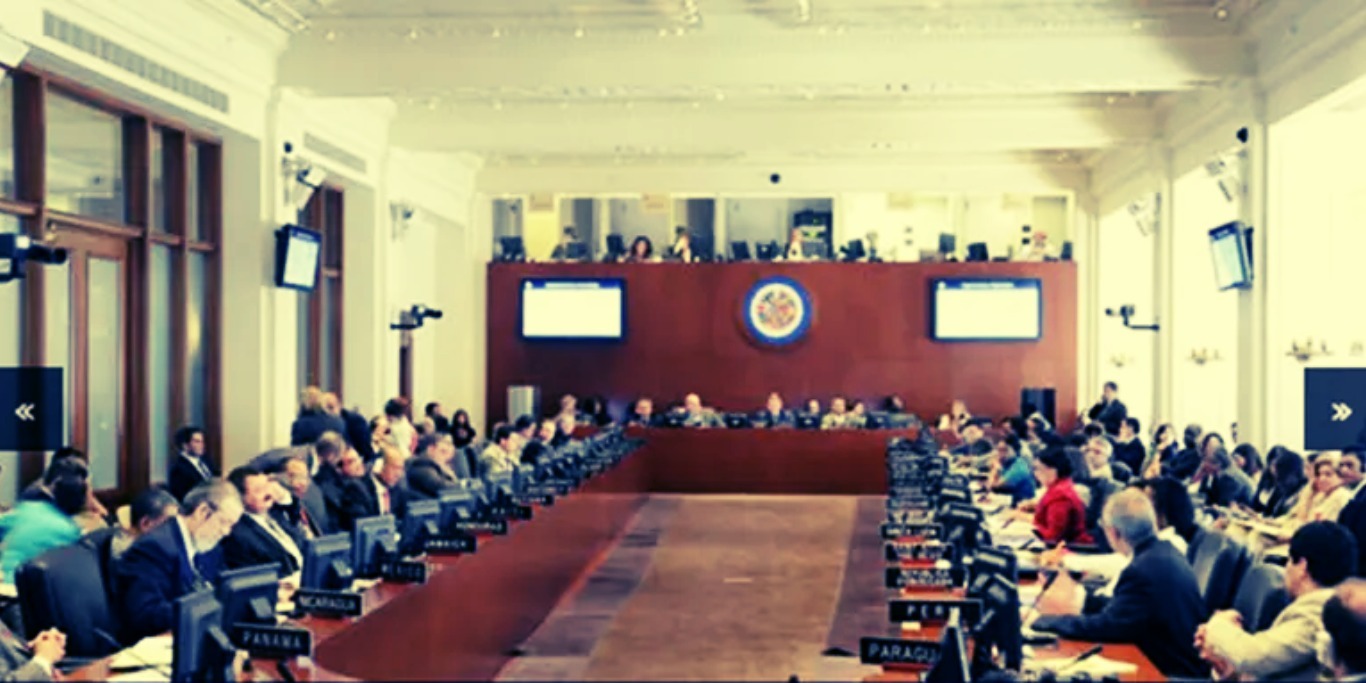
The Inter-American Commission on Human Rights (IACHR) appeared before the Permanent Council of the Organization of American States (OAS) to present a report on the human rights situation in Venezuela, focusing on people detained for political reasons. Across outlets, it is reported that the IACHR demanded the immediate and unconditional release of all such detainees, highlighted discrepancies between the number of people the authorities claim have benefited from an amnesty law and those who actually enjoy full liberty, and warned that many former prisoners remain under restrictive measures akin to supervised freedom. Coverage agrees that OAS member states, including Argentina and Canada, convened and backed scrutiny of Venezuela, that the OAS Secretary General publicly urged Venezuelan authorities to free all political prisoners without conditions, and that victims and ex‑officials have given detailed testimony about alleged torture, disappearances, and ill-treatment in detention centers such as El Helicoide.
Media on both sides acknowledge that the IACHR framed the detentions and abuses as part of a broader human rights and rule‑of‑law crisis in Venezuela, rather than a set of isolated cases. It is consistently noted that the IACHR described repression, arbitrary detentions, and forced disappearances as elements of a state policy and called for structural changes, including an end to arbitrary detention practices, transparency on the official list of prisoners and beneficiaries of the amnesty law, and permission for an in loco visit. Outlets also concur that these developments are tied to the wider regional concern over democratic stability and human rights, with the OAS and IACHR portrayed as key multilateral actors using both political and legal tools to pressure Venezuela. Both perspectives further agree that opposition figures like María Corina Machado have linked the dismantling of the repressive apparatus and the release of more than 500 alleged political prisoners to any credible democratic transition in the country.
Areas of disagreement
Nature of political prisoners and repression. Opposition-aligned sources present political prisoners as victims of a systematic, centrally ordered repression apparatus whose sole purpose is to neutralize dissent and maintain the Maduro government in power, often citing survivor testimony and the IACHR’s language that repression is state policy. Government-aligned outlets, when they echo the IACHR proceedings, tend to use more institutional and legal language, downplaying or omitting direct references to the government’s intent and often framing cases as disputed or under judicial review. While opposition coverage emphasizes a pattern of torture, disappearances, and fabricated charges, government-aligned reporting is more likely to stress procedural aspects of cases and avoid labeling detainees as unequivocally political.
Characterization of the amnesty law and "freedom" figures. Opposition outlets highlight the IACHR’s criticism that the amnesty framework is largely cosmetic, underscoring that many released individuals remain under surveillance, travel bans, or conditional measures, and that the real number of people with full liberty is far below official claims. Government-aligned coverage, by contrast, frames the amnesty law as proof of institutional goodwill and a step toward reconciliation, often repeating higher official figures and stressing that the law is being implemented in stages. Opposition media cast the mismatch in numbers as evidence of systematic deception by authorities, whereas government-aligned pieces treat discrepancies more as technical or administrative issues rather than deliberate manipulation.
Responsibility and international pressure. Opposition-aligned sources explicitly assign responsibility for arbitrary detentions and abuses to the Maduro government (and to figures like Delcy Rodríguez), welcoming OAS and IACHR pressure as vital leverage to force change and protect victims. Government-aligned outlets covering the OAS debate tend to dilute direct attribution of blame, placing emphasis on the role of foreign governments, such as Argentina and Canada, and multilateral organs, and sometimes implying that external actors are politicizing human rights to isolate Venezuela. Where opposition media describe international engagement as solidarity with Venezuelan democracy, government-leaning narratives more often hint at interference or geopolitical agendas behind the calls for prisoner releases.
Political transition and future reforms. Opposition coverage treats the release of more than 500 alleged political prisoners as a non-negotiable prerequisite for any genuine democratic transition, echoing María Corina Machado’s argument that the repressive apparatus must be dismantled before fair elections or reforms are possible. Government-aligned sources, while acknowledging discussions about prisoners and reforms, typically fold them into a broader, more gradual account of institutional evolution, balancing human rights concerns with stability and sovereignty narratives. Opposition outlets frame IACHR and OAS demands as aligned with the Venezuelan people’s push for regime change, whereas government-aligned reporting portrays them as one component among many in an ongoing, state-led process of legal and political adjustments.
In summary, opposition coverage tends to cast the IACHR’s intervention as confirmation of a deliberate state policy of repression and as leverage to force an immediate, wholesale release of political prisoners and rapid democratic change, while government-aligned coverage tends to institutionalize and soften the same events, presenting the amnesty law and ongoing discussions as controlled, sovereign reforms in which discrepancies and abuses are technical problems rather than proof of a repressive regime.