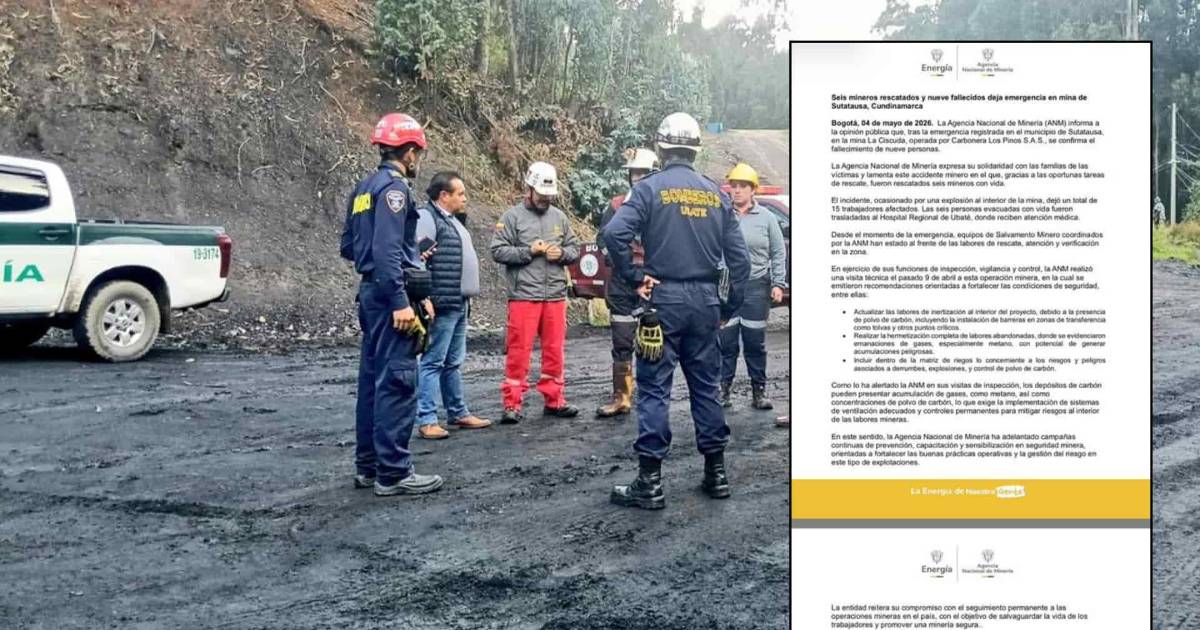
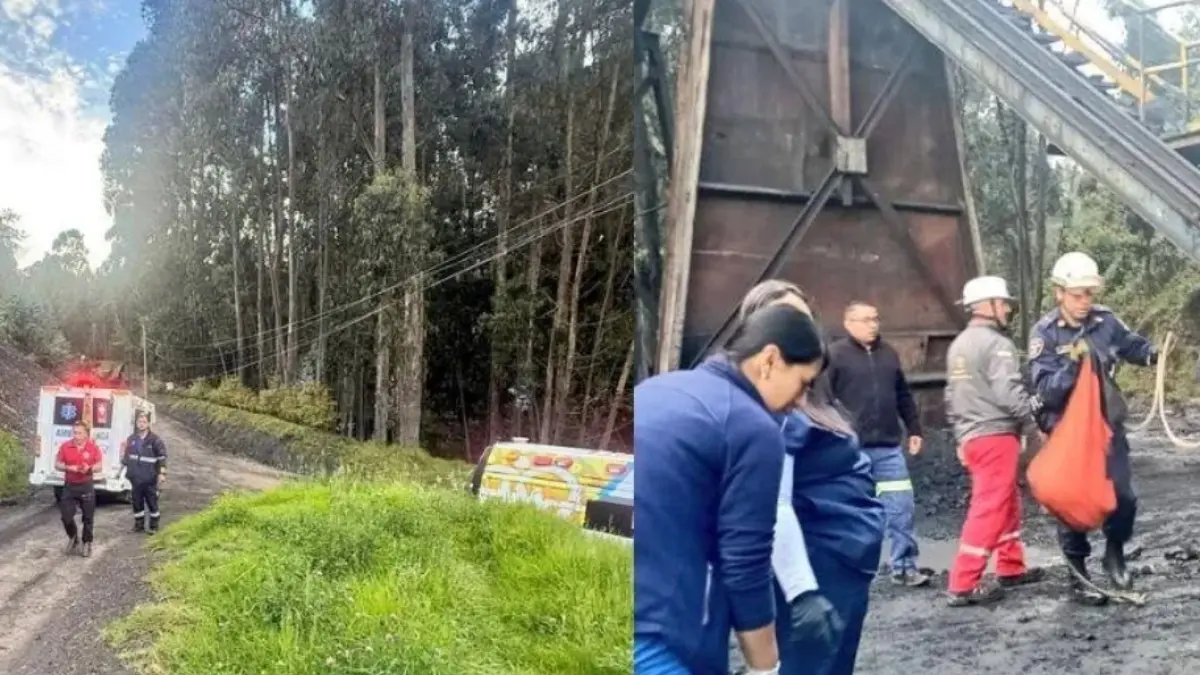
Nine miners were killed and six others injured or rescued alive after an explosion in the P3 La Ciscuda coal mine in Sutatausa, Cundinamarca, central Colombia, on or around May 4. Both opposition and government-aligned outlets agree that the blast occurred hundreds of meters underground, that emergency and rescue teams were rapidly deployed, and that the National Mining Agency (ANM) is the lead authority for technical information about the disaster and for the formal investigation into what happened.
Across both types of outlets, coverage situates the explosion within a broader pattern of recurrent mining accidents in Colombia, often linked to gas buildup, coal dust, and ventilation failures in underground coal operations. The role of the ANM is consistently described as that of the regulator that inspects mines, issues technical recommendations, and now investigates this specific case, while the tragedy is framed as another example of structural safety deficits in the country’s mining sector and the need for more effective enforcement and reforms to prevent similar incidents.
Areas of disagreement
Responsibility and blame. Opposition-aligned sources emphasize that the ANM had already identified serious safety flaws at La Ciscuda, including risks from methane, coal dust, and abandoned tunnels, and they frame the tragedy as the foreseeable consequence of ignored warnings and weak enforcement. Government-aligned outlets mention regulatory involvement but lean toward describing the accident as the result of gas accumulation typical of high-risk underground mining, presenting it more as part of a structural safety problem than a specific failure by current authorities. The opposition narrative thus personalizes accountability toward operators and oversight agencies, whereas government-aligned coverage diffuses responsibility across longstanding sector-wide conditions.
Regulatory performance and prior warnings. Opposition coverage dwells on prior ANM inspections and recommendations, stressing that concrete ventilation and safety improvements were requested before the explosion and implying that official follow-up and compliance checks were insufficient. Government-aligned reports acknowledge ANM’s technical role and the opening of a formal investigation but focus less on the detailed history of warnings and more on the present response, portraying institutions as active and engaged in clarifying causes. This creates a contrast between a backward-looking focus on missed red flags and a forward-looking emphasis on current procedural steps.
Characterization of the tragedy. Opposition outlets frame the event as an avoidable disaster that exposes chronic negligence in mine safety oversight and the failure to correct known hazards at a specific site. Government-aligned outlets frame it primarily as a tragic but emblematic incident within an inherently dangerous industry that has repeatedly suffered accidents from gas buildup and inadequate ventilation, using it to underscore general safety challenges rather than a singular regulatory lapse. As a result, opposition narratives sharpen the sense that this mine should never have been operating under such conditions, while government-aligned narratives highlight systemic risk and the need for broader improvements.
Political and policy implications. Opposition coverage implicitly links the explosion to shortcomings in the current administration’s capacity or will to enforce mining regulations, suggesting that tragedies like Sutatausa are evidence that institutional reforms and stricter oversight are overdue and have not been effectively implemented. Government-aligned sources place more emphasis on ongoing investigations, rescue efforts, and the structural danger of underground mining, implicitly aligning the event with the government’s broader agenda of improving safety rather than directly criticizing existing policies. Thus, the opposition uses the incident to pressure authorities for accountability and change, while government-aligned reporting frames it as a test of institutional response within a long-running national challenge.
In summary, opposition coverage tends to depict the Sutatausa explosion as an avoidable tragedy rooted in ignored ANM warnings and regulatory failures at a specific mine, while government-aligned coverage tends to portray it as a tragic but emblematic accident of a historically risky sector, emphasizing institutional response and systemic conditions over individualized blame.