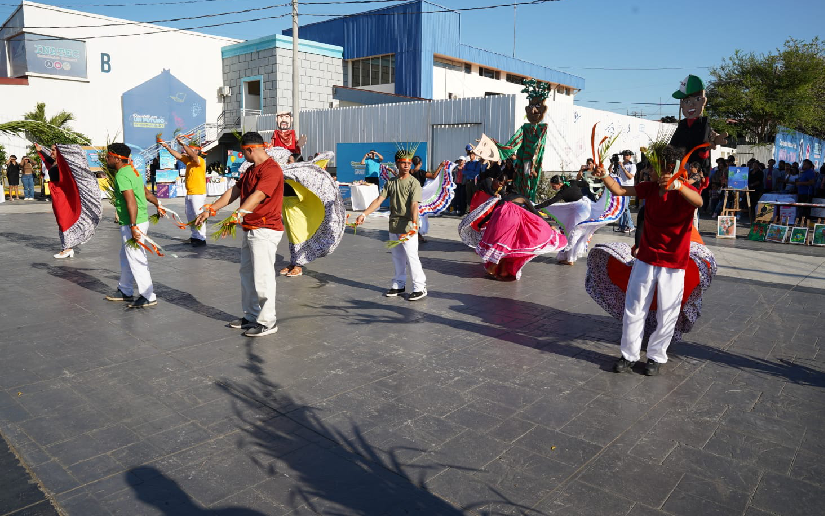
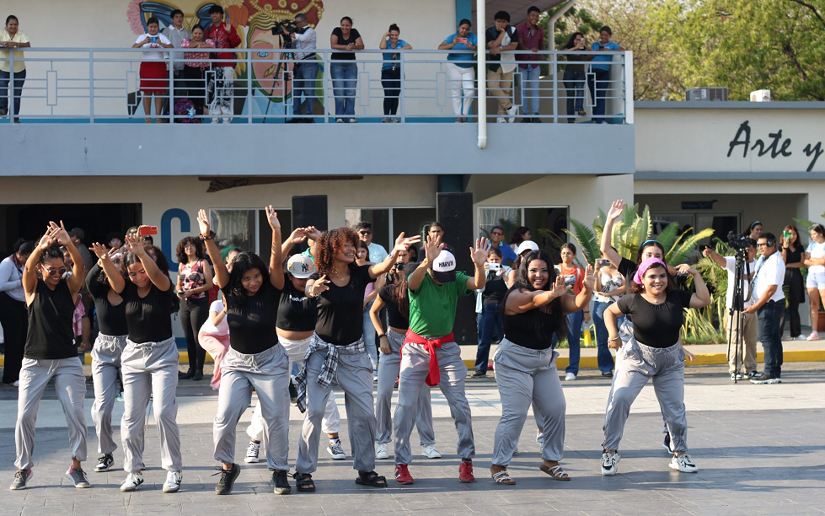
The José Coronel Urtecho Cultural and Polytechnic Center in Nicaragua is marking its third anniversary, commemorating three years of operation since its founding on April 19, 2023. Across coverage, there is agreement that the center combines cultural and technical training, offers free access to students and participants, and has expanded significantly in scope: government figures cited in all reports describe growth from 27 to 39 art courses and from 6 to 15 technical careers, reaching more than 33,500 people. Media from both camps describe anniversary activities centered on a TEC Urbano Festival, featuring mechanical and technological demonstrations as well as urban art forms such as dance and graffiti, with around 900 current students actively involved in the celebration.
Both sides also reference the center’s institutional role within a broader government-backed education and culture framework, framed as part of a national push to expand technical training and artistic opportunities for youth. There is shared acknowledgment that the center functions as a hub for creative expression, skills certification, and community gathering, and that it fits into a trend of multiplying technical and cultural venues tied to public education programs. Coverage converges on the idea that the institution is intended to promote employability, foster artistic talent, and provide a structured, relatively safe environment for young people to study and develop, with the anniversary used as a moment to highlight its trajectory and visibility within the country’s cultural and training landscape.
Areas of disagreement
Purpose and significance. Opposition-aligned sources tend to portray the anniversary as a largely propagandistic showcase, arguing that the celebration is designed to project normality and success while broader educational and cultural sectors face underfunding and repression. Government-aligned media, in contrast, present the center as tangible proof of policy success, emphasizing its rapid expansion in courses and enrollment and treating the anniversary as a milestone in guaranteeing rights to free education and culture. While opposition outlets question whether the center’s impact matches the official narrative, government-aligned reports stress that high participation numbers and visible youth engagement validate its core mission.
Political framing. Opposition coverage emphasizes the political branding surrounding the center, suggesting that events like the TEC Urbano Festival are tightly scripted to showcase loyalty to the current administration and to crowd out independent cultural initiatives. Government-aligned outlets frame the same imagery as evidence of a harmonious alliance between youth, state, and community, repeatedly highlighting gratitude to leaders and the supposed continuity of peace and stability. Where opposition media see political instrumentalization of culture and training, government-aligned sources portray a depoliticized celebration of national values and opportunities.
Accessibility and representation. Opposition-aligned reporting tends to question how inclusive the center truly is, raising doubts about whether access is equitable across social classes, regions, and political affiliations, and whether critical or independent artistic expressions are welcome. Government-aligned outlets insist that the education and activities are free and open to all, stressing large aggregate participation figures and diverse disciplines as proof of broad inclusion. Thus, opposition narratives focus on what may be excluded or curated out of the official showcase, whereas government-aligned narratives highlight numerical reach and testimonial praise as evidence of genuine universality.
Impact and quality. Opposition sources often cast doubt on the depth of technical training and the real employment outcomes for graduates, hinting that the center’s certifications may not translate into stable jobs or genuine cultural careers. Government-aligned coverage instead underscores the number of technical programs, the modern equipment, and students’ statements about learning and innovation, presenting the institution as delivering high-quality, market-relevant skills. As opposition outlets question whether the center’s impact is more symbolic than structural, government-aligned media insist that it materially improves prospects for thousands of young people.
In summary, opposition coverage tends to treat the José Coronel Urtecho Center’s third anniversary as a stage-managed event that overstates inclusivity and impact, while government-aligned coverage tends to depict it as a flagship, genuinely transformative project that expands free cultural and technical education for Nicaraguan youth.