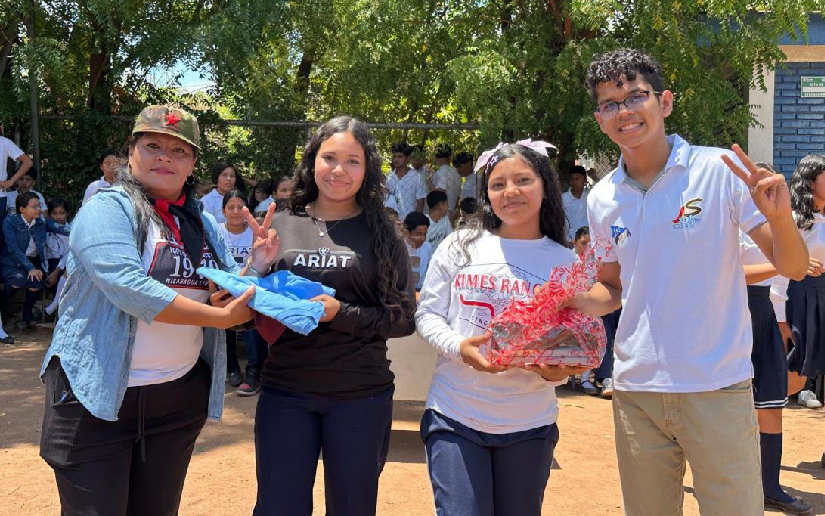
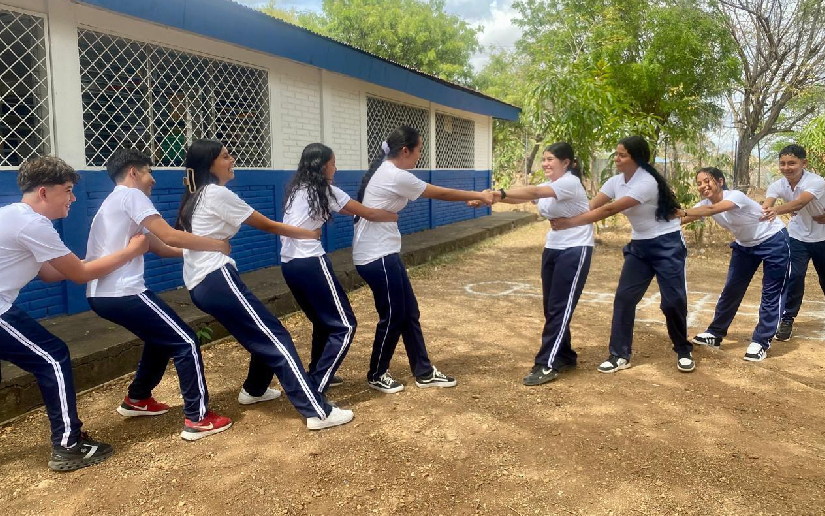
Across Nicaraguan cities and departments such as Granada, Carazo, Madriz, and the South Caribbean Coast, media on both sides acknowledge that student-focused festivals have recently been held in secondary schools. They agree that these activities included dance contests, karaoke, games or "dynamics," and various sports, and that they were organized for adolescents and young people enrolled in the public education system. Both perspectives concur that the events were branded explicitly as celebrating peace and student life, were coordinated at the school level with visible participation from students and teachers, and took place over a concentrated period rather than as isolated, one-off events.
Coverage from all sides also recognizes that these festivals are framed within Nicaragua’s broader education and youth policies, in which schools function as key venues for civic and cultural activities, not just formal instruction. Both opposition and government-aligned outlets describe the events as part of an ongoing pattern of state-involved youth programming that frequently uses peace, convivencia, and national symbols as unifying themes. There is shared acknowledgment that institutions such as the Ministry of Education and local municipal authorities play organizing or facilitating roles, and that the festivals are meant to project an image of social stability, community participation, and continued schooling for Nicaraguan youth.
Areas of disagreement
Meaning of “peace.” Opposition-aligned sources tend to question the official use of the word "peace," suggesting it functions as a political slogan that obscures underlying repression, unresolved conflicts from the 2018 protests, and limits on civil liberties around schools and public gatherings. Government-aligned outlets, by contrast, present peace as a tangible reality achieved under the current administration, emphasizing safe campuses, the absence of visible street conflict, and students’ ability to gather for cultural and sports activities without disruption.
Spontaneity versus orchestration. Opposition coverage typically portrays these student festivals as highly orchestrated events promoted from above, implying that school administrations and local party structures mobilize students and staff to generate images of mass support and normality. Government-aligned media depict the festivals as organic expressions of student enthusiasm, highlighting voluntary participation, creative initiatives from youth groups, and community pride in local school achievements.
Political messaging in education spaces. Opposition outlets often argue that such festivals are another example of the politicization of the public school system, alleging that official slogans, symbols, and narratives are embedded into cultural activities and that dissenting or apolitical voices feel pressured to conform. Government-aligned coverage instead describes the same events as neutral or patriotic celebrations, stressing values like unity, national identity, and social cohesion, while downplaying or ignoring any explicitly partisan content.
Social reality behind the images. Opposition reporting tends to juxtapose images of joyful festivals with descriptions of economic hardship, migration, and fear of political persecution, asserting that the festivities mask structural problems facing students and their families. Government-aligned media, on the other hand, use the events as proof of improving conditions for youth, linking them to investments in education, community security, and infrastructure, and largely omitting references to emigration pressures or political risks.
In summary, opposition coverage tends to cast the student peace festivals as carefully staged, politically instrumental events that conflict with a more troubled social and political reality, while government-aligned coverage tends to frame them as genuine, grassroots celebrations of stability, educational opportunity, and harmonious daily life for Nicaraguan youth.