government-aligned
Tribute to Yuri Gagarin, the First Man in Space
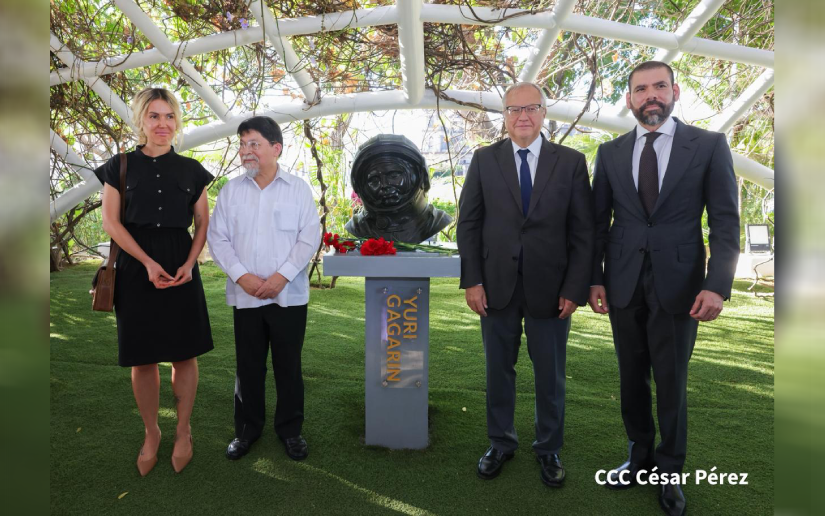
In the framework of the celebration of Cosmonautics Day and the 65th anniversary of the first manned space flight, authorities from the Russian Embassy.
a month ago
Tributes marking the 65th anniversary of Yuri Gagarin’s 12 April 1961 flight, the first human journey into outer space, are being reported as solemn, celebratory events held by Russian state institutions and diplomatic missions abroad, including embassies. Coverage emphasizes Cosmonautics Day as the central commemorative date, with ceremonies highlighting Gagarin’s role as the first man in space and referencing related milestones such as the launch of the first satellite, early animal missions, and subsequent Soviet space achievements. Both opposition and government‑aligned outlets agree on the basic chronology of Gagarin’s flight, his global fame following the mission, and his tours to dozens of countries, including Mexico and others that recognized his achievement.
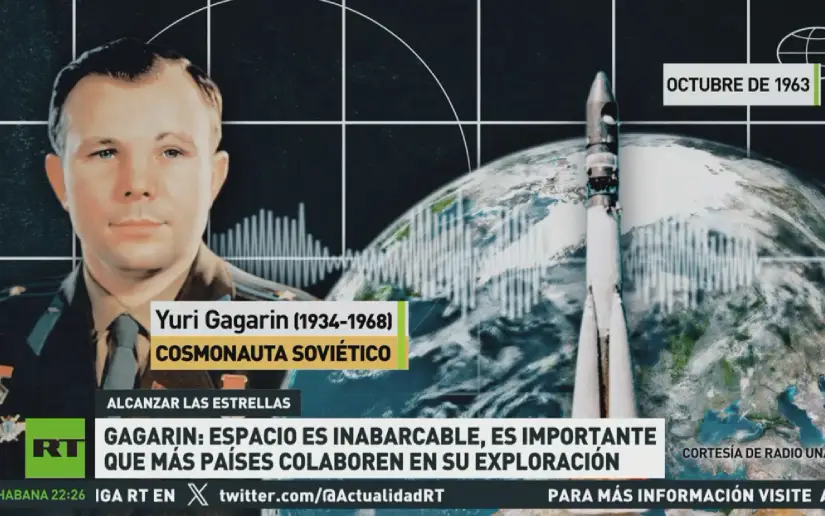
Across the spectrum, media describe these tributes within a broader historical arc of Soviet and Russian contributions to space exploration, noting the legacy of early space technology for present‑day communications, navigation, and scientific research. There is shared acknowledgment of key figures and institutions, such as designers like Sergey Korolev and the Soviet space program’s foundational role in shaping global space efforts, along with a general consensus that international cooperation is now a practical necessity for complex missions. Both sides cite Gagarin’s own rhetoric about the immeasurable nature of space and the importance of scientific collaboration among nations, framing his image as a symbol of human curiosity, technological progress, and the enduring relevance of space exploration for current and future generations.
Framing of Gagarin’s legacy. Government‑aligned coverage presents Gagarin chiefly as a unifying national hero whose feat confirms Russia’s historic leadership in space and underpins contemporary state prestige, stressing pride, continuity, and loyalty to the Soviet and Russian space tradition. Opposition‑aligned outlets, while not disputing his heroism, tend to universalize his legacy as belonging to humanity rather than to a single state, and are more likely to emphasize the scientific and ethical significance over patriotic messaging. They may highlight how Gagarin’s global tour and popularity abroad illustrate a broader human story that transcends current Russian political narratives.
Use of history for present‑day legitimacy. Government‑aligned media frequently connect the anniversary tributes to the current Russian space program, arguing that today’s policies and institutions are natural heirs to Soviet breakthroughs and using the commemoration to validate ongoing government priorities. Opposition sources are more inclined to question this direct line of succession, contrasting past achievements with present funding levels, institutional problems, or international isolation, and suggesting that the state leans on historical glory to compensate for contemporary shortcomings. This leads to divergent evaluations of whether current space policy lives up to Gagarin’s legacy.
Narrative on international cooperation. In government‑aligned reporting, references to Gagarin’s calls for collaboration and quotations from figures like Korolev are used to stress Russia’s openness to partnership, framing Moscow as a constructive actor seeking joint projects despite geopolitical tensions. Opposition outlets typically echo the importance of cooperation but juxtapose it with criticism of foreign policy choices that they say have constrained Russia’s participation in major international space initiatives. While both sides affirm the value of collaboration in principle, they diverge on who bears responsibility for the current limits on such cooperation and how realistic government rhetoric on partnership really is.
Role of ideology and symbolism. Government‑aligned sources often integrate Soviet symbols and state ceremonies into their coverage, presenting Cosmonautics Day as an ideologically charged reminder of the strength and continuity of Russian statehood. Opposition‑aligned media, though still treating the date as significant, are more likely to downplay official symbolism, spotlighting independent scientific voices, international partners, or civic commemorations instead of formal state rituals. This creates contrasting visual and rhetorical landscapes: one centered on officialdom and patriotic spectacle, the other on pluralistic or civic interpretations of Gagarin’s meaning.
In summary, opposition coverage tends to universalize Gagarin’s achievement, question the state’s appropriation of his legacy, and stress gaps between historic glory and current policy, while government-aligned coverage tends to foreground national pride, continuity of state-led space leadership, and an image of Russia as a willing partner in global space cooperation.