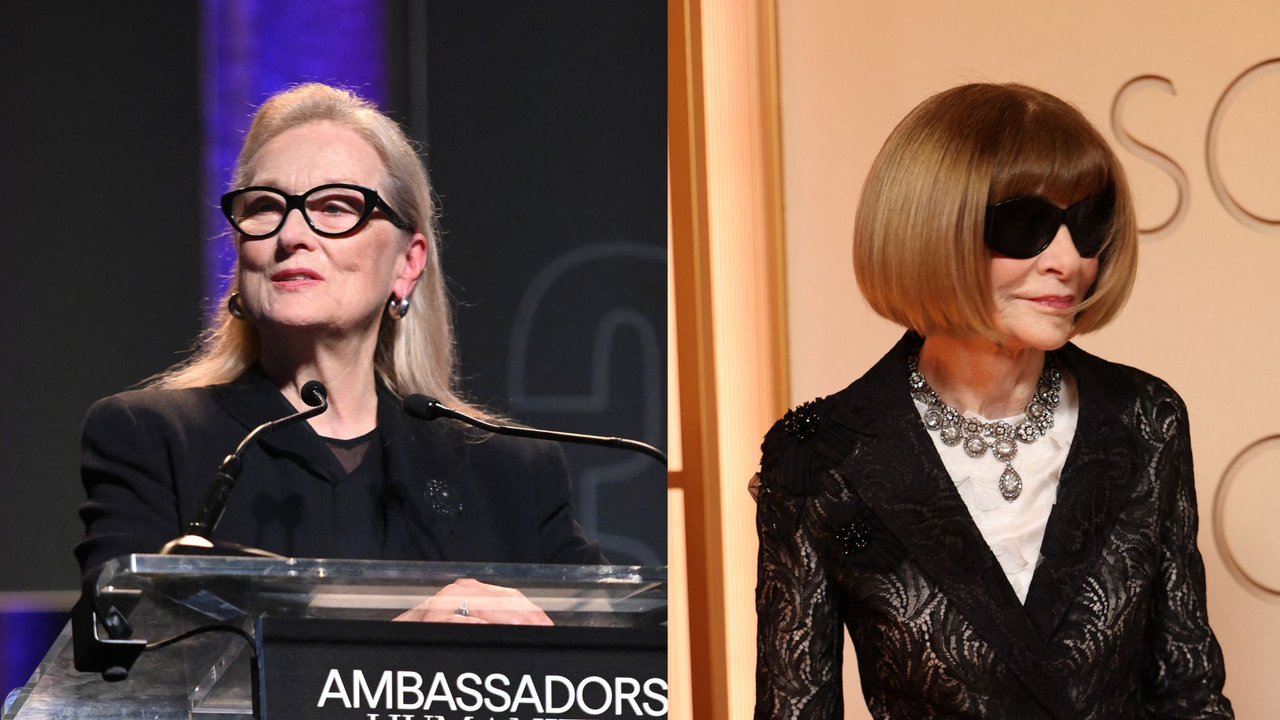
Meryl Streep and Anna Wintour are jointly featured on the cover of Vogue’s new May issue to promote the announced sequel to “The Devil Wears Prada,” nearly 20 years after the original film’s release. Across both opposition and government-aligned coverage, outlets agree that Streep will reprise her role as Miranda Priestly and that Wintour, the real-life editor-in-chief of Vogue, appears alongside her in an image that deliberately blurs the line between the fictional fashion editor and the real one. All sides report that the cover package includes a conversation between Streep and Wintour in which Streep acknowledges having drawn on Wintour as a key inspiration for Miranda’s character, while Wintour calls it an honor to be represented by Streep, and that a promotional video recreates one of the film’s most iconic scenes with the returning cast.
Both sets of outlets also agree on the broader cultural context: the original 2006 film is treated as a landmark fashion-world satire that shaped public perceptions of magazine power and female leadership in the industry, making the sequel and the shared Vogue cover symbolically significant. They similarly frame Vogue as the central institution that both launched the Miranda Priestly archetype into global pop culture and now stages the reunion of fiction and reality through this cover and interview. Coverage on both sides highlights themes of power, curiosity, and work ethic in fashion journalism, and treats the Streep–Wintour dialogue as a reflection on how media, celebrity, and high fashion have evolved over two decades.
Areas of disagreement
Cultural meaning of the cover. Opposition-aligned outlets emphasize the cover as a wry commentary on concentrated media power, reading the Streep–Wintour pairing as a meta-joke about how closely real fashion elites resemble their on-screen caricatures. Government-aligned outlets instead present the image as a celebratory fusion of art and industry, highlighting it as a tribute to the creativity and economic heft of the fashion sector. While opposition coverage stresses the irony of reality echoing satire, government-aligned reports lean into the prestige and aspirational glamour of two icons sharing the page.
Power and leadership framing. Opposition sources foreground the conversation about power and female leadership as an entry point to critique gatekeeping in elite media circles, suggesting that the same personalities who inspired an intimidating fictional boss remain entrenched atop cultural institutions. Government-aligned coverage, by contrast, frames Wintour and Streep as role models whose persistence and discipline exemplify positive leadership, downplaying any discomforting parallels to Miranda’s ruthlessness. The result is that opposition narratives hint at structural critique, whereas government-aligned narratives celebrate continuity and stability in elite leadership.
Interpretation of Wintour’s influence. Opposition outlets treat Streep’s admission that Wintour inspired Miranda Priestly as confirmation that a single editor’s tastes can dominate fashion and celebrity ecosystems, reinforcing concerns about soft power and image control. Government-aligned outlets characterize that same influence as a sign of national and industry strength, portraying Wintour’s global cultural impact as an asset that helps project soft power and elevate local designers and brands. Thus, what opposition coverage casts as potentially unhealthy sway over public imagination, government-aligned reporting recasts as valuable cultural leadership.
Commercial versus artistic motives. Opposition-aligned coverage tends to underline the sequel and the Vogue cover as savvy cross-promotion designed to monetize nostalgia and consolidate audience attention around legacy media brands. Government-aligned outlets more often present the project as a natural artistic continuation of a beloved film, emphasizing fan service, creative reunion, and the celebration of fashion as a cultural industry rather than as a purely commercial play. This leads opposition pieces to sound more skeptical about the marketing calculus, while government-aligned pieces sound more accepting of the blend of art and commerce.
In summary, opposition coverage tends to read the Streep–Wintour Vogue cover as a self-revealing moment about entrenched media power, soft influence, and commodified nostalgia, while government-aligned coverage tends to spotlight it as a glamorous celebration of cultural leadership, industry success, and the enduring appeal of a fashion-world classic.