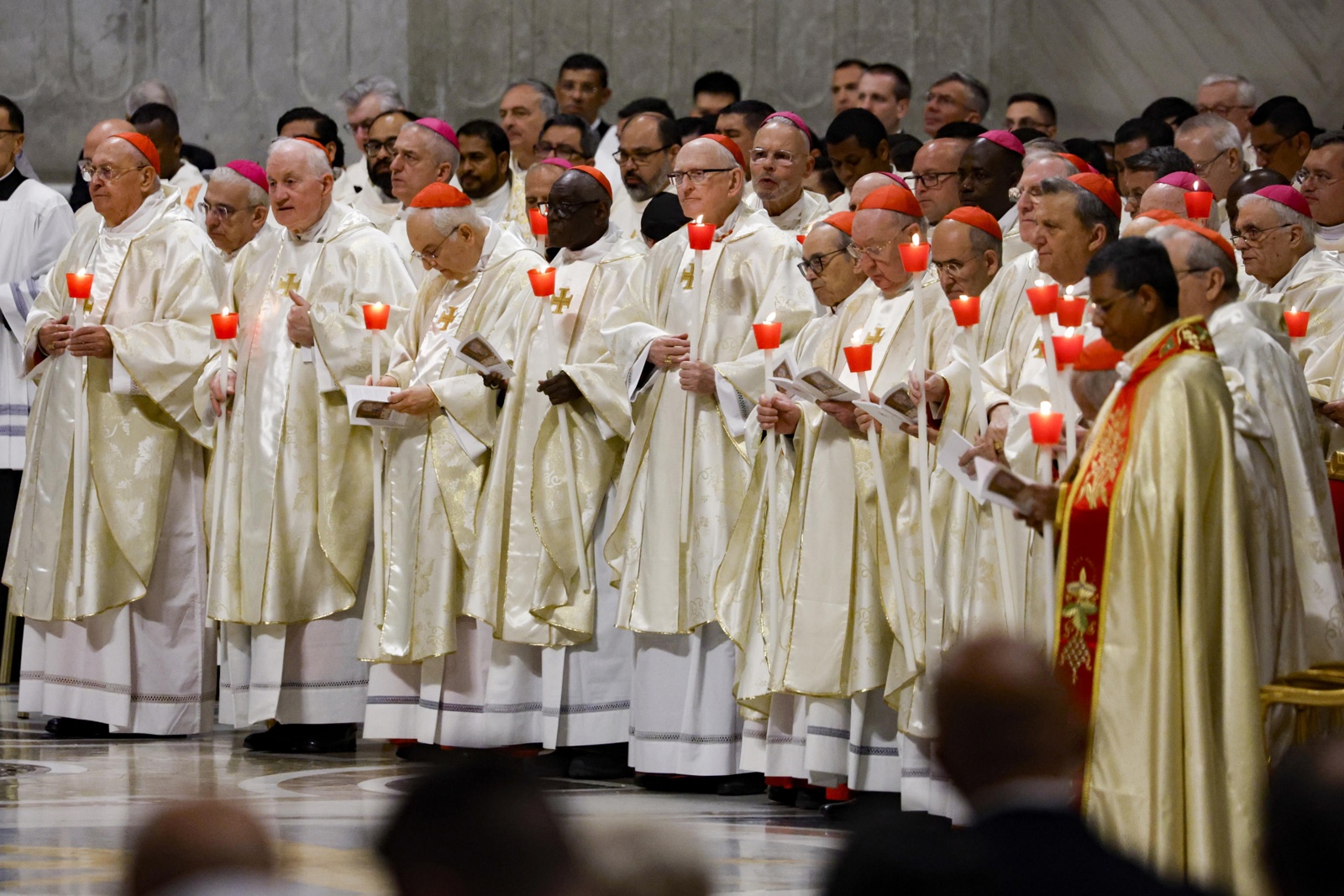
During the Easter Vigil at St. Peter’s Basilica, Pope Leo XIV presided over a solemn liturgy that included the blessing of fire, the lighting of the Paschal candle, and the baptism of ten adults, marking his first Easter Vigil as pope. In his homily, which government‑aligned outlets present as the central religious event of the day, he framed the resurrection of Christ as a victory over death and called on the faithful not to be immobilized by the "heavy stones" of war, injustice, and isolation, urging a renewed search for peace and reconciliation rooted in Christian hope.
Shared context across coverage highlights Easter Vigil as one of the most important ceremonies in the Catholic liturgical year, underscoring the Vatican and St. Peter’s Basilica as key institutional settings where the pope addresses both Catholics and the wider world. The homily is situated within a broader backdrop of ongoing wars, social injustices, and feelings of isolation that believers and societies face, with the symbolism of the Paschal candle and adult baptisms presented as signs of renewal, moral reform, and the Church’s role in encouraging peace‑building and solidarity.
Areas of disagreement
Framing of the homily’s purpose. Government‑aligned outlets frame Pope Leo XIV’s message as fundamentally spiritual and pastoral, stressing the theological core of the resurrection and portraying his call for peace as a universal, nonpartisan appeal. Opposition outlets, by contrast, are likely to highlight the same peace language as implicitly political, interpreting his references to war and injustice as veiled criticism of current power structures and the international alignments of the government.
Political relevance and targets. Government‑aligned reporting tends to downplay any direct connection between the homily and specific domestic or foreign policies, instead situating his references to war and injustice in a broad, global context that includes conflicts such as US–Iran tensions mentioned elsewhere in the news. Opposition outlets are more inclined to read the homily as morally charging current authorities, suggesting that calls not to be "paralyzed" by injustice speak to citizens and institutions under authoritarian or corrupt rule and thus resonate pointedly with the government’s record.
Emphasis within the day’s news agenda. Government‑aligned media integrate the Vigil into a wide national and international news roundup, balancing it alongside stories about local cultural figures, human rights cases, environmental inspections, and space exploration, which diffuses its potential as a singularly political signal. Opposition outlets would more likely foreground the papal ceremony as a marquee moral event, using it as a lens to critique domestic human rights issues and governance failures, rather than presenting it as just one story among many.
Role of the Church in public life. Government‑aligned sources tend to present the Church, and Pope Leo XIV specifically, as a stabilizing cultural and spiritual reference point that complements national institutions without directly challenging them. Opposition reporting would more often portray the Church and the papacy as independent moral authorities whose Easter message on war, injustice, and isolation reinforces civil society and human rights advocates, sometimes implicitly casting them as counterweights to state power.
In summary, opposition coverage tends to treat Pope Leo XIV’s Easter Vigil homily as a morally charged, implicitly political critique that underscores failures on war, injustice, and social isolation, while government-aligned coverage tends to stress its spiritual universality, liturgical significance, and consonance with a broader, nonconfrontational news agenda.