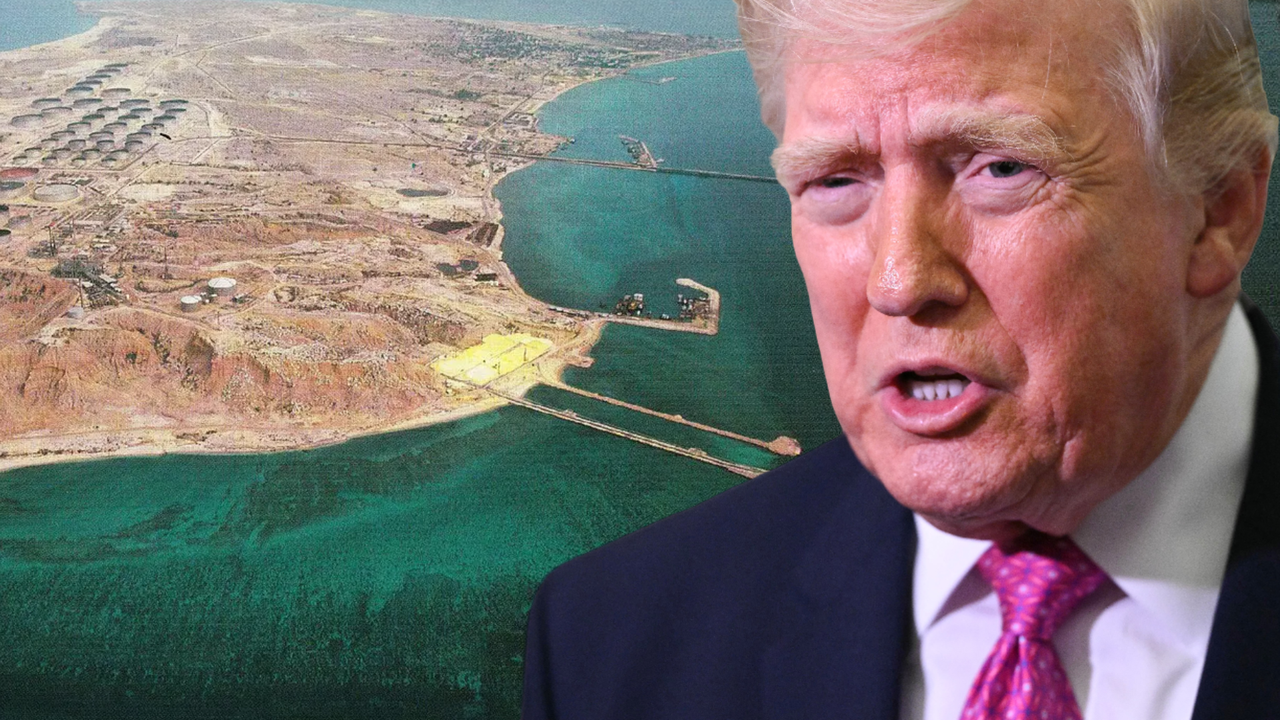
US President Donald Trump has publicly warned that the United States could "completely destroy" Iran's Jark/Jarg island, a key oil export hub that handles roughly 90% of Iran's oil exports, if an agreement with Tehran is not reached soon. Both opposition and government-aligned outlets agree that these remarks come amid intensified Middle East conflict, expanded US military deployment, and discussions about possible ground operations, including a potential long-term presence and even seizure of the island. They likewise concur that Trump has linked the threat to broader negotiations with a new Iranian government, framed around ending current hostilities, reopening the Strait of Hormuz, and curbing what he characterizes as the former regime's "reign of terror," while also floating the idea of taking control of Iran's oil resources.
Across sources, there is agreement that these statements are being made in the context of high-stakes regional power politics involving Iran, the United States, and Israel, with Israeli Prime Minister Netanyahu signaling progress on military objectives. Both camps describe the island as Iran’s main oil export terminal and highlight the strategic importance of global energy markets, noting that Brent crude prices have already risen and could spike further if the situation escalates. Coverage on both sides situates Trump's threats within a broader pattern of US policy that mixes economic pressure, military posturing, and negotiations over sanctions relief and security guarantees, while acknowledging that any move to destroy or occupy the island would have far-reaching consequences for regional stability and international trade.
Areas of disagreement
Legality and norms. Opposition-aligned coverage highlights that threatening to destroy a civilian oil export hub could amount to a war crime and stresses the violation of international humanitarian law and norms against targeting critical civilian infrastructure. Government-aligned outlets largely avoid explicit legal language, framing the threat as a hardline negotiating tactic or a proportional response to Iranian behavior without dwelling on legal constraints. Opposition pieces emphasize the potential for international condemnation and tribunal scrutiny, while government-aligned reports treat the legality question as secondary to strategic effectiveness and deterrence.
Motives and objectives. Opposition sources portray Trump’s talk of "taking Iran’s oil" and possibly seizing Jark/Jarg island as evidence of resource plunder and neo-colonial ambition, suggesting economic gain and domestic political signaling are driving the posture more than security needs. Government-aligned outlets instead present these ideas as a means to deny Iran revenue used for regional militias and missile programs, casting control over oil infrastructure as a tool to enforce peace and fund reconstruction. Where opposition coverage questions the sincerity of the "serious talks" with a new Iranian government, implying they are overshadowed by coercion, government-aligned narratives emphasize the talks as proof that maximum pressure is steering Tehran toward a more "reasonable" stance.
Risk assessment and escalation. Opposition media stress the grave risk of regional escalation, warning that destroying or occupying the island could trigger broader war, attacks on Gulf shipping, and long-term US entanglement akin to Iraq or Afghanistan. Government-aligned outlets acknowledge the need for a long-term ground presence only in passing and tend to frame the buildup as a calculated show of strength designed to shorten the conflict and quickly reopen the Strait of Hormuz. Opposition reporting underscores potential blowback, including attacks on US forces and allies, while government-aligned coverage suggests that decisive action could actually stabilize markets and reinforce deterrence against Iran and other adversaries.
Framing of Iran and the new government. Opposition sources are skeptical of Trump’s claim that the US is dealing with a "new and more reasonable" Iranian regime, treating the phrase as rhetorical cover for regime-change aims and continued pressure on Iranian institutions. Government-aligned outlets more readily adopt that language, presenting the new government as distinct from a discredited "former regime" and implying that hard US measures have produced a more pragmatic interlocutor. For opposition media, references to a "reign of terror" are depicted as one-sided and dehumanizing, while government-aligned reporting uses them to justify harsh threats as a necessary break from past leniency.
In summary, opposition coverage tends to cast Trump’s threats against Jark/Jarg island as illegal, reckless escalation driven by resource interests and regime-change ambitions, while government-aligned coverage tends to frame them as a tough but rational negotiating tool aimed at curbing Iranian aggression, reshaping the regime’s behavior, and restoring regional stability.