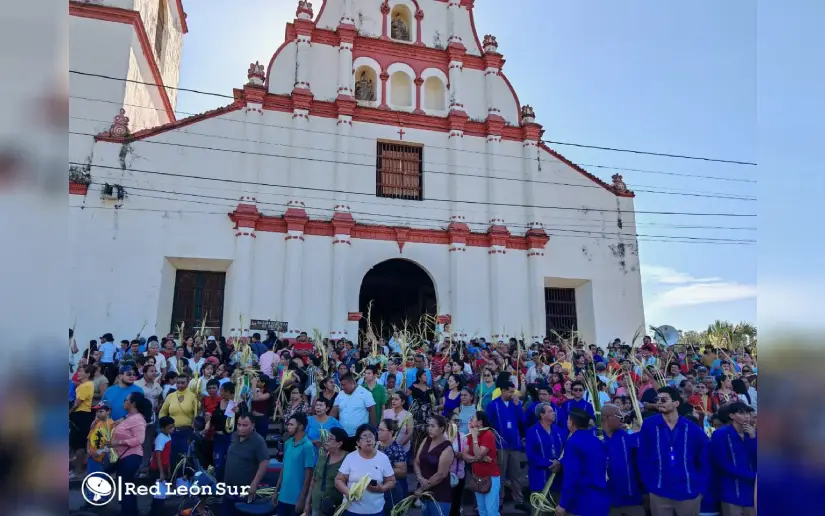
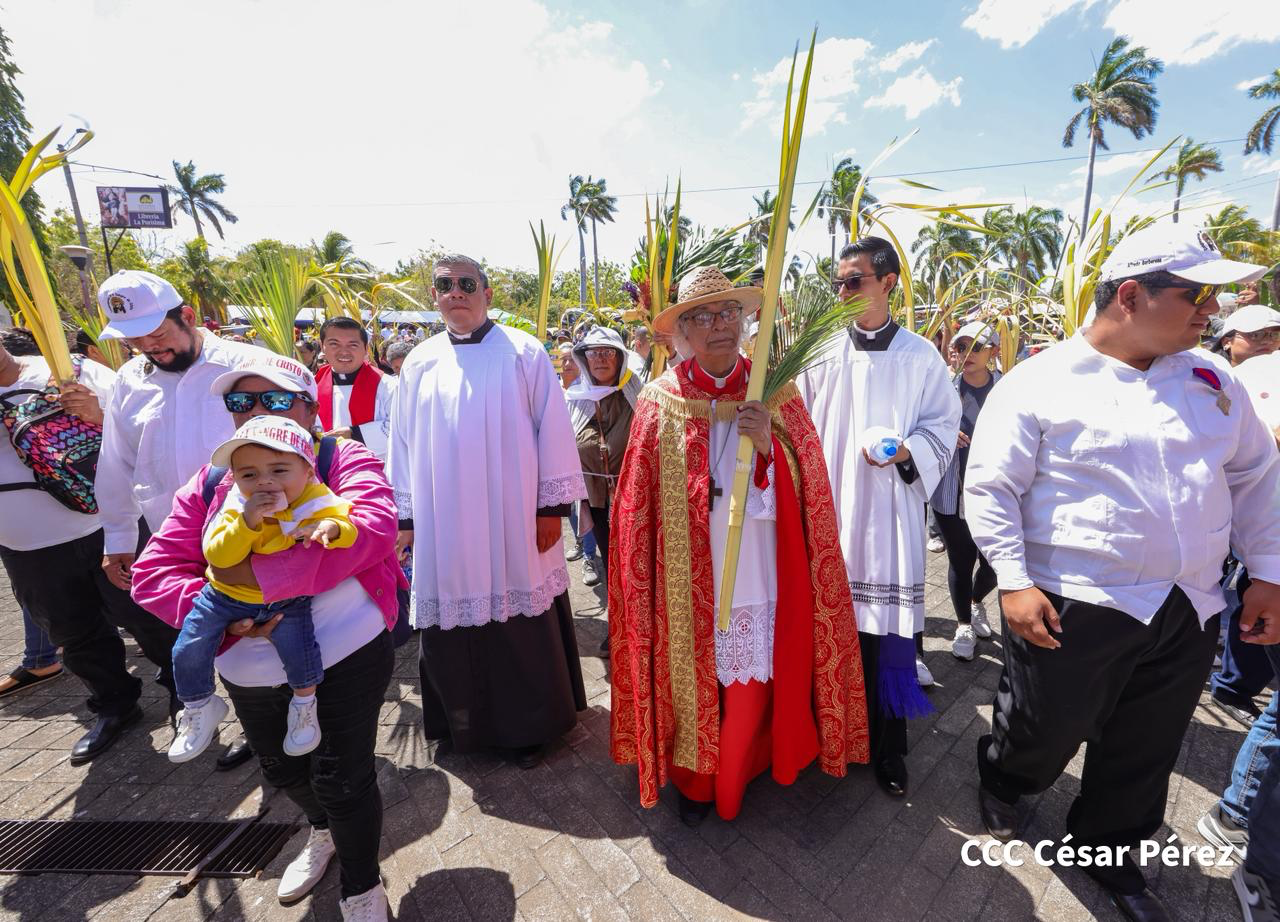
Thousands of Catholic faithful in Managua marked Palm Sunday inside the Metropolitan Cathedral, where the traditional blessing of palms and a symbolic, shortened procession were held to commemorate Jesus’ triumphal entry into Jerusalem and the start of Holy Week. Both opposition and government-aligned outlets agree that the celebrations drew large crowds, were led by Cardinal Leopoldo Brenes, and were mirrored by similar liturgies in parishes across Nicaragua, emphasizing prayer, liturgical singing, and a public demonstration of faith. They also concur that Holy Week is framed by church leaders as a time for reflection, mercy, forgiveness, and responsible behavior during a significant religious holiday period.
Across the coverage, both sides situate the event within Nicaragua’s broader Catholic tradition and the institutional role of the church in national life, underscoring that Palm Sunday is a central moment in the liturgical calendar that inaugurates Holy Week. They describe the cathedral and parishes as longstanding focal points for communal worship and note that, despite adjustments to the format of processions, the core rituals—mass, blessing of palms, and processions in some form—remain intact. Both perspectives acknowledge the state’s interest in projecting an image of social stability and the church’s effort to preserve religious practices under current conditions, without disputing the basic religious significance of the celebrations or the importance of maintaining order and safety during mass gatherings.
Areas of disagreement
Characterization of restrictions. Opposition outlets stress that the government has imposed continued limits on outdoor religious processions, forcing Palm Sunday celebrations and any processions to remain within church premises or be reduced to brief symbolic circuits, which they frame as evidence of curtailed public religious expression. Government-aligned media largely omit or downplay the notion of restrictions, instead portraying the celebrations as normal, free exercises of faith taking place in an atmosphere of peace and tranquility. Where opposition sources highlight constraint and adaptation, government-aligned coverage emphasizes continuity and serenity, suggesting that any adjustments are routine rather than politically motivated.
Government motives and messaging. Opposition reporting presents state media coverage—directed by Rosario Murillo—as a deliberate strategy to flood the airwaves with images of crowded churches to project religious tolerance, while simultaneously limiting public manifestations of faith, which critics call hypocritical. Government-aligned outlets depict the same communications effort as a positive affirmation of Nicaragua’s spiritual life and a reaffirmation of the country’s commitment to peace through shared religious traditions. Thus, what opposition sources cast as propaganda designed to mask repression, government-aligned sources frame as rightful celebration and promotion of national values.
Portrayal of the public mood. Opposition outlets underline the tension between visible devotion and a sense of restriction, suggesting that the faithful are adapting creatively but worshiping under a climate of control that colors the atmosphere of the celebrations. Government-aligned media, by contrast, repeatedly stress peace, tranquility, and harmony, presenting the crowds as joyful and untroubled participants in a unified national religious event. The former see an undercurrent of unease and resilience, while the latter describe an uncomplicated, festive reaffirmation of faith.
Role of church and state. Opposition narratives implicitly cast the church as a moral counterweight to an overbearing state, highlighting how religious leaders and communities preserve processions and symbolism inside church grounds despite state-imposed limits on public space. Government-aligned coverage portrays church and state as aligned in promoting responsible behavior, moral values, and social stability, emphasizing Cardinal Brenes’s calls for reflection and responsibility as complementary to government appeals for order. In one view, the church appears as a space of semi-contained resistance; in the other, as a partner in a shared project of peace and social cohesion.
In summary, opposition coverage tends to frame the indoor Palm Sunday celebrations as an adaptation forced by restrictive government policies and instrumentalized state media, while government-aligned coverage tends to present them as free, peaceful, and harmonious expressions of faith that confirm national unity and stability.