government-aligned
Crisis in Cuba: The island registers the second blackout in less than a week
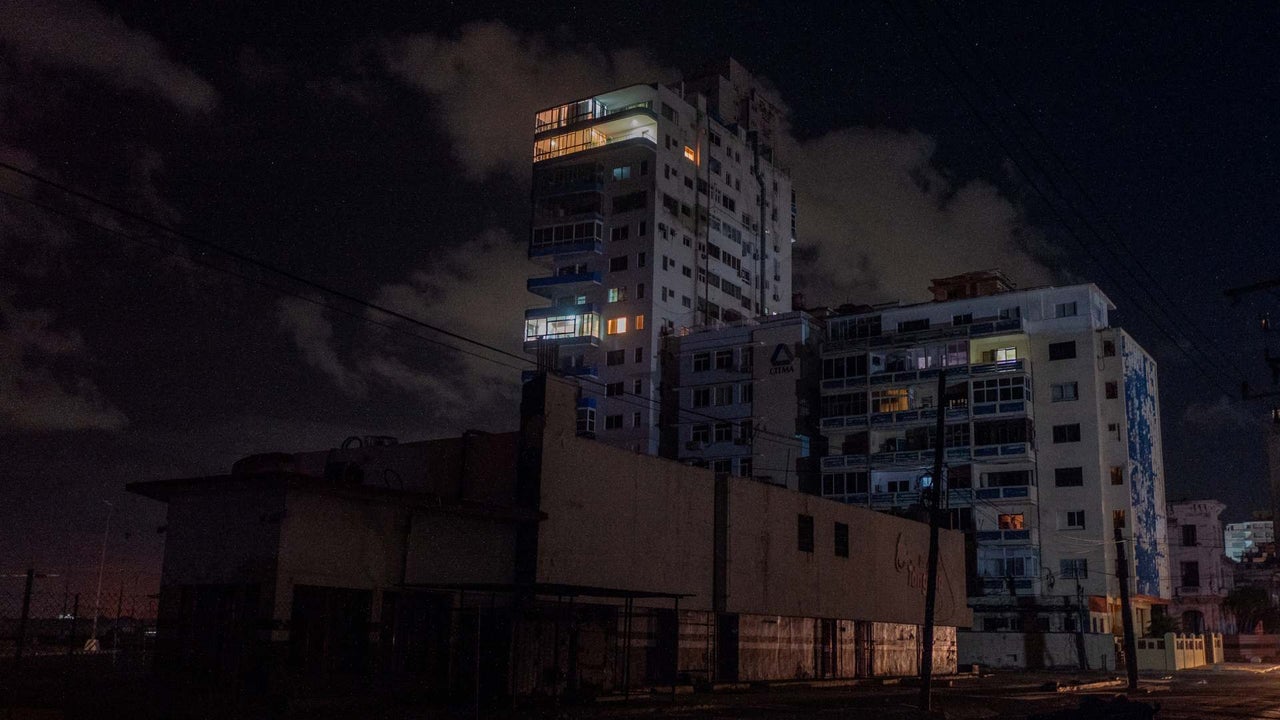
In less than a week, Cuba experienced a new blackout this Saturday amid the severe energy crisis hitting the island.
2 months ago
Cuban and foreign outlets across the spectrum agree that Cuba’s National Electric System suffered a second nationwide collapse in less than a week, leaving virtually the entire island of roughly ten million people without electricity. Both opposition and government-aligned sources report that this was the seventh general blackout in about 18 months (often dated from late 2024 or mid‑2023), that the failure was linked to a problem at the Nuevitas thermoelectric plant within an already fragile grid of aging thermal units, and that the outage lasted more than 16 hours before partial restoration began. They concur that the blackout was total or near-total, that restoration was slow, and that the authorities had to start by bringing smaller or more manageable generation sources online before attempting to synchronize larger thermoelectric units to rebuild the system’s stability.
Coverage from both sides also agrees that Cuba is in the midst of a prolonged and severe energy crisis rooted in chronic underinvestment, obsolete infrastructure, and heavy dependence on imported fuels. Reports converge on the idea that the country’s thermoelectric fleet is old and prone to breakdowns, that there is a shortage of essential fuels needed for rapid “black start” capabilities, and that external factors such as reduced Venezuelan oil shipments and U.S. sanctions or pressure on oil supplies have exacerbated the situation. Both opposition and government-aligned articles reference the resulting social strain, including unrest and protests triggered or intensified by lengthy power cuts, and they depict the current collapses as symptoms of a systemic vulnerability that cannot be fixed quickly and will require major technical and policy reforms.
Responsibility and blame. Opposition outlets frame the blackout primarily as a consequence of decades of government mismanagement, underinvestment, and a rigid state monopoly over the energy sector, treating external sanctions as aggravating but not decisive. Government-aligned media instead highlight U.S. sanctions, oil “blockades,” and the reduction of Venezuelan fuel deliveries as central causes, presenting domestic shortcomings as secondary or as legacies of economic constraints beyond Havana’s control. While the opposition stresses accountability of the Cuban leadership and its planning failures, state-friendly sources emphasize external hostility and structural limitations imposed from abroad.
Nature and severity of the crisis. Opposition coverage portrays the second nationwide collapse in a week as evidence of an acute and potentially escalating breakdown, warning that the grid is on the verge of systemic failure and that blackouts are becoming the defining feature of everyday life. Government-aligned outlets acknowledge a severe and prolonged energy crisis but tend to normalize it within a narrative of resilience, emphasizing that this is the latest in a series of challenges Cuba has historically overcome. The opposition frames the pattern of seven total blackouts in 18 months as intolerable and symptomatic of a broader governance crisis, whereas official media casts it as serious but manageable and largely imposed by external economic warfare.
Depiction of state response and recovery. Opposition sources describe the restoration process as slow and hampered by chronic fuel shortages and technical incapacity, sometimes suggesting that authorities lack both resources and transparency to manage the crisis effectively. Government-aligned reports present the same gradual recovery—from small hydro and local generators to larger thermal units—as evidence of competent technical management under extremely difficult conditions. The opposition underscores delays, public frustration, and perceived improvisation, while pro-government coverage foregrounds methodical steps, expert teams, and the inevitability of a phased restart in an obsolete system under sanction.
Social impact and political implications. Opposition media highlight social unrest and protests as a sign of growing discontent with the government, interpreting the blackouts as a catalyst for broader political grievances and calls for change. Government-aligned outlets acknowledge tension and hardship but usually downplay the scale or political nature of protests, framing public reactions more as expressions of understandable frustration in the face of hardship than as organized opposition. While the opposition connects energy failures directly to questions of regime legitimacy, state-friendly coverage tends to separate socioeconomic strain from explicit political challenge and stresses unity and patience.
In summary, opposition coverage tends to depict the repeated national blackouts as the predictable result of systemic mismanagement and a failing model that is provoking mounting public anger, while government-aligned coverage tends to situate the crisis within a narrative of external siege, technical constraints, and a state that is competently improvising solutions despite powerful outside pressures.

