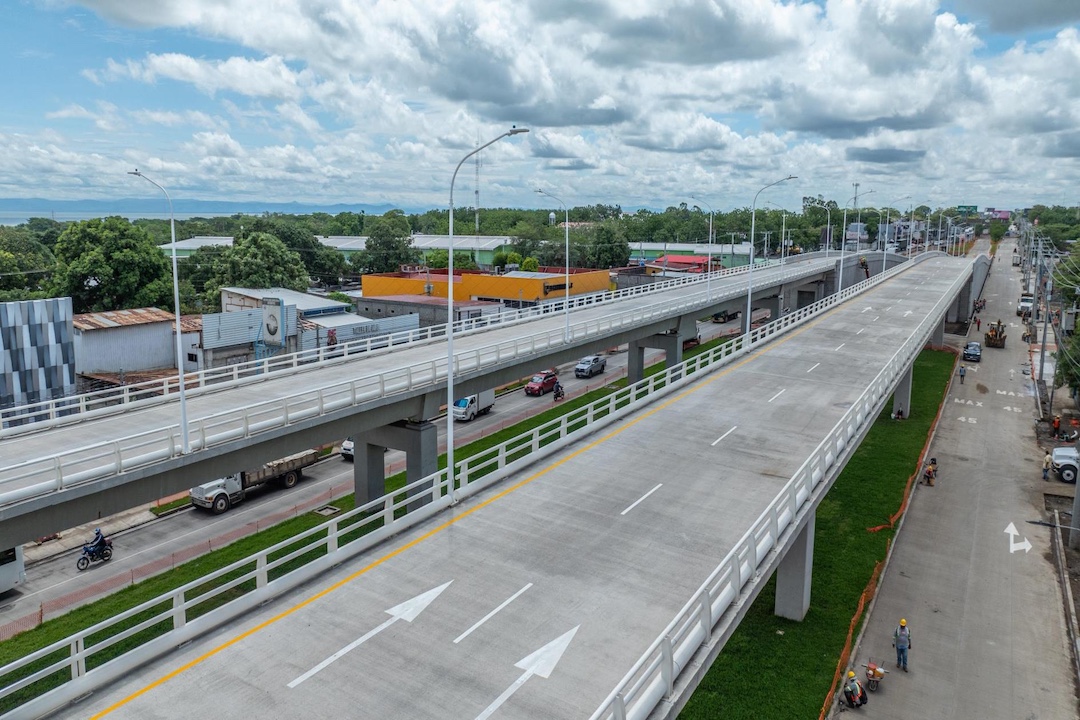
The National Assembly of Nicaragua has approved a 25 million dollar loan from the OPEC Fund for International Development to help finance the Masaya–Sabana Grande highway project, whose total cost is put at about 33 million dollars. Both opposition and government-aligned outlets agree that the initiative involves expanding and connecting 4.4 kilometers of roadway between Carretera a Masaya and Sabana Grande in Managua, creating a four-lane corridor designed to ease congestion, improve traffic flow, and reduce travel times in one of the capital’s busiest urban transport zones.
Coverage from both sides also converges on the project’s basic features and institutional framing: it is presented as part of a broader national strategy to strengthen urban mobility, improve drainage infrastructure, and stimulate economic and commercial activity in the capital region. The reports agree that the work includes an overpass around kilometer 10.5 of Carretera a Masaya, complementary elements such as a bike lane, and that the financing falls under the country’s public debt policy, positioning the highway as one more piece in ongoing transport and infrastructure modernization plans.
Areas of disagreement
Economic framing and debt. Opposition outlets emphasize the loan as an additional burden within a growing public debt portfolio, questioning whether a 4.4-kilometer road justifies 33 million dollars and highlighting the gap between the project cost and the 25 million dollars actually financed by the OPEC Fund. Government-aligned media instead frame the loan as a responsible, development-oriented financing tool that enables strategic investments Nicaragua could not self-fund at the same pace, stressing long-term productivity gains and reduced vehicle operating costs. While the opposition treats debt sustainability and opportunity cost as core concerns, pro-government coverage largely assumes the debt is manageable and focuses on visible infrastructure outcomes.
Short-term disruption versus long-term benefit. Opposition coverage tends to give relatively less attention to construction-phase traffic disruptions and more to structural questions about whether this is the best use of scarce funds, sometimes implying that high-profile works are prioritized over broader social needs. Government-aligned outlets devote more space to the immediate, practical impact on drivers, warning that traffic in Managua will worsen in the short term due to lane closures and detours but framing this as a necessary sacrifice for future congestion relief. In this way, opposition narratives cast doubt on the strategic planning behind the project, while official-aligned narratives assume the project’s necessity and debate mainly how residents should cope with the transition period.
Project beneficiaries and policy narrative. Opposition sources describe the road mainly in abstract terms of improved connectivity and economic activity, but place this within a skeptical narrative about how regime-led megaprojects often favor political interests or showcase spending without transparently demonstrating who benefits most. Government-aligned media clearly position the project as a benefit for ordinary commuters and local businesses, underscoring elements like the overpass, bike lane, and drainage works as signs of inclusive planning and modern urban design. Where the opposition hints at uneven or politicized distribution of benefits, official-aligned coverage uses the project to reinforce a broader narrative of competent, people-centered infrastructure policy.
Governance and accountability. Opposition outlets implicitly raise questions about transparency and oversight by stressing that this highway is yet another item embedded in the national public debt strategy, with little discussion of detailed cost breakdowns or independent evaluation of impact. Government-aligned reporting, by contrast, anchors the project within state planning and executive initiatives without foregrounding oversight concerns, presenting approvals by the National Assembly and cooperation with the OPEC Fund as sufficient institutional guarantees. Thus, opposition voices invite scrutiny of how funds are managed and prioritized, while pro-government narratives focus on execution and formal authorization rather than on deeper accountability mechanisms.
In summary, opposition coverage tends to frame the Masaya–Sabana Grande highway as a debt-heavy, politically driven project whose costs, beneficiaries, and oversight warrant skepticism, while government-aligned coverage tends to present it as a technically justified, internationally financed infrastructure upgrade that will temporarily worsen traffic but ultimately modernize Managua’s transport system.