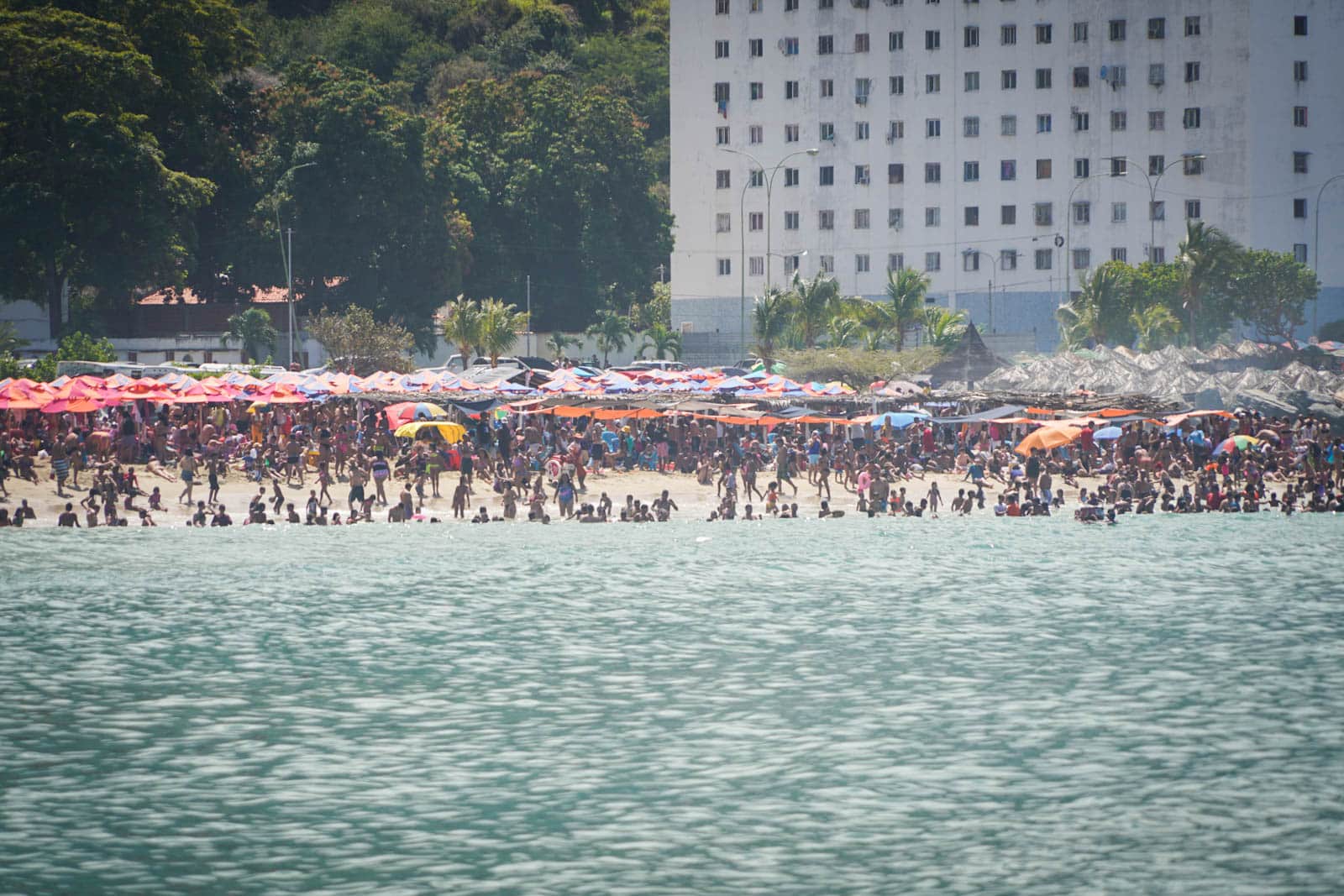
The Caracas Metro has activated a special Carnival "Ruta Playera" or beach route using MetroBús units to connect Caracas with beaches in La Guaira during the 2026 Carnival holiday period. Coverage agrees that the service operates between February 14 and 17, with departures from at least the La Paz, Gato Negro, and Zona Rental stations in Caracas, and return trips from La Guaira at set times throughout the day. Reports concur that the fare is a fixed amount payable exclusively with the SUVE electronic card, and that authorities in La Guaira expect a significant increase in visitors, prompting the deployment of over 2,000 security personnel to oversee order and safety along the route and in tourist areas.
Both sides also acknowledge that this seasonal service is framed as a temporary operational plan layered on top of the regular Caracas Metro and MetroBús network. They agree that the initiative is coordinated among the Caracas Metro system, local transport authorities, and security bodies in La Guaira, and that it forms part of broader Carnival mobility and tourism arrangements. The coverage also converges on the idea that the route is meant to facilitate access to coastal recreation for Caracas residents during the holiday, especially for those who rely on public transport, and that the use of the SUVE card is consistent with the government’s broader fare digitization push across state-run transport.
Points of Contention
Quality and intent of the service. Opposition-aligned outlets tend to describe the beach route, when they mention it, as a short-term publicity gesture that does little to solve chronic transport and metro system deterioration, often contrasting the festive initiative with reports of breakdowns, delays, and limited coverage in everyday service. Government-aligned coverage, by contrast, presents the route as evidence of efficient planning and responsiveness to popular demand, highlighting schedules, organization, and the state’s role in guaranteeing Carnival mobility. While opposition narratives question whether the system can reliably meet holiday demand and emphasize structural underinvestment, official media frame the same facts as proof that public transport continues to function and even expand during high-traffic periods.
Accessibility and cost. Opposition sources typically focus on whether the fare, though numerically modest, is burdensome in relation to average wages and the cost of a full day at the beach, and they often stress that exclusive use of the SUVE card can exclude irregular workers, pensioners, or people without easy access to recharge points. Government-aligned outlets, in contrast, underscore that the fare is standardized, predictable, and lower than informal transport alternatives, and they portray the SUVE-only payment as a modern, orderly, and transparent mechanism that streamlines boarding. Where critics see potential barriers and hidden inequities in fare policy and payment technology, official narratives emphasize subsidized mass access and the normalization of electronic payment.
Security and state presence. Opposition coverage tends to view the deployment of more than 2,000 security personnel as an over-militarized show of force that does not address underlying issues like petty crime, corruption in transport controls, or lack of institutional trust, and may note citizens’ fear of abuses or arbitrary checks. Government-aligned media instead highlight the same deployment as a guarantee of safety and a sign of strong coordination among police, civil protection, and other agencies to protect families and tourists, especially in busy terminals and coastal areas. While critics question the effectiveness and motives behind such a heavy presence, official narratives frame it as a concrete benefit of a proactive state.
Symbolism and broader transport policy. Opposition-aligned voices often situate the beach route within a pattern of what they call showcase or seasonal measures that mask the absence of deeper reforms in urban transport, referencing past promises on metro expansion, maintenance, and integration that remain unfulfilled. Government-aligned coverage embeds the initiative within a broader storyline of recovery and improvement of public services under current authorities, linking it to other Carnival and tourism operations and to the gradual rehabilitation of state-run transport. Thus, opposition media treat the route as symptomatic of policy short-termism, while official outlets present it as another step in a longer trajectory of infrastructural consolidation.
In summary, opposition coverage tends to treat the Carnival beach route as a limited, image-focused initiative that highlights deeper structural and equity problems in Caracas transport, while government-aligned coverage tends to showcase it as a successful, affordable, and secure example of state-led planning that broadens holiday access for the population.