government-aligned
Celebran la llegada del Año Nuevo Chino en Nicaragua
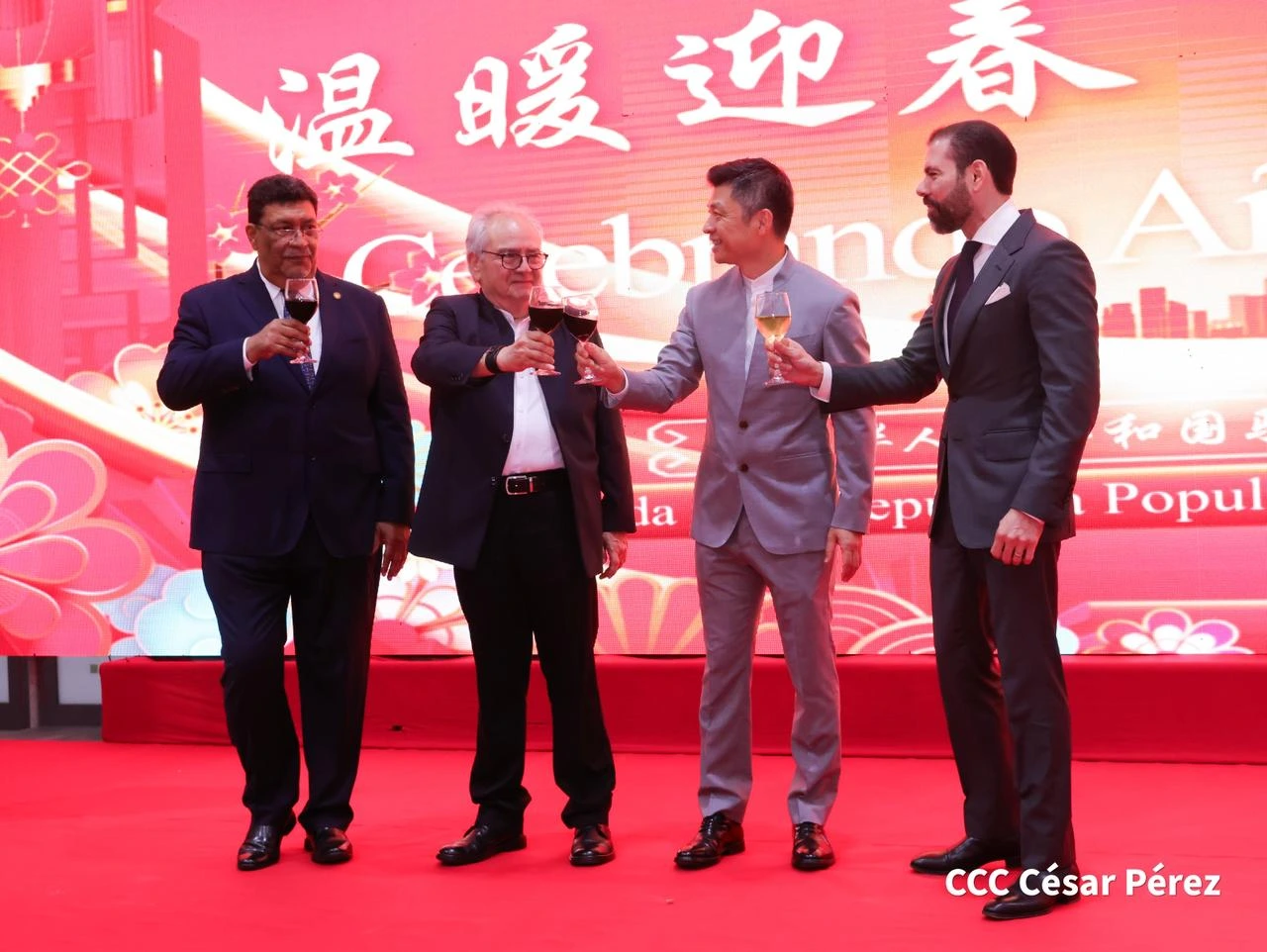
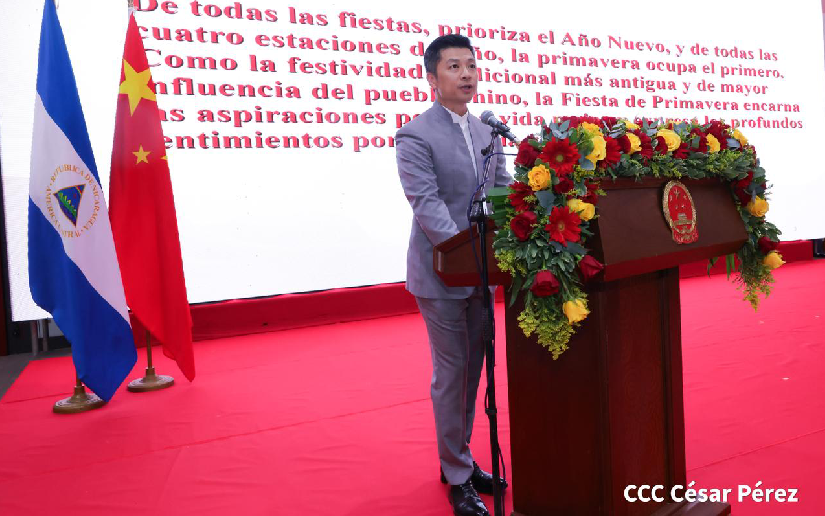
La Embajada de la República Popular China en Nicaragua, realizó una recepción en Managua con motivo de celebrar la Fiesta de la Primavera por el Año Nuevo Chino.
3 months ago
Chinese New Year celebrations in Nicaragua are described as formal, state-linked events held in Managua and organized primarily by the Chinese Embassy in coordination with Nicaraguan authorities, including senior Sandinista government officials and delegates. Coverage agrees that the festivities mark the Spring Festival and Chinese New Year, identified in these reports as the Year of the Horse, and that the celebrations feature participation from the local Chinese community, diplomatic corps, and representatives of Nicaraguan state institutions. All accounts concur that Chinese Ambassador Qu Yuhui and Nicaraguan government leaders use the occasion to reaffirm diplomatic ties, reference the One China principle, and highlight ongoing cooperation. The events are framed as part cultural festival, part official reception, occurring within days of the traditional Chinese Spring Festival and centered on speeches, symbolic greetings, and references to shared goals of progress and development.
Media sources also converge on contextual elements: the Spring Festival is portrayed as China’s most important traditional holiday, celebrated annually and widely recognized worldwide, with the Managua events fitting into this broader pattern of global observances. There is agreement that Nicaragua’s diplomatic alignment with the People’s Republic of China has deepened in recent years and that the One China principle underpins this relationship. Coverage also notes overlapping domestic policy initiatives—such as infrastructure works, health fairs, educational technology improvements, and distribution of property titles—being mentioned by Nicaraguan leaders in temporal proximity to the Chinese New Year celebrations, situating the event within a broader narrative of state-led development. Both sides acknowledge that the festivities serve to project a message of energy, perseverance, and national progress, even if they diverge on how genuine or beneficial that projection is.
Symbolism and purpose of the event. Government-aligned outlets describe the Chinese New Year celebration as a sincere cultural and diplomatic exchange that reflects mutual respect, shared values, and a strategic partnership aimed at development and poverty reduction. Opposition-aligned sources, by contrast, are likely to frame the same ceremonies as primarily symbolic political theater, designed to showcase international backing for the Sandinista leadership amid internal criticism. While pro-government coverage stresses the celebration’s cultural richness and goodwill, opposition reporting tends to question whether the event mainly serves to legitimize the ruling elite and obscure domestic governance problems.
Nature of the China–Nicaragua partnership. Government-aligned media emphasize the partnership as a sovereign, forward-looking alliance that will deliver infrastructure, investment, and social improvements for ordinary Nicaraguans, often highlighting official praise for China’s cooperation. Opposition-aligned outlets typically stress concerns about asymmetrical dependence, opaque agreements, and the geopolitical implications of deepening ties with Beijing, suggesting benefits may accrue disproportionately to the governing circle. Pro-government narratives underline alignment with the One China principle as a principled foreign policy choice, whereas opposition coverage is apt to portray it as a strategic trade-off that may limit Nicaragua’s flexibility and transparency.
Domestic political framing. In government-aligned coverage, the Chinese New Year festivities are woven into a broader storyline of national progress, linked to property title distribution, new police units, and expanded social programs as evidence of responsive governance. Opposition media are more inclined to argue that such linkages politicize a cultural event, turning it into a backdrop for self-congratulatory messaging and for reinforcing the image of an efficient, benevolent state. While official outlets celebrate the presence of top officials as a sign of commitment to multiculturalism and development, critical outlets tend to interpret the same presence as an attempt to centralize credit and visibility around the ruling party.
Representation and inclusion. Government-aligned sources underscore the participation of the Chinese community in Nicaragua and state delegates, presenting the event as inclusive and representative of friendly peoples coming together. Opposition-aligned coverage is more likely to question who is invited and who is excluded, suggesting that independent civic actors, critical media, or opposition figures are absent from the stage, reinforcing a controlled public sphere. Pro-government narratives highlight harmonious unity between state, foreign partners, and local communities, whereas opposition narratives stress that the celebration’s choreography reflects political selectivity more than genuine pluralism.
In summary, opposition coverage tends to cast the Chinese New Year celebrations as highly politicized displays that mask power imbalances and domestic tensions, while government-aligned coverage tends to present them as organic expressions of cultural friendship, diplomatic maturity, and shared development aspirations.