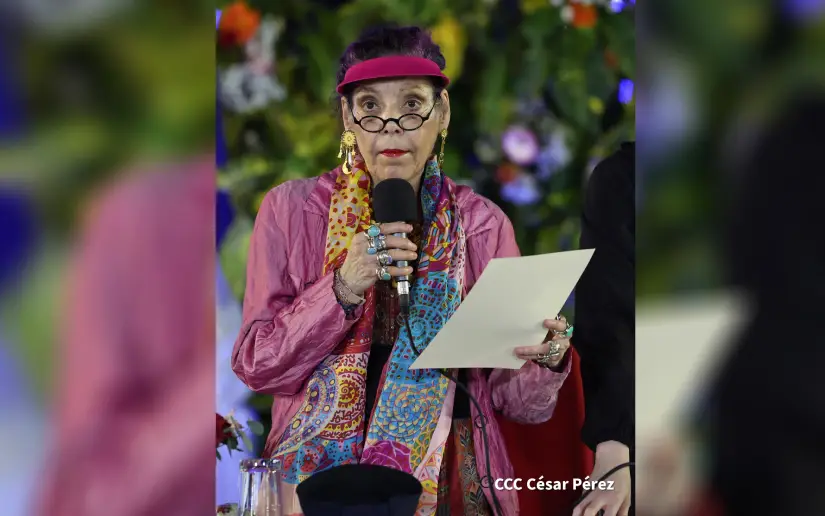
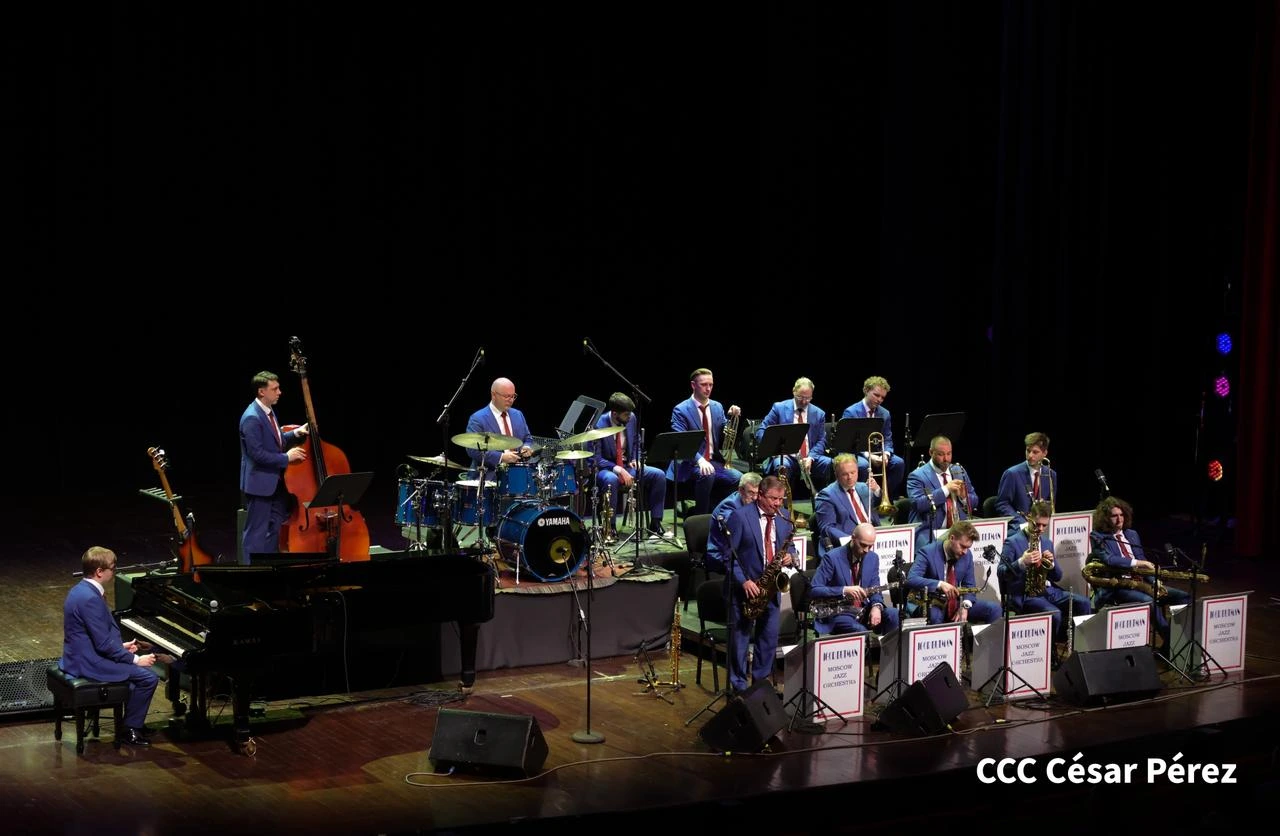
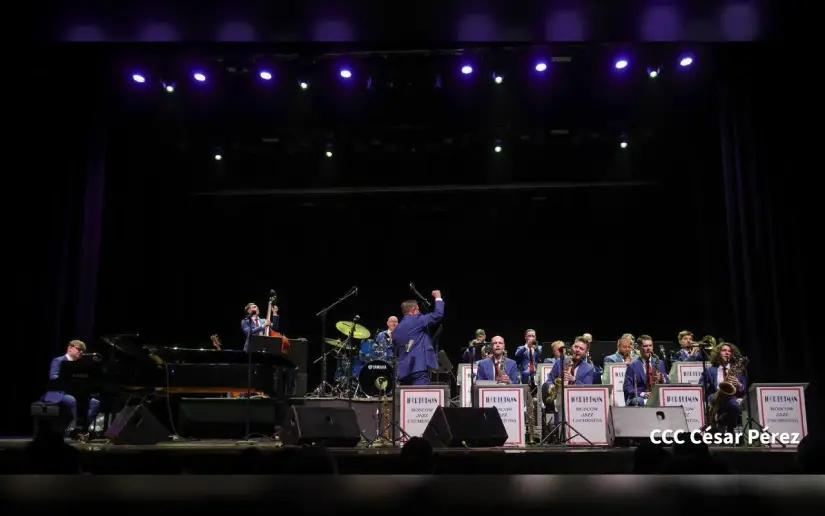
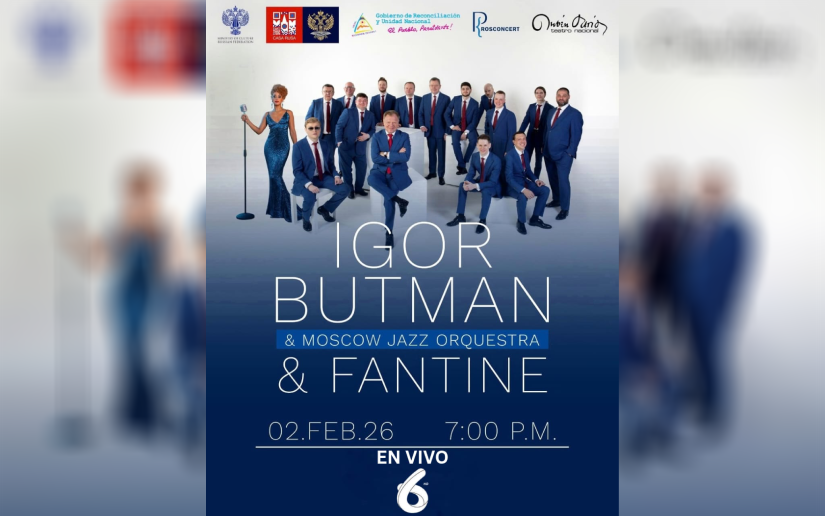
The Moscow Jazz Orchestra, led by Igor Butman and composed of about 25 Russian musicians, visited Nicaragua to perform a series of concerts centered on a major event at the Rubén Darío National Theater in Managua. Coverage agrees that this was framed as a free or widely accessible cultural event within a broader Russia–Nicaragua cultural exchange, that the performances were attended and publicly endorsed by senior Nicaraguan officials including Vice President Rosario Murillo and presidential advisor Laureano Ortega Murillo, and that the visit has now formally concluded with official farewells. Both sides also acknowledge that during this visit Butman pledged to return to Nicaragua for future performances and to invite Nicaraguan artists to participate in jazz festivals in Russia, and that Nicaraguan state media broadcast or amplified the concert, including via Canal 6.
Reports also converge on the idea that the tour is part of a longer trajectory of cultural and artistic cooperation between Nicaragua and Russia, rooted in decades of political and diplomatic ties that now extend into cultural diplomacy. Both sides cite or accept the existence of formal frameworks such as cultural exchange agreements and a memorandum signed with Russia’s Ministry of Culture, and situate the orchestra’s visit within a wider package of bilateral collaboration that includes education, security, infrastructure, and technological projects. Shared context in the coverage portrays this cultural initiative as one among many recent governmental announcements—such as improvements in public transport, citizen security, and social services—used to showcase Nicaragua’s international partnerships and internal development. There is broad agreement that the Moscow Jazz Orchestra’s performances serve not only as entertainment but as a symbolic reaffirmation of strategic relations between Nicaragua and the Russian Federation.
Points of Contention
Framing of the visit. Government-aligned outlets frame the orchestra’s tour as a celebratory milestone in cultural diplomacy, describing the concerts as a gift to the Nicaraguan people and evidence of a vibrant national cultural life. Opposition-oriented commentary, where it appears, tends to describe the event more as official spectacle tightly managed by the government and its media apparatus. While government-aligned coverage centers on emotional language of affection, recognition, and gratitude, opposition voices are more inclined to note the political staging, security presence, and elite attendance that accompany such events.
Political significance. Government-aligned sources present the visit as proof of Nicaragua’s successful multipolar foreign policy, emphasizing deep friendship with Russia and portraying the orchestra as an ambassador of peace, culture, and mutual respect. Opposition-leaning narratives instead highlight how the event showcases Nicaragua’s growing dependence on a small group of allied states—particularly Russia and China—amid strained relations with Western governments. For official media the concerts symbolize national prestige and inclusion in a global cultural circuit, whereas for opposition outlets they can appear as a carefully chosen example used to mask Nicaragua’s international isolation and domestic tensions.
Domestic context and priorities. In government-aligned reporting, the farewell to the Moscow Jazz Orchestra is woven together with announcements about new Chinese buses, property titling, education programs, and infrastructure works, depicting a coherent story of social progress and effective governance. Opposition coverage, by contrast, tends to juxtapose such high-profile cultural acts against ongoing complaints about economic hardship, migration, and political repression, questioning whether these events genuinely benefit the broader population. While state-aligned media stress inclusion and free access to the concert, critical outlets question the representativeness of the audience and whether resources for promoting foreign cultural initiatives might be diverted from underfunded local arts and social needs.
Role of state media and propaganda. Government-aligned outlets underline the broadcasting of the concert on Canal 6 and other state platforms as a means to democratize culture and bring world-class jazz to households across the country. Opposition-aligned sources, however, interpret this saturation coverage as part of a propaganda strategy that uses cultural content to soften the image of a heavily controlled media environment and to foreground loyalist voices like Rosario Murillo and Laureano Ortega. From the official perspective, media amplification of the orchestra’s visit exemplifies transparent public communication, whereas critics see it as another carefully curated narrative with no space for independent artistic or political viewpoints.
In summary, opposition coverage tends to view the Moscow Jazz Orchestra’s performances as a politically instrumentalized spectacle that highlights regime alliances and priorities rather than broad cultural pluralism, while government-aligned coverage tends to celebrate the visit as a joyful success of cultural diplomacy, evidence of international respect, and a tangible cultural benefit delivered by the current administration.