Fines to which transport companies are exposed for not updating the anti-money laundering mechanism
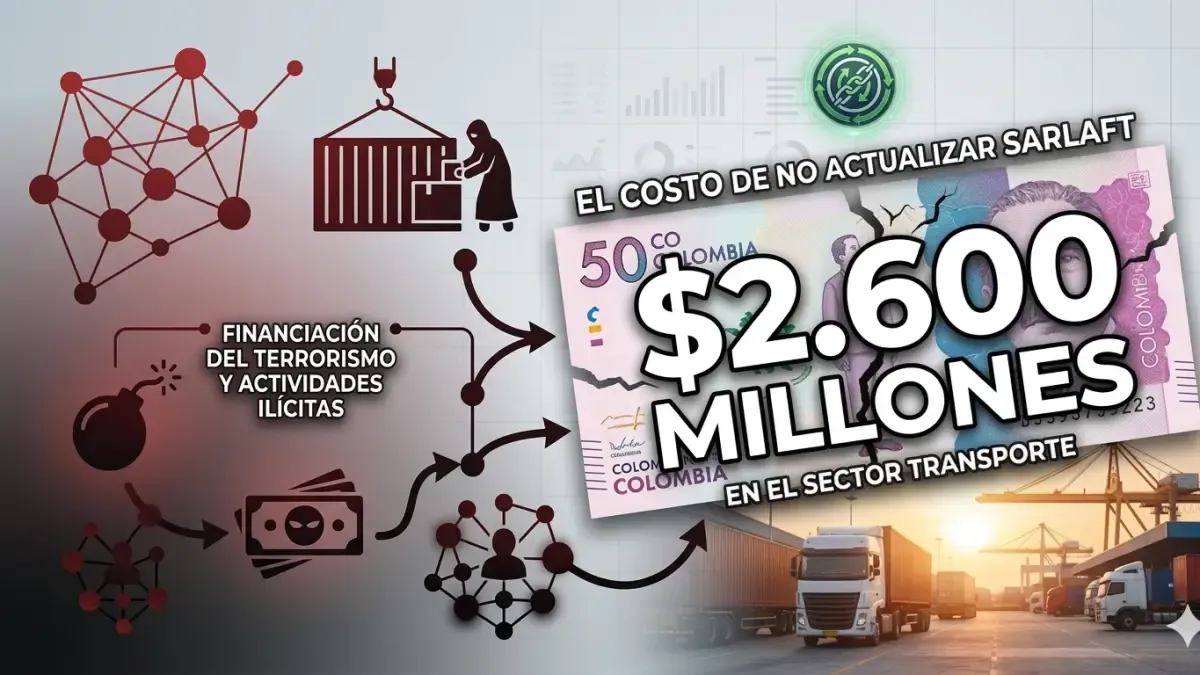
SARLAFT is the System for the Administration of Money Laundering and Terrorism Financing Risk. Photo: AI Generated
TL;DR
- Transport companies face significant fines and sanctions for non-compliance with updated Sarlaft regulations.
- The Superintendencia de Transporte has raised compliance standards for cargo, passenger, special transport, concessionaires, and infrastructure companies.
- Penalties can include fines of up to 2,000 SMMLV (approximately $2.6 billion), activity suspension, and contracting restrictions with the state.
- Updated Sarlaft requires risk matrices based on real data, deeper due diligence, and permanent, traceable monitoring.
- Sarlaft integration with transparency and business ethics programs is mandated, linking money laundering risks with corruption and bribery.
- Senior management and corporate governance bodies are now directly responsible for the system's functionality.
- Compliance requires demonstrating control functionality, monitoring, auditing, and response capabilities, not just written policies.
- The true risk extends beyond fines to operational and reputational damage.