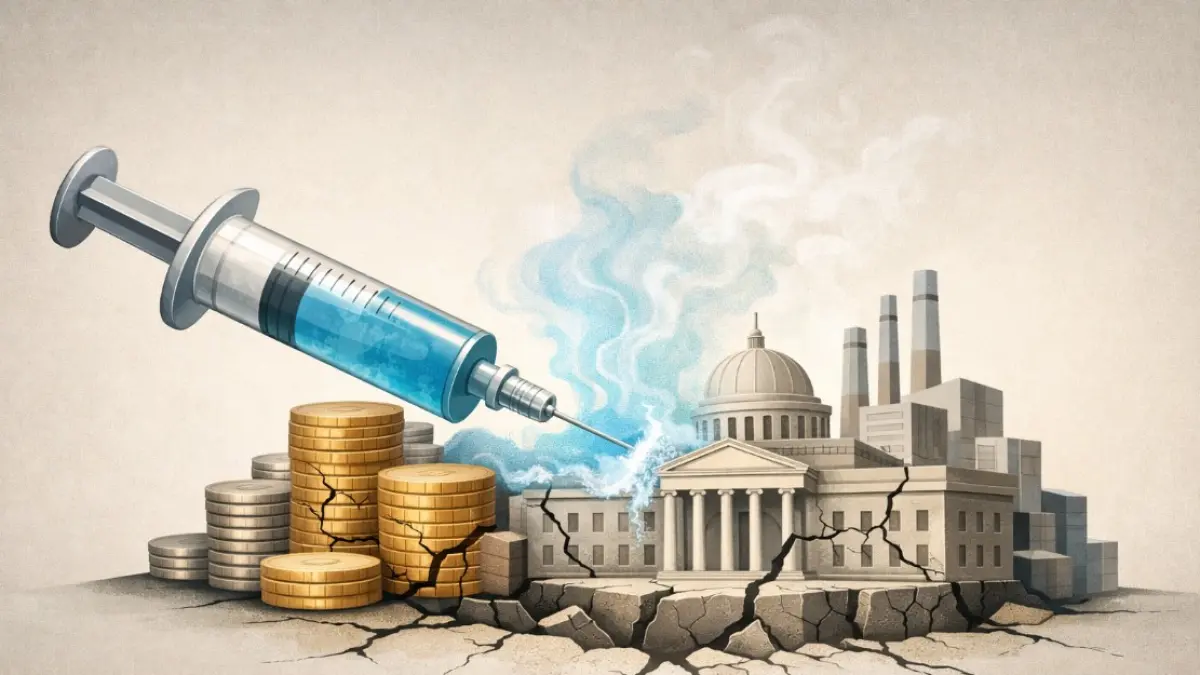
The 'fiscal anesthesia' that eased public accounts in 2025, through debt, is losing its effect
Spending cuts must be a priority for authorities in 2026. Photo: Image generated with artificial intelligence.
TL;DR
- Colombia's public accounts experienced temporary relief in 2025 due to debt management strategies, which acted as a temporary 'anesthesia' to fiscal pressures.
- The fiscal deficit reached 6.4% of GDP in 2025, with the primary deficit at 3.5% of GDP, indicating significant pressure on debt sustainability.
- Unlike previous crises, the current fiscal deterioration is primarily due to increased public spending, not severe macroeconomic shocks.
- Increased primary spending between 2022 and 2025 absorbed savings from debt financing, widening the structural fiscal imbalance.
- Lack of clarity on short-term financing needs and the delayed publication of the 2026 Financial Plan have increased market uncertainty.
- The next government will require a fiscal adjustment of 3-4% of GDP to comply with the fiscal rule by 2028.
- Corficolombiana estimates the fiscal deficit to remain high at 6.8% of GDP in 2026, with the primary deficit at 3.7% of GDP.
- The market has 'woken up' to the fiscal deterioration, leading to significant devaluations in public debt securities and higher interest rates.
- Colombia faces a fiscal crossroads where economic policy decisions will be crucial to prevent current imbalances from consolidating into a growing debt dynamic.