Escasez de agua golpea a comunidades migrantes en San José, Costa Rica
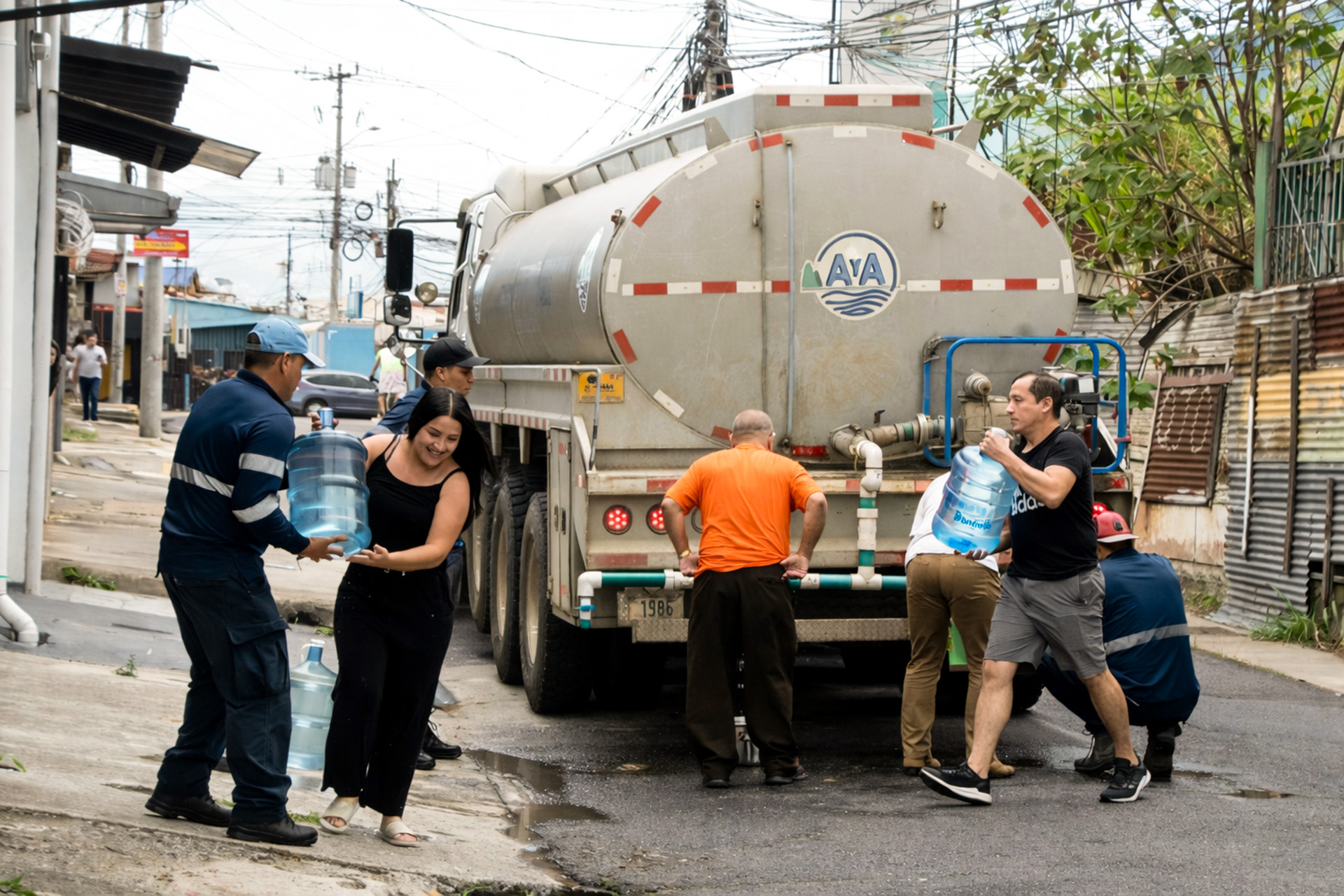
La falta de agua potable se ha convertido en una rutina incierta para cientos de familias del Gran Área Metropolitana de San José. En barrios como Pavas, los cortes prolongados e intermitentes revelan una crisis estructural que golpea con más fuerza a comunidades migrantes y expone fallas históricas en la gestión del recurso hídrico.
TL;DR
- Pavas, a densely populated district in San José, has faced prolonged water service cuts for months, even years.
- Water often arrives intermittently, mainly during the night, forcing families to collect and store water.
- Migrant communities, including Nicaraguan migrants, are disproportionately affected and fear reporting the issues due to their immigration status.
- Water scarcity is not isolated to Pavas, with other San José areas like Alajuelita and Guadalupe also reporting consecutive days without water.
- Factors contributing to water scarcity include climate change (prolonged droughts) and poor resource management, as well as aging infrastructure and historical deficiencies in the piping system.
- Environmentalists note that water source contamination and decreased availability are widespread issues.
- Despite Costa Rican law recognizing water as a human right for all, fear of reprisal prevents many from seeking solutions.
- Institutional responses, such as infrastructure upgrades by Acueductos y Alcantarillados, are ongoing but deemed insufficient by affected communities.