Manual for Losing a Country (and Continuing to Cite Articles)
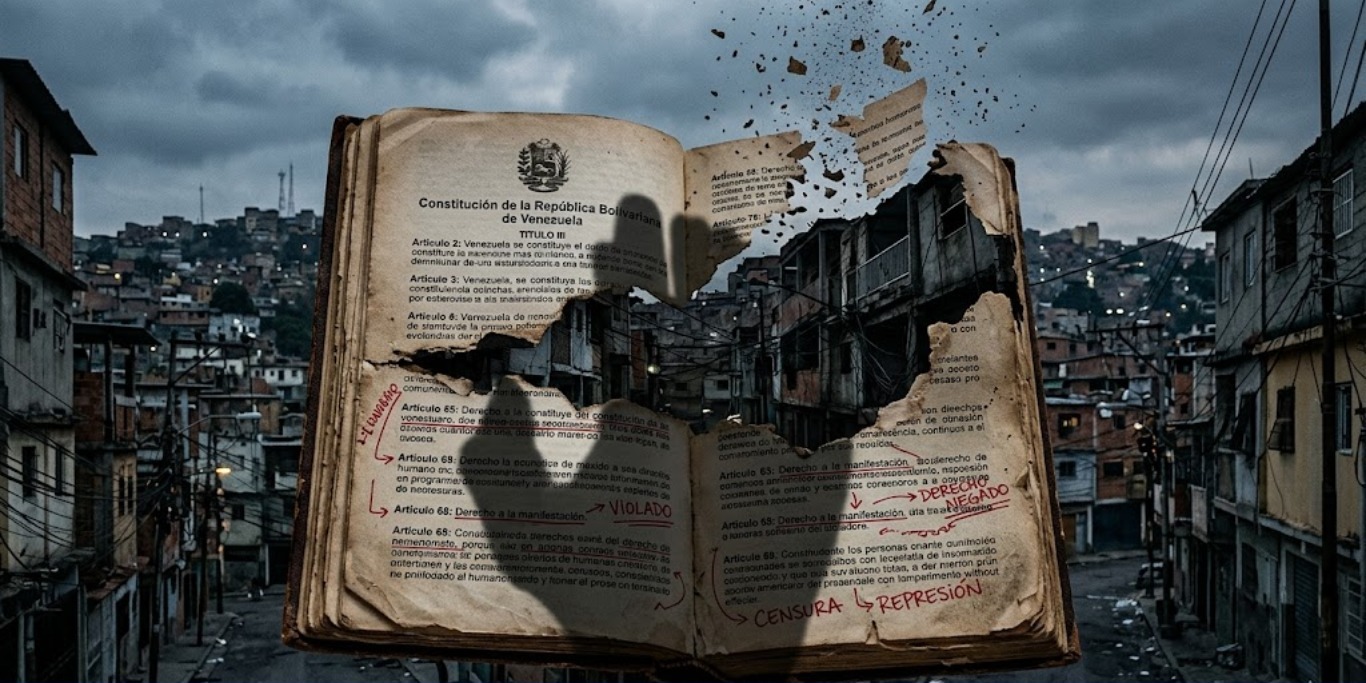
In Venezuela, something extraordinary is happening: while power is exercised without shame, politics is discussed with a manual in hand. Articles are invoked as if they were amulets, procedures are recited as if they were spells, and it is expected—with a faith bordering on the liturgical—that the constitutional text will do what politics has failed to do for twenty-five years. It is a familiar scene: the real country crumbles, but the legal country continues to fight on paper. And there, on that paper, many continue to search for a way out.
TL;DR
- Venezuelan politics is characterized by a reliance on constitutional articles and procedures, often treated as magical solutions.
- The current political crisis stems from a fundamental shift where power adapts the constitution rather than adhering to it.
- The opposition's strategy of engaging solely within the constitutional framework has devolved into political ritualism, replacing effective strategy.
- The crisis is primarily a power crisis, where legal norms become tools for power rather than limits.
- Political transitions are driven by factors beyond legal interpretation, including negotiations, pressures, and elite fractures.
- An exclusive focus on formalism in politics is ineffective and depoliticizes conflict by turning it into a technical discussion.
- The promise that a way out lies solely within the rules has proven insufficient.
- A serious approach to the Republic requires understanding that it is sustained by decisions, power dynamics, and responsibilities, not just texts.
- Postponing politics in Venezuela, through adherence to ineffective procedures, is a form of taking sides.