Economías regionales crecen bajo control de grupos armados mientras los combatientes superan los 27.000 en Colombia
Periodista Portafolio04.02.2026 13:52 Actualizado: 04.02.2026 18:33
TL;DR
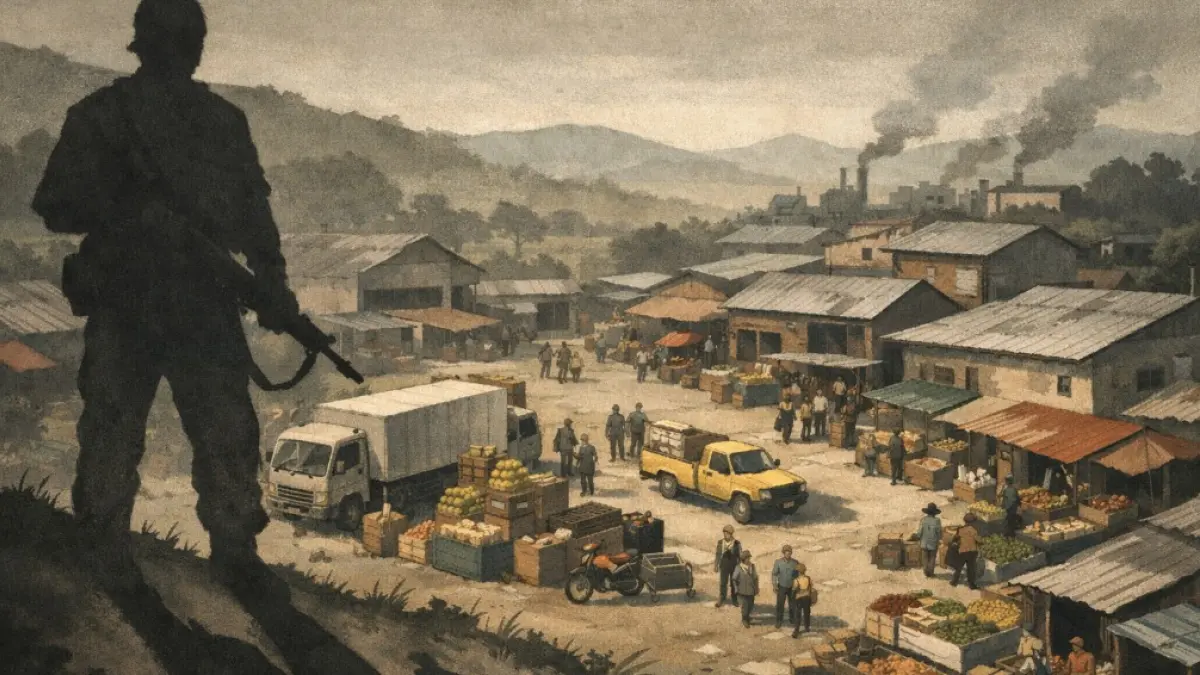
- Regional economies in Colombia are growing but operate under armed group control, not state rules.
- This informal regulation and rent capture do not translate into development for the people.
- Economic growth is precarious, fragmented, and heavily influenced by violence, which is intensifying in some areas.
- Illegal armed groups have increased by approximately 23% compared to the previous year, reaching over 27,000 members.
- The conflict is characterized by multiple armed structures with fragmented territorial interests, leading to increased disputes.
- 13 regions currently have active armed disputes, nearly double the number at the start of the current government.
- Armed groups influence formal sectors, imposing their own rules and affecting local hiring and public resource allocation.
- The economy diversifies beyond drug trafficking to include illegal mining, deforestation, land grabbing, and human trafficking.
- Economic growth does not equate to sustainable development or regional convergence, widening gaps between regions.
- Over one million people were affected by displacement, confinement, and mobility restrictions in 2025.
- Armed groups act as arbiters in economic life in consolidated areas, regulating activities and extracting rent.
- Despite criminal governance, some regions like Urabá show economic activity, such as banana cultivation and infrastructure projects.
- Addressing the issue requires understanding the economics sustaining armed groups and fostering long-term strategies.
- Transformation requires state, private sector, and community articulation to break the cycle of growth under armed rules.