Following the Petro government's halt, Antioquia seeks a 'Plan B' to expand the José María Córdova airport
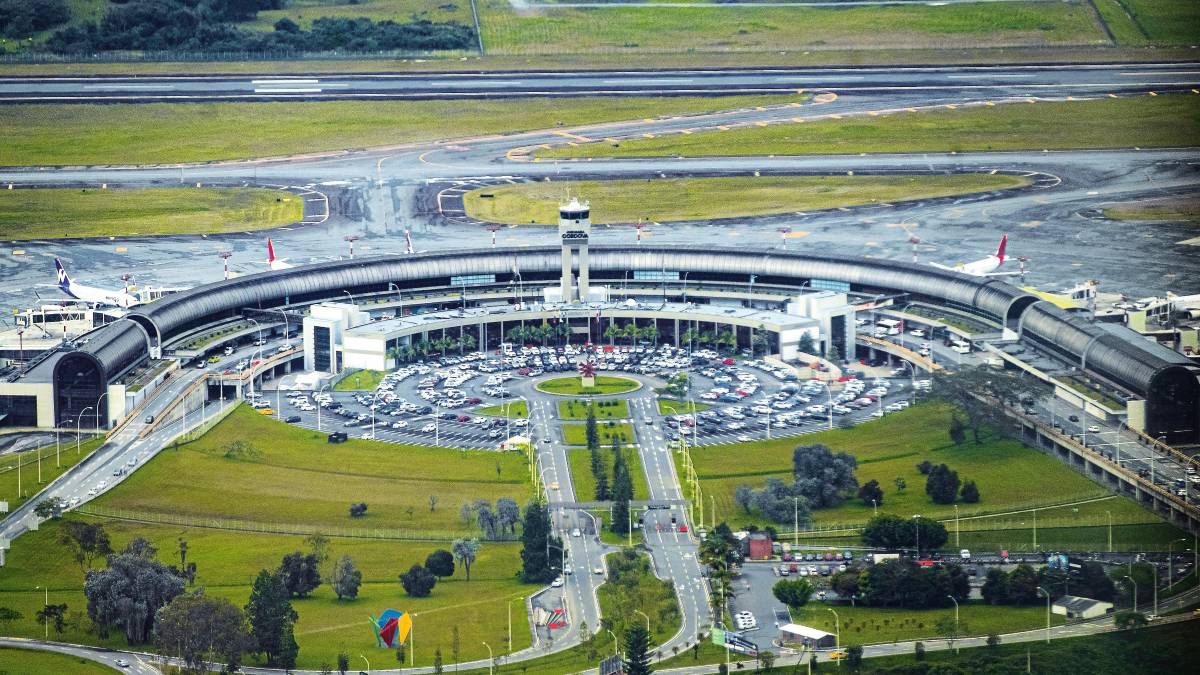
Given the National Government's lack of "green light" to expand the José María Córdova airport and the astronomical cost of its second runway—whose investment is equivalent to that of Hidroituango—Antioquia has begun to manage its own ways to decongest a terminal that exceeded its operational capacity three years ago. The story seems to repeat itself: as in the 70s, the region is forced to lead and "pedal" autonomously the project that today keeps its air competitiveness in suspense.
TL;DR
- Antioquia is seeking an alternative plan to expand the José María Córdova airport as the National Government has not given approval.
- The estimated cost for the airport's expansion, including a second runway, is $22 trillion, comparable to the cost of Hidroituango.
- The airport is currently operating at 14.5 million passengers, significantly exceeding its designed capacity of 11 million.
- Short-term improvements, designed by the concessionaire Airplan, require only a signature from the ANI to proceed and are funded by the concessionaire.
- These short-term works include maintenance on the runway, adding six new parking positions for aircraft, and expanding the terminal with 24 new counters and six boarding gates.
- The long-term master plan, valued at $22 trillion, includes a second runway and a new terminal, with execution projected until 2055.
- Concerns exist about the funding mechanisms for the master plan, with proposals for 'turnkey' projects and public-private partnerships facing scrutiny.
- The current situation mirrors historical challenges in constructing the airport, which also faced significant delays and government inaction.