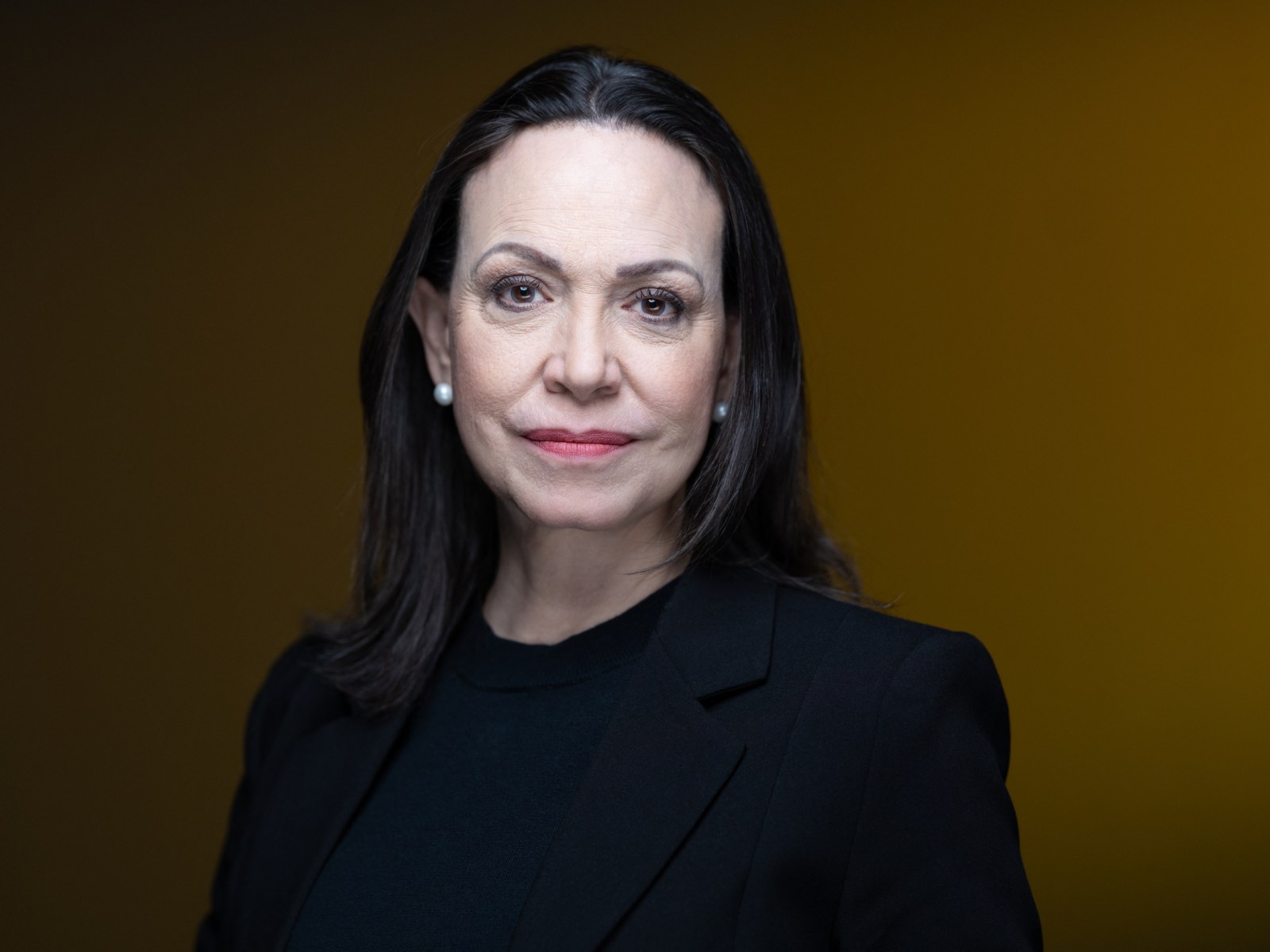
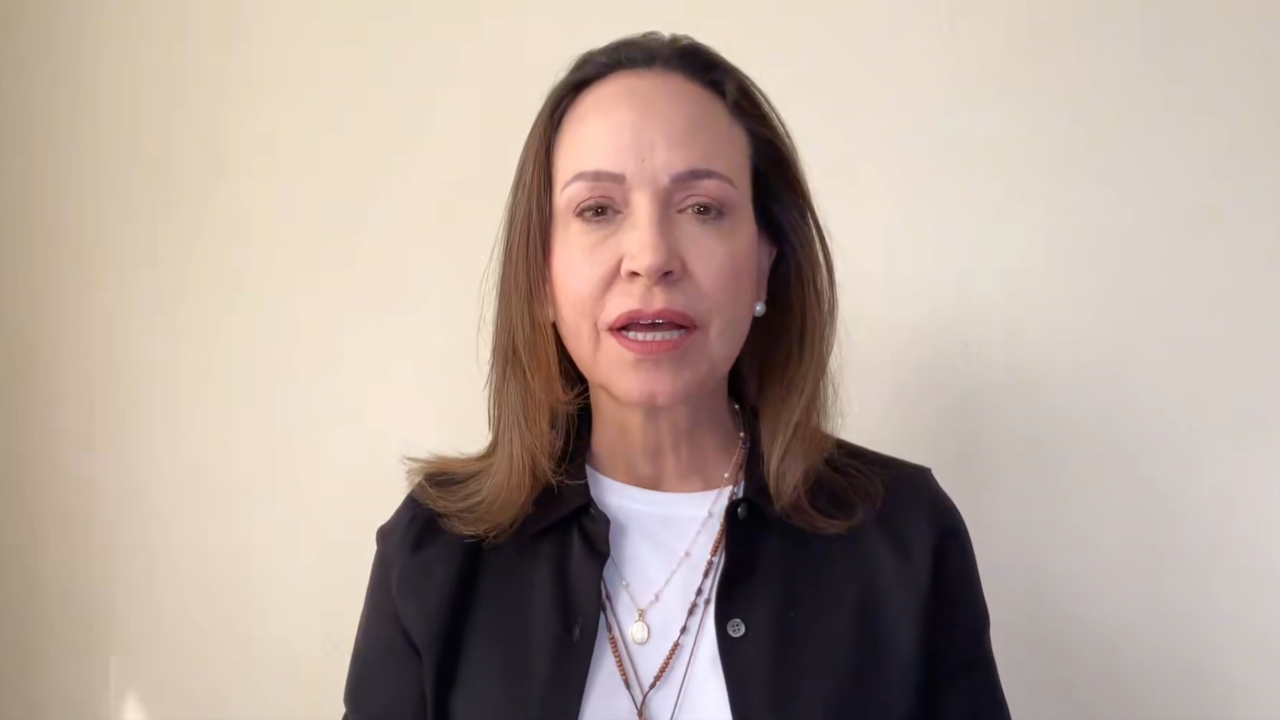
For years, Venezuela has been a difficult country to measure. Not because Venezuelans lack opinions, but because expressing them has come at a very high cost. In the final stages of Nicolás Maduro's tenure, polls ceased, some pollsters had to hide, and people began to respond to any political question with 'don't know, no answer.' In recent months, however, new data has begun to emerge. And what it reveals is that Venezuelans are currently navigating between a hope that has never risen so fast and a distrust that shows no sign of abating. It is an 'vigilant expectation,' as defined by Saúl Cabrera, president of Consultores 21, a firm with 40 years of experience in the country. The numbers are not comparable and vary by pollster, but they show some common scenarios. María Corina Machado remains the undisputed leader, regardless of the poll. Delcy Rodríguez does not have the trust of most of her citizens, although a third of Venezuelans still approve of her management. And the United States and Donald Trump have achieved unprecedented popularity in a country that spent two decades being told that imperialism was the enemy. Venezuelans want change, but they also prioritize resolving their economic precariousness first. Polls in Venezuela are generally private commissions circulated among corporations, investment funds, and embassies that pay to understand the terrain they are navigating. Most do not appear in newspapers. Furthermore, not all polling firms are what they seem. Alongside established firms, there are others created specifically to produce government-favorable numbers, appearing during electoral junctures and disappearing when no longer needed. Venezuela has been speaking a lot lately about hope, a fragile sentiment built on expectations, but one that has become measurable again in recent months. In February 2026, ORC Consultores registered that 81% of Venezuelans declared themselves hopeful about the country's future, the highest level in their entire historical series. In December 2025, when hundreds of US ships loomed in the Caribbean, this same indicator was at 51%. The jump occurred in a few weeks, after January 3rd, when Maduro was arrested. 'The first change we observed over time was not in the polls, but in the phones,' explains Oswaldo Ramírez, director of ORC. 'People stopped deleting political messages and started forwarding memes about Maduro. That's also data.' Ramírez spent almost a month in hiding, accused of being behind the collection of electoral records to demonstrate the fraud in the July 2024 elections. Venezuela's contradictions are also reflected in the numbers. Six out of ten Venezuelans believe they will live better in the short term. At the same time, almost six out of ten evaluate their current living conditions negatively, according to a Datanalisis survey from late April, a private poll that EL PAÍS had partial access to. This paradox—optimistic about the future and pessimistic about the present—is a good portrait of the country's mood at this moment. According to this survey, the most frequent emotion reported is hope again, at 40%, above frustration and anxiety. But economic pressure does not ease: inflation, devaluation, and low wages account for almost 80% of responses when asked about the most urgent problem. 'The economy is no longer just another problem, it is the lens through which Venezuelans interpret everything else,' states Luis Vicente León, head of Datanalisis. Venezuelans have two priorities: economic improvements and political change. And they do not necessarily go hand in hand. In the ORC survey, 85% of respondents believe that economic stabilization should come before an immediate democratic transition. At the same time, 57% state they would not give the current government an electoral chance even if the economy improves. In Datanalisis, 62% say the economic issues must be resolved first, even if political change takes longer. 'This does not mean they do not want elections or changes; they want them, and clearly,' warns Luis Vicente León. 'What the study tells us is that they prefer that process to happen under certain conditions.' Almost half prefer that, before going to elections, a national agreement with rules and guarantees be built, compared to 33% who want them as soon as possible, even if the agreements are incomplete. When Consultores 21 presented their respondents with the dilemma of choosing between democracy or economic stability without democracy, two out of three chose the former. 'People realized that economic policy is made by politicians,' explains Cabrera. 'They are not separate variables.' According to Cabrera's numbers, two out of three Venezuelans want elections to be called, and three out of four expect them in the short term. Responses regarding political leadership have few nuances. According to ORC, when asked spontaneously who they would vote for if there were elections this Sunday, 44% respond María Corina Machado without anyone suggesting her name. That is her floor, not her ceiling. No other Venezuelan politician comes close: Edmundo González appears with 12% and Delcy Rodríguez with 8.5%. The fact that Machado has spent more than a year between clandestinity and exile without her leadership waning is itself a significant point. 'We are almost three decades in which several valued opposition leaders have ended up consumed by political circumstances. This has not been the case with María Corina, so far,' notes Cabrera, who is beginning to place Juan Pablo Guanipa, a close collaborator of Machado and recently released from prison, in an incipient third place in his surveys. In the ranks of Chavismo, however, Maduro's fall did not erode existing support. One out of every four Venezuelans remains Chavista or justifies Chavismo. 'Chavismo is in full mutation,' warns Cabrera. There is another piece of data that summarizes the country's mood. When asked who Venezuelans trust to achieve their well-being, oil companies, with 59%, receive more support than Trump (52%) and María Corina Machado (49%), according to the ORC sample. And of course, more than Delcy Rodríguez, the president of a country where three out of four citizens do not trust her. Total distrust is led by Rodríguez with 74.4%, while Machado worries 19% and Trump 15%. Other polls confirm the trend: according to Atlas Intel, Rodríguez's approval has fallen month by month, from 37% in February to 31% in April. Venezuela's destiny is currently unpredictable, but the polls portray the distrust of a country still governed by the heirs of a revolution that broke the economy and repressed its citizens. A revolution that no longer has a way to make anti-imperialism its banner, when Venezuelans today trust Donald Trump more than their own president. And more in foreign companies coming to extract their oil than in any local politician.