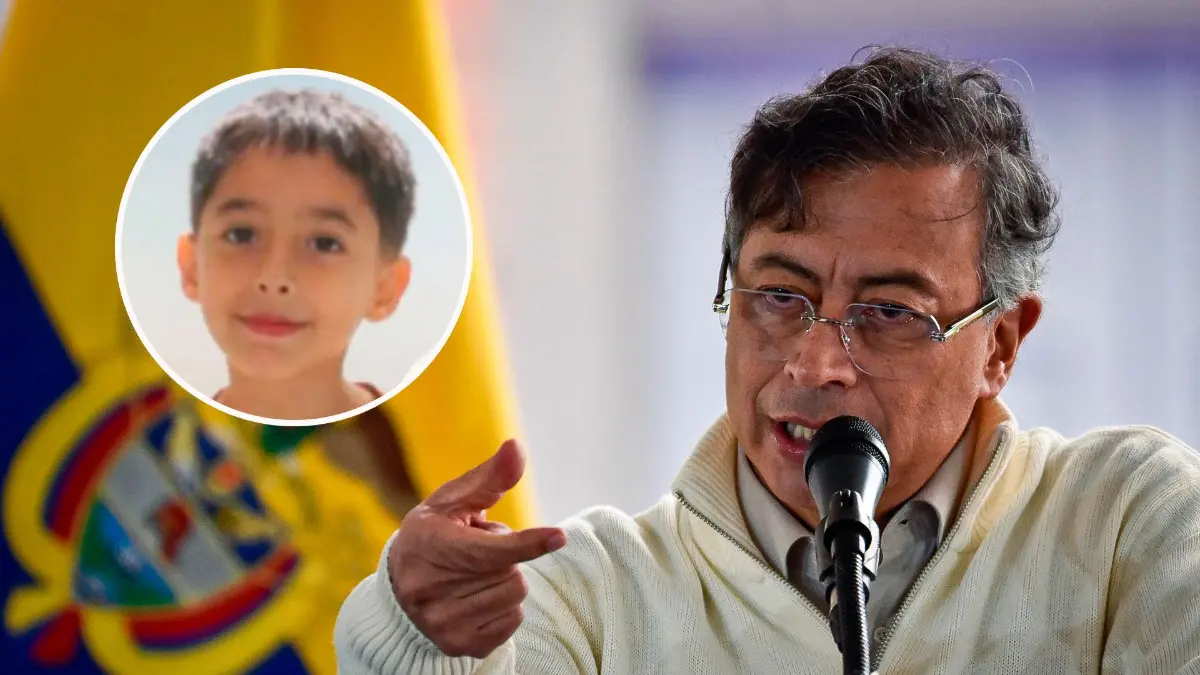
The case of Kevin Arley Acosta Pico, the seven-year-old boy who died waiting for Nueva EPS to provide him with treatment for his diagnosis of hemophilia A, has been a reflection, in recent hours, of the depth of the health system crisis that is taking dozens of patients who die waiting for their medications. The minor was transferred to a medical center in La Plata, Huila, after suffering an accident while riding his bicycle. After three days of care in that health center, he was transferred to Bogotá, to the La Misericordia hospital, where he finally died this weekend. Kevin Arley suffered from severe hemophilia A, which, as Diego Gill, executive director of the Colombian Federation of Rare Diseases, explains, is 'a bleed, like a cerebral one, it can progress very quickly. Continuity of treatment is not optional, it is mandatory. If timely supply of the factor and specialized follow-up is not guaranteed, the outcome can be fatal.' The minor's mother, Katherine Pico, amid her pain, revealed that she had been requesting medication for her son's treatment since December, but Nueva EPS – intervened by the Government – had not supplied it, a situation that worsened the minor's health condition and left him vulnerable to everyday actions that any child of his age performs, such as riding a bicycle. 'The last dose he received was on December 12. On the 31st, they told me that Nueva EPS ended its agreement with Medicarte. They knew where he was. The child used the treatment since he was 9 months old. I couldn't keep him tied up or locked away,' Pico said in an interview with Blu Radio, contradicting the version of Petro and the minister. Kevin then died waiting for the medications to treat his hemophilia diagnosis, and not from riding his bicycle, as mistakenly suggested this Monday by both the Minister of Health, Guillermo Alfonso Jaramillo, and President Gustavo Petro during a Cabinet meeting. In that new cabinet meeting, both the minister and the president referred to the minor's case, downplaying the EPS's responsibility to provide his treatment and instead, they blamed the mother for her son's death by allowing him to play. 'Who are the institutions that must prevent? First, the family. If one educates more, they are in a better position to prevent... If a child with hemophilia is not allowed to ride a bicycle, they have fewer risks. If the doctor or the health system does not teach, the mother does not know, mothers are not born knowing, especially in the very deficient educational levels that exist in Colombia,' expressed the president, somehow re-victimizing the family of the deceased minor. The Minister of Health, for his part, assured that according to reports, Kevin Arley suffered a 'traumatic brain injury' after the fall from his bicycle. He also stated that children with hemophilia should have activities that could imply severe trauma restricted. 'It is understandable that children suffering from hemophilia must be restricted in many activities that can cause them severe violent and hemorrhagic trauma,' stated the official. But, how true is it that a child diagnosed with hemophilia cannot ride a bicycle? Can children with hemophilia like Kevin Arley Acosta ride bicycles and practice other sports? The question was answered by Dr. Agustín Contreras, a pediatric hemato-oncologist at the Fundación Cardioinfantil in Bogotá, who, in dialogue with the radio station La FM, assured that minors diagnosed with hemophilia like Kevin Arley can indeed ride bicycles and practice other sports. In fact, the specialist assured that this physical activity 'is one of the activities we recommend,' as long as the patient is receiving their medication and has protective measures such as a helmet, knee pads, and elbow protection. Thus, riding a bicycle did not put the child's life at risk; what put it in danger was the lack of his treatment, which was not supplied by an EPS intervened by the Government. Dr. Contreras emphasized in the interview that, although the medication reduces the risk, 'it is fundamental that the patient is receiving the factor and has protective measures.' The doctor insisted that children with hemophilia are not prohibited from engaging in physical activity. 'No, children can carry out their activities with preventive measures and the use of medication,' he concluded.