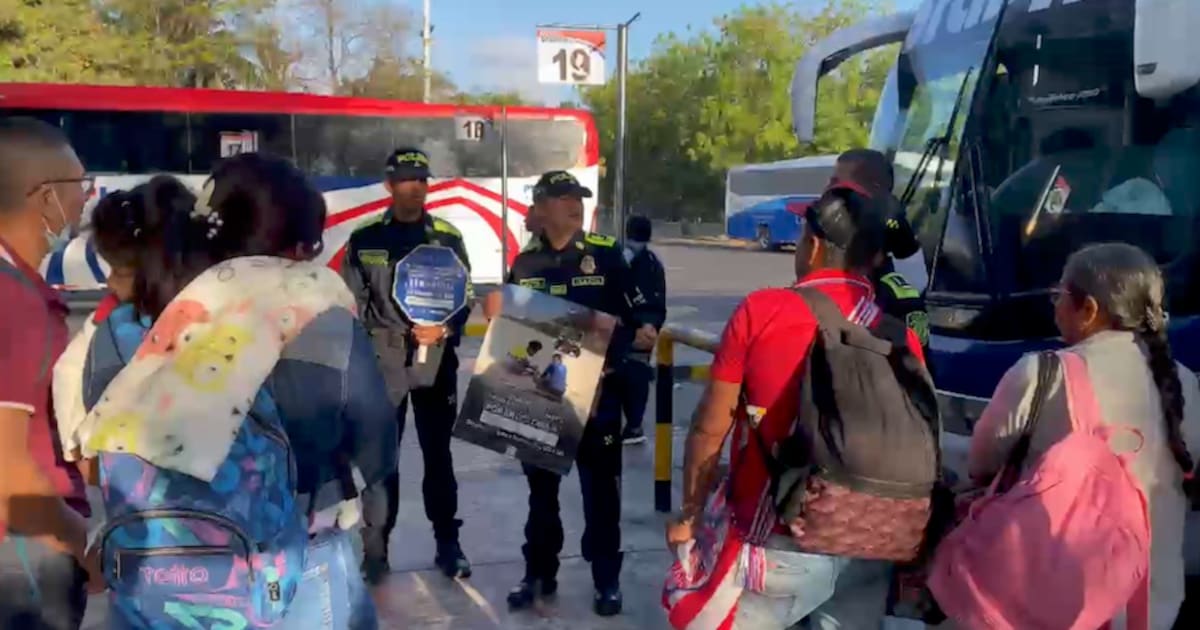
Thousands of people in the state of Sucre and parts of Margarita Island, in northeastern Venezuela, have been facing an unprecedented water crisis for almost two months, forcing them to rely on seawater, rivers, or improvised sources to survive this situation, which has been managed with secrecy by the authorities. The Governorate of Sucre announced on March 5th the declaration of a 'water emergency' due to a 'structural failure' in a diversion tunnel of the Turimiquire reservoir following a 'seismic event', the exact date of which is unknown. However, it wasn't until early March that the emergency gained national attention after several days of dry taps. On the 29th of that month, authorities reported the rescue of eight workers who had been 'isolated' for several hours while working in the tunnel. The Turimiquire reservoir supplies a large part of Cumaná, the capital of Sucre, and part of Margarita – home to over 600,000 and 300,000 inhabitants, respectively – as well as the Sucre municipalities of Araya and Marigüitar. Some unions speak of up to one million people affected, but the figures are unclear due to a lack of official information amidst growing citizen desperation. 'We are living this tragedy, because it has truly become a tragedy for us, the citizens, to have to carry water to be able to wash, to clean the bathrooms, for daily necessities,' William Zang told EFE. This 63-year-old man uses a homemade cart to carry water from a source located in a public square, which, luckily, is just a few meters from his home, but sometimes doesn't work. Residents are seeking alternatives to supply themselves without knowing details about the magnitude of the failure or how long it will take to repair the structure and fully restore the water service. And although, ironically, Zang seems lucky, his story is not common. Other people have to travel to very remote areas in search of water sources or go to the beach. Many also turn to relatives, as part of the city is supplied by the Cancamure dam and an old, remodeled station. Engineer Nelson Rodríguez, former president of Hidrocaribe, the company responsible for water supply, explained that the Turimiquire reservoir provides Cumaná with 'double' the water that Cancamure supplies. 'We are talking about approximately two-thirds less water that this area is no longer receiving,' Rodríguez explained. In Araya, known for its salt flats, people are digging wells in search of water, while authorities have set up three desalination plants to alleviate the situation. 'Every day you have to find water, come to these areas,' commented Ronald Maíz, a transporter who approached some freshwater pipes on a highway outside Cumaná, where dozens of people gather. He is not sure where the water comes from, but it serves for household chores. Maíz said he fills about 100 two-liter bottles for various tasks at home, while he buys drinking water for about a dollar after suffering 'stomach problems' from ingesting the water from these pipes. Meanwhile, losses in the commerce sector are estimated at 16 million dollars, according to a study by the local college of economists. The president of the Chamber of Commerce, Production, and Industries of Cumaná, Miguel Amendolara, told EFE that the sector is in 'the red' with a 40% paralysis. 'We have received reports from some affiliated businesses that have had to close their doors because they have received no water, others have resorted to supplying themselves through private tankers,' explained the leader, for whom this 'damages' the cost structure of businesses. Even some cleaning companies or marine product canning companies – one of the main products of these fishing regions – have not been able to operate in parts of Cumaná. The situation has also forced the reduction of working hours in various sectors. Some schools have opted for distance learning. 'We are alarmed because to date there is no precise plan for the community, there is no response,' lamented Cristina Santana, president of the College of Engineers of Sucre. Meanwhile, the Governorate of Sucre assures that it is working to restore the service. EFE