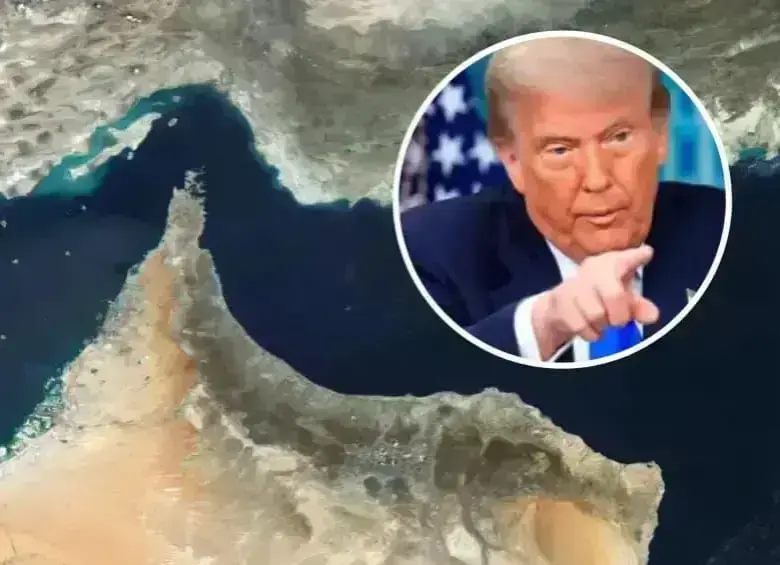
Trump Contemplates Maintaining Naval Blockade Against Iran for "Months" if Necessary
The United States will maintain the naval blockade of Iran's ports for months if necessary, President Donald Trump communicated to oil sector businessmen, according to a White House official on Wednesday. The president held a meeting with sector executives on Tuesday at the White House, Axios reported. There, they discussed "the measures taken by the president to alleviate the situation of global oil markets and those that could be taken to maintain the current blockade for months if necessary and minimize the impact on American consumers," the official, who spoke on condition of anonymity, said in a statement to AFP. "The president frequently meets with energy sector executives to gather their opinions on national and international energy markets," the official stated. Topics such as "domestic production, developments in Venezuela, oil futures, natural gas, and maritime transport" are discussed in these meetings, he added. Treasury Secretary Scott Bessent, Vice President JD Vance, and Chief of Staff Susie Wiles also attended the meeting. American oil giant Chevron confirmed to AFP that its CEO, Mike Wirth, participated in the meeting. Global crude oil prices soared on Wednesday following media reports that Trump was considering an extension of the blockade on Iran. Brent crude exceeded $116 per barrel and WTI approached $105 at 14:15 GMT. The war in Iran threatens to plunge over 30 million people into poverty, expressed the head of the United Nations Development Programme. "We conducted a study after six weeks of war and estimated that even if the conflict ended at that moment, 32 million people would be pushed into precariousness in 160 countries," Alexander De Croo told AFP in Paris. The war has led to the closure of the Strait of Hormuz, through which about a fifth of the world's oil and liquefied natural gas normally passes. The shortage of supplies and high prices have led countries in Africa and Asia to impose a combination of measures such as fuel rationing and reducing the work week to decrease consumption, while others have reduced fuel taxes to cushion the impact on consumers. "It's reverse development," De Croo said. "It took decades to build stable societies, develop local economies, and it only took several weeks of war to destroy that," he added. According to the UNDP, the war will have a profound impact on countries in sub-Saharan Africa or Asia such as Bangladesh and Cambodia. Q&A Block: What impact does this conflict have on the price of oil? With the Strait of Hormuz blocked, through which 20% of world crude passes, supply is drastically reduced. This has led the price of a barrel to exceed $100, increasing global inflation. Why is the United States blocking Iran's ports? It seeks to control oil exports and protect international prices amidst geopolitical tensions.