Banco Mundial alerta que una de cada cuatro economías en desarrollo sigue más pobre que antes de la pandemia
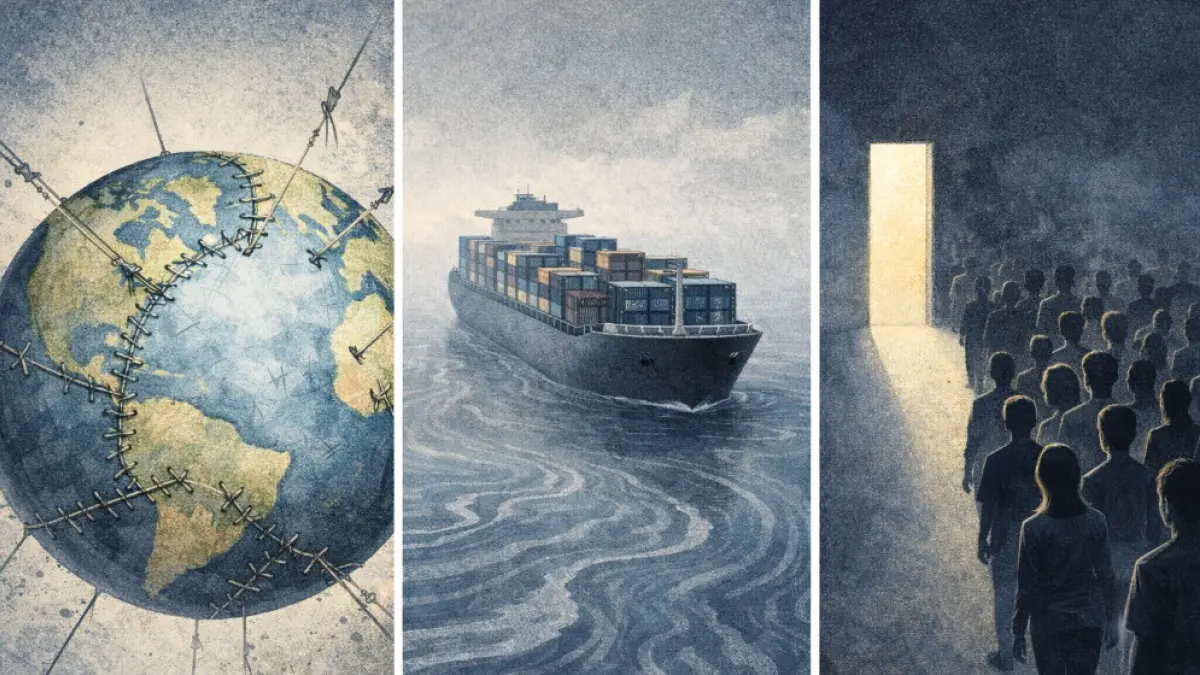
El mundo seguirá creciendo en su economía, pero con avances desiguales. Foto: Imagen generada con Inteligencia Artificial - ChatGPT
TL;DR
- Global economy shows resilience despite historical uncertainty in trade and policies.
- Growth is weakening, and recovery is not reaching all countries equally, especially less developed ones.
- One in four economies is poorer than in 2019.
- Global growth is projected at 2.6% in 2026 and 2.7% in 2027, indicating a slow path.
- The 2020s decade is on track to be the weakest for global growth since the 1960s.
- A widening gap in living standards is observed, with most advanced economies surpassing 2019 income levels while developing economies lag.
- Trade growth boosted the economy in 2025 but is expected to fade in 2026 as global demand weakens.
- Factors like easing financial conditions and fiscal expansion may cushion the slowdown.
- Global inflation is predicted to fall to 2.6% in 2026.
- The World Bank chief economist notes the economy's diminishing capacity to generate growth despite increased resilience to policy uncertainty.
- Governments are urged to liberalize private investment and trade, curb public consumption, and invest in technology and education to restore growth capacity.
- Developing economies are projected to slow down moderately in 2026, with growth rates expected to rise gradually thereafter.
- Low-income countries are expected to grow, but without closing the income gap.
- A large-scale labor challenge looms as 1.2 billion young people in developing economies reach working age in the next decade.
- Regional growth projections include acceleration for Latin America and the Caribbean.
- Regional growth projections: East Asia and Pacific (4.4% and 4.3%), Europe and Central Asia (2.4% and 2.7%), Middle East and North Africa (3.6% and 3.9%), South Asia (6.2% and 6.5%), and Sub-Saharan Africa (4.3% and 4.5%).