politics
May 9, 2026
The Last Homeland
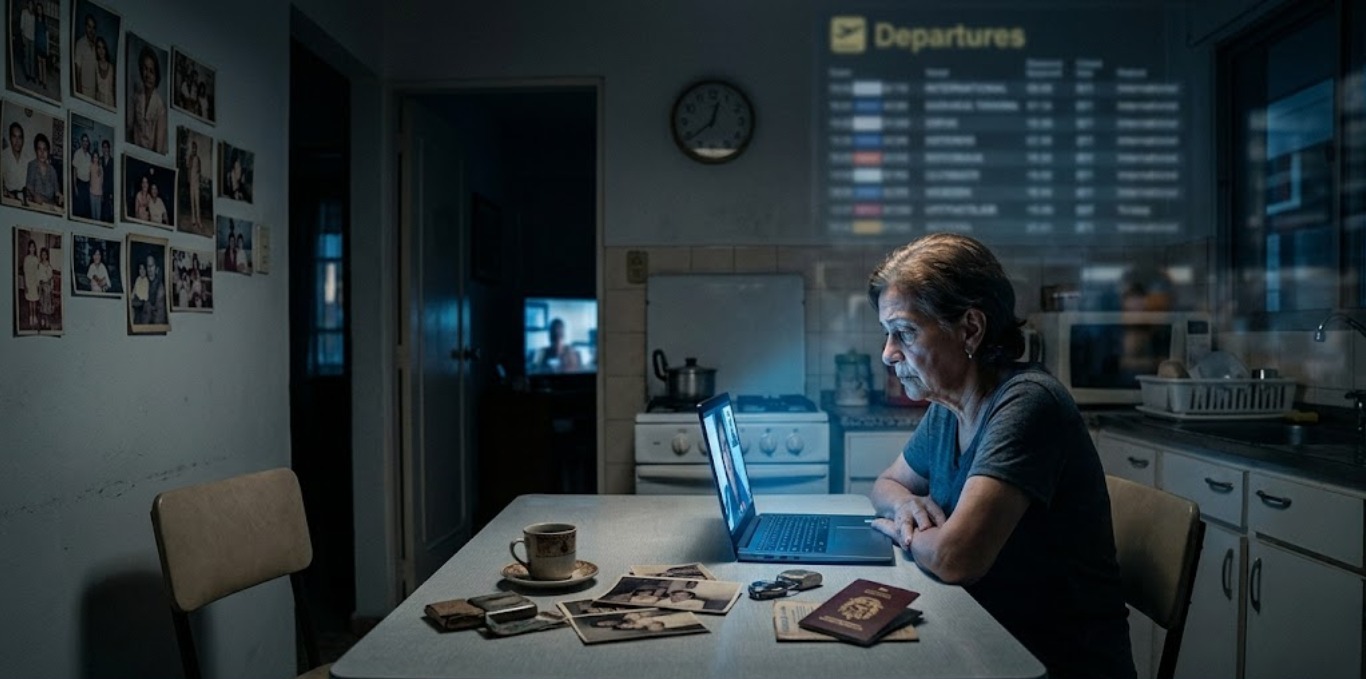
There are photographs that time deteriorates and others that pain makes eternal. In almost all Venezuelan families scattered around the world, there is an image that ends up acquiring a sacred gravity: a mother leaning on the edge of a table, a mother waiting in a silent room, a mother smiling without knowing that years later that photograph will be consulted like one opens a reliquary. Exile turns the simplest images into small ruins of happiness. And then one discovers that the word return does not always name a place: sometimes it names a woman.
TL;DR
- Exile creates enduring emotional wounds for Venezuelan mothers and their children, often unrepresented in statistics or political discourse.
- Photographs of mothers waiting become sacred relics, symbolizing lost happiness and the longing for return, which sometimes means returning to a woman, not just a place.
- Distance distorts time, leaving children with vivid memories of mothers they haven't seen in years, making memory feel like a home where someone still waits.
- Mother's Day is a difficult occasion for Venezuelan emigrants, marked by silent ceremonies like interrupted video calls and replayed voice messages.
- The political narrative of migration often overlooks the mothers who aged watching airports, learned time zones, and feigned tranquility to shield their children from guilt.
- Mothers in exile develop a heroic form of silence, learning to say 'I'm fine' amidst growing emptiness and the repeated heartbreak of goodbyes.
- Exile can cruelly inflict incomplete grief, preventing children from being present at their mothers' deaths and mothers from burying their children who died far away.
- Mothers become the last territory of the homeland, representing the true 'nation' made of small, intimate moments like morning coffee or kitchen discussions.
- Each Mother's Day serves as an inventory of absences, with children missing milestones and mothers hiding their deterioration to avoid worrying their children.
- Exile reshapes the way people love, forcing them to build affections with borrowed time, photographs, and memories that blur with imagination.
- A mother's love persists like lights in old houses, offering silent blessings, continued care, and a minimal normality amidst global dispersion.
- A mother's love is presented as the last possible form of homeland, surviving the failure of countries, time, and distance, remaining intact even when all else is lost.