The Normalization of Evil, Jorge Rodríguez Version
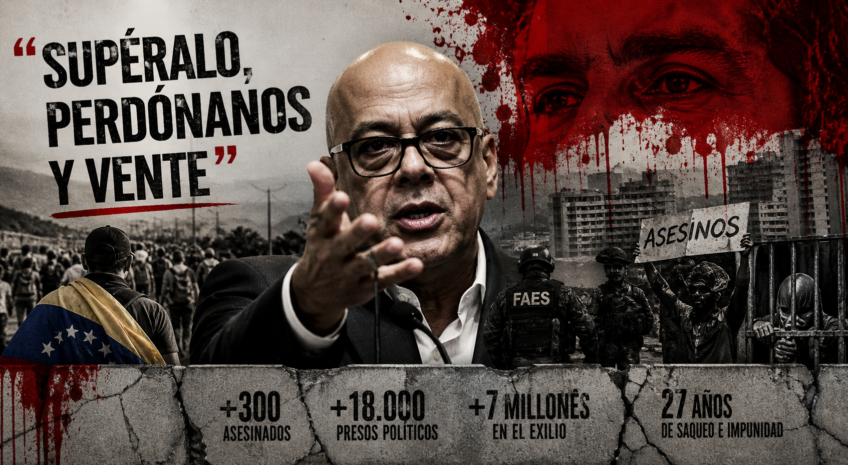
“Get over it, forgive us, and come back,” Jorge Rodríguez told the Venezuelan diaspora that fled the country. For him, an original Chavista who has based his political career on resentment for the murder of his father—whose culprits, it must be said, were duly tried and convicted—he pretends, from a moral superiority that does not belong to him, to speak of forgiveness and reunion.
TL;DR
- Hannah Arendt distinguishes between human offense and radical evil as a framework for understanding forgiveness.
- Jorge Rodríguez's call for the Venezuelan diaspora to return is criticized for trivializing the harm caused by Chavismo.
- The author equates Chavismo with state terrorism due to systematic threats, persecution, violence, and impunity.
- Arendt posits forgiveness as a liberator from the irreversible nature of actions but also identifies unforgivable crimes that transcend human scale.
- The article questions how to adequately punish those responsible for systemic looting, political imprisonment, and the Venezuelan migration crisis.
- Arendt believed forgiveness is a plural act, requiring the presence of others, not a solitary sentiment.
- The author concludes that those who commit radical evil cannot effectively forgive themselves, and their attempts to normalize their actions are futile.