politics
May 9, 2026
The soulless “bonification”: Venezuela versus Rerum Novarum
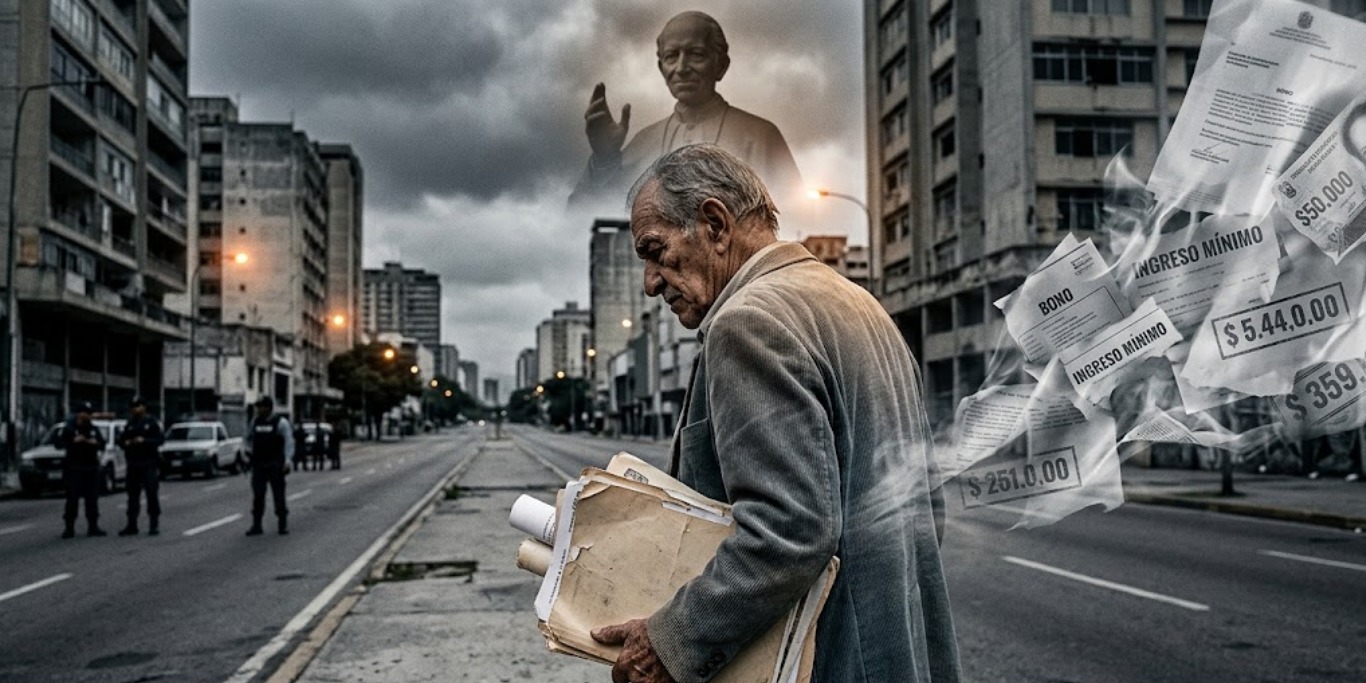
Walking down Urdaneta Avenue during a protest of university retirees is to witness a cruel anachronism. Faces carrying decades of teaching, research, and public service crowd in front of police lines, not demanding luxuries, but clamoring for the minimum: survival. This scene, which repeats with painful frequency in 2026, would have been familiar to Pope Leo XIII when in 1891 he drafted the encyclical Rerum Novarum. That document, which laid the foundations of Catholic Social Teaching, was born to denounce the “miseries and calamities that so unjustly weigh upon the greater part of the working class.” Leo XIII warned of a world where a handful of powerful imposed an almost servile yoke on a mass of dispossessed workers. One hundred and thirty-five years later, the Venezuelan economic model has achieved a macabre feat: reissuing those injustices of the 19th century under a veneer of progressive rhetoric, replacing real wages with a bonus structure that strips work of its human and legal content.
TL;DR
- Venezuelan retirees are protesting, highlighting economic hardships and comparing their situation to 19th-century worker exploitation addressed in Pope Leo XIII's Rerum Novarum.
- The current Venezuelan economic model replaces real wages with bonuses, which are criticized for lacking benefits, hindering social security, and reducing work to immediate consumption without future security.
- The article posits that this bonus system is a form of social control, atomizing workers by eroding their past service value and future savings potential, leading to a perpetual state of submission.
- Recent protests by various professional guilds are seen as a resurgence of class consciousness, demanding the restitution of the concept of salary and systemic change, not just monetary adjustments.
- The author argues that Venezuela's current approach to compensation for essential workers like educators and medical professionals is a form of discrimination and a threat to the nation's future, as it disconnects work from social mobility and individual freedom.